
Episode Overview
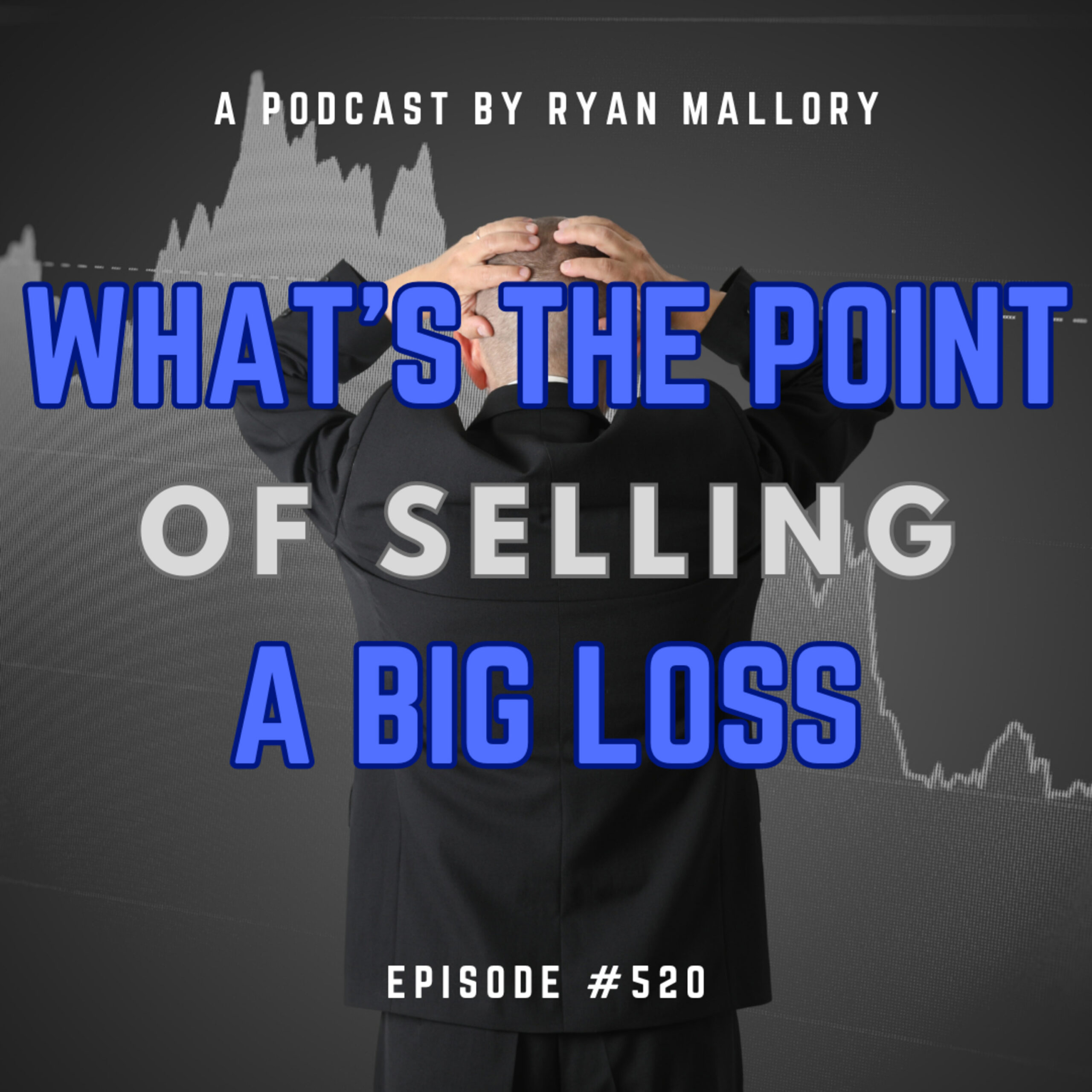
In this podcast episode, Ryan Mallory talks about the big losses that traders experience and what to do with them when the amount of the loss seems impossible to come back from. Do you just sell the stock while it is down and take the loss, or do you just hold it knowing that it can’t get that much worse than it already is? Also covered in this podcast episode is trading what you see and not what you think, and the importance of using risk management when it isn’t convenient.
Available on: Apple Podcasts | Spotify | Amazon | YouTube
Episode Highlights & Timestamps
- [0:19] What’s the Point of Selling at a Big Loss?
Ryan introduces the listener’s dilemma of holding stocks that have fallen significantly and wondering whether selling now still makes sense. - [2:49] Risk Management Has to Work When It Hurts
Ryan explains that true risk management is not about discipline when it feels convenient, but staying committed when taking the loss is painful. - [5:25] Why Reward to Risk Matters
Using examples like Adobe and software stocks, Ryan shows why chasing a possible 15% gain is not worth risking a devastating 70% loss. - [10:17] Trade What You See, Not What You Think
Ryan emphasizes that traders should focus on visible setups, charts, and risk levels instead of relying on opinions or assumptions. - [15:00] Why Huge Losses Remove the Right Answer
Ryan explains that once a trade is down badly enough, selling or holding can both feel wrong, which is why preventing that situation matters most.
Key Takeaways from This Episode:
- Risk Management Must Be Used Early: Waiting until a trade is deeply underwater makes every decision harder and more emotionally painful.
- Trade What You See: Ryan stresses that traders should react to what the chart is showing instead of what they think the stock should do.
- Large Losses Create Bad Choices: Once losses become extreme, there may not be a satisfying decision left for the trader.
- Reward to Risk Comes First: A possible gain is not worth pursuing if the downside risk is dramatically larger than the upside.
- Avoid the Situation Entirely: The best solution is to use stops and risk discipline before a trade turns into a portfolio damaging loss.
Resources & Links Mentioned:
- Swing Trading the Stock Market – Daily market analysis, trade setups, and insights by Ryan Mallory.
- Join the SharePlanner Trading Block – Get real-time trade alerts and community support.

Take the Next Step:
✅ Stay Connected: Subscribe to Ryan’s newsletter to get free access to Ryan’s Swing Trading Resource Library, along with receiving actionable swing trading strategies and risk management tips delivered straight to your inbox.
? Level Up Your Trading: Ready for structured training? Enroll in Ryan’s Swing Trading Mastery Course, The Self-Made Trader, and get the complete trading course, from the foundational elements of trading to advanced setups and profitable strategies.
? Join the Trading Community: Sign up for SharePlanner’s Trading Block to become part of Ryan’s swing-trading community, which includes all of Ryan’s real-time swing trades and live market analysis.
Full Episode Transcript
Click here to read the full transcript
0:02
Hey, I’m Ryan Mallory and this is my swing Trade in the Stock Market podcast. I’m here to teach you how to trade in a complex, ever changing world of finance. Learn what it means to trade profitably and consistently, managing risk, avoiding the pitfalls of trading, and most importantly, letting those winners run wild.
0:19
You can succeed at the stock market, and I’m ready to show you how. Hey everybody, this is Ryan Mallory with shareplanner.com. Swing trade in the stock market. In today’s episode, we’re going to talk about what’s the point of selling stocks at a big loss. One of the things that I’ve noticed, it’s a common thread with a lot of traders is that whether they’re coming to the trading block looking for answers or whether I just come across these people through the normal course of life or through social media, is that a lot of traders experience heavy losses in their portfolio.
0:55
And they don’t know, especially early on in their trading, and they don’t know what to do with them. Like what’s the point of selling them now when they’re this big of a loss? And that’s really what I want to focus on with this particular podcast episode. So what I like to do, I don’t like to use people’s real names.
1:16
I, I never do. I use people’s I give people good Florida red nicknames. And in this case, instead of using the real name, I’m going to call this guy Rusty Gravel. Don’t know if there’s actually a Rusty Gravel out there. I, I even did a Facebook people search and there wasn’t any, but I thought it was kind of a cool name.
1:34
So we’re going to give this guy the name Rusty Gravel and Rusty writes. Hi Ryan, I recently discovered your podcast and listening to lots of episodes. Now I have a question. When to cut losses? I’ve been investing for a little while now but only part time as a novice trying to learn along the way.
1:52
I’m looking to start investing now much more as part of being a novice. Until now I was not good about risk management. I’m getting better. I have several stocks that I bought too high thinking they go higher and didn’t make my wins as I should have and then they declined.
2:12
I continued to hold while thinking that they would turn around and now I’m way down on these. At this point, I think what’s the point of selling now? Might as well hold, Hold it until it goes up a little bit. Thinking even if it won’t make me a profit, at least I can sell when it isn’t so down. Should I just cut my losses on these or is there a point where you are down so much you might as well hold it a little bit longer?
2:32
Thank you, Rusty Gravel. OK, there’s a lot to unpack. A short e-mail unlike the last podcast episode, which is pretty long. Also a very good episode. This one here is a little bit more shorter, so I don’t have a lot of the background context here, but I think there’s a lot to talk about here.
2:49
And as you guys know that have been listening to this podcast, I kind of pick up on some subtleties and their emails that right there for the people who write on the show. And then I try to unpack some of that as well. First off, being good at risk management. You can see where you were saying I’m looking, what did he say here?
3:06
He said I’m looking to start investing a little bit more as part of being a novice. I wasn’t very good at risk management, but I’m getting better. OK? Being good at risk management means really about being committed when it hurts. When you get better at risk management is when when you’re willing to be disciplined, even when it hurts to be disciplined.
3:29
And let me tell you, every time I get stopped out of a trade, there’s a level of pain that you feel from it because it’s the finality of that trade at a loss. But you have to be committed to risk management when it hurts. It’s not really risk management when it’s convenient.
3:46
Think about it. I mean, you look at the market that we’re in right now, right? If if you ignore your stop losses and you’re, let’s say, and you’re in SanDisk, right, SanDisk drops 10% intraday and you ignore that stop loss, there’s a good chance by the end of the day, you’re back in the green.
4:02
You’re like, think going to say it. I was willing to ignore my stop loss and stay in the trade. That might be true for that trade, but long term you’re, and we talked about this in the, in the previous episodes, long term, you’re essentially signing the death warrant for your capital because if you’re willing to be undisciplined and, and just pick and choose where you’re going to be disciplined.
4:24
And usually that comes down to whether it feels good to be disciplined, which barely ever does. You’re, you’re going to come across the time where that trade is or a trade is really going to burn you and you’re going to wish that you would have been disciplined much earlier. And I think this is some of the issues that Rusty’s having here with, with his portfolio.
4:44
So again, it means being committed when it hurts it, it, it’s not really miss risk management if it’s convenient for you to, to manage the risk overtime, though, I, I, I think that when you, you truly embrace risk management and understand truly its importance overtime, you’ll, you’ll embrace it knowing that it protects you.
5:06
And when you’re looking back at the body of work, you’ll realize how much it saved you from utter disaster. You take the software industry of like, right. I mean this this is an industry that’s just getting hammered because of the AI trade stocks like even like Palantir, which is also AAI stock, but it’s well off of its all time highs has been getting hammered.
5:25
You take ones like more traditional ones like Salesforce or Adobe. I mean, these stocks are cratering right now. If you didn’t use a stop loss on these do do you realize how bad a shape that you would be? Let’s say you got in at the highs. Let’s say there was a legitimate bull flag about a year ago, maybe even more than a year ago now on Adobe and you got long on that, on that bull flag breakout if you weren’t using a stop loss.
5:55
Besides that, I mean like when if you’re getting into Adobe back then at all time highs, maybe you’re looking for like a 10 to 15% return, but that bull flag doesn’t materialize and it completely falls apart. And then now you’re looking at a year later and you’re down 50 or 60 or 70% off of that trade.
6:13
Was that 15% possible profit on the trade worth a 70% loss? And that’s how you got to be thinking like there’s no scenario where a 15% gain is worth taking a possibly 70% loss on a trade.
6:31
And you have to think about it in those ways. Is it worth a 5% worth taking a possible 5% loss? Absolutely. That’s three to one. If you’re right, you’re going to make three times the amount of what you lost definitely worth it. Is it is it worth it even 2 to one? Yes, absolutely.
6:48
But if if you’re talking about making 15% for a possible 70% loss or like basically a reward to risk ratio, that’s one to five, it’s not worth it. That’s horrible. That’s horrible, horrible stuff.
7:04
So over time, when you start to look at things, not so much at the dollar amount that you’re losing. That’s why I say don’t dollar watch. But if you start looking at things from our multiples it you’ll be more willing to take take the losses when you should and you won’t be simply looking at stop loss management as a something that you do when it’s convenient, when it doesn’t hurt so bad.
7:26
I see that, just not with the stop losses. I see that risk management is not convenient when it is taking profits when it’s trying to maximize the upside or trying to make sure you get every last dollar out of it which prevents you from taking profits along the way. I can’t tell you how many times my profitable trades has only come from taking profits at the 1st 3rd and getting stopped out of with the last 2/3 of the trade.
7:51
But I still wind up being profitable or slightly profitable just because I was able to take profits along the way. If I didn’t, I would have taken a loss on the trade. And so that’s part of like understanding stop losses and experiencing how beneficial they are long term and the fact that they’re the reason why you stay in the game.
8:08
If you’re not using them and you’re taking 70% losses, you’re not going to stay in the game. It just it’s a matter of fact. If you’re ignoring your stop losses, if you’re ignoring risk disciplines, you’re, you’re, you’re not going to make it. Yes, you may have some phenomenal trades along the way and you may ride hood from, you know, $15 a share up to $100 a share.
8:28
And you’re thinking to myself, yours or yourself, if I, if I had it, ignored the stop off, I would never have experienced those gains. And you hold on to that forever. And then as a result, it leads you taking on all sorts of unnecessary losses and and being very undisciplined with future trades when they don’t pan out in the same way.
8:51
So I know I’m unpacking a lot just from what it said. It’s there. But getting better about risk management is, is really about being committed to risk management even when it hurts. Another problem that I see here, he says he bought several stocks thinking that he said that I bought too high it it’s not so much that you bought them too high.
9:14
I mean, I think for instance, Intel right now way too high, right? It’s just gone straight parabolic. I wouldn’t buy it right now. But if you started seeing like a continuation triangle pattern or maybe if you had like a a pullback of sorts to a rising trend line and started to bounce, even though it’s probably still too high, then I would still be willing to swing trade it.
9:34
Why? Because I’m not looking to make a long term investment out of it. I’m looking to take advantage of a short term opportunity. So if there’s like a continuation triangle breakout or if there is a bounce off of support, and yes, it may be still crazy high, may have APE over 100 still, but I’ll still play it because from swing trade, I’m I’m not as much concerned about the fundamentals as I am about the technicals.
9:58
And so if there’s an opportunity there in the short term, I have my reward risk ratio set up in such a way to where, OK, if I do lose on the trade, it’s going to pale in comparison to what the potential word reward could have been. And if I when it’s going to be much more than what the risk would have been that I was taking on.
10:17
And so here he’s thinking that he bought it at too high and thinking that they go higher. But the keyword there is a stinking. He was thinking essentially the problem here is that he thought, you know, he thought that something was going to happen. We don’t think that we have to see, we have to see the opportunities and then we see whether that they’ll work out.
10:37
Meaning again, you go back to the Intel description. I see a bull flag pattern playing out on Intel. I don’t think that it’s going to go U. Instead I see an oortunity. I see a possibility where the reward is far greater than the risk that I’m taking.
10:54
I don’t know if it’s actually going to go UI. Don’t really even care to think whether it’s going to keep going up. I just see the opportunity for it to go up. And so I’m going to play it because I have a reward risk ratio that makes sense. That profits me much more on the reward side than it does on the risk side.
11:10
So you have to see the opportunities and see. And then once you get in, you’re going to see whether they work out. That’s why I always say trade what you see, not what you think. And so that’s critical to be unbiased once you get into a trade.
11:26
And what do I mean by that? When you see the opportunity and when you get into the trade, what I see on social media, lot of people rah, rah in their size, like go, go, go, go. You know, it’s like, oh, you know, Tesla to the moon or Palantir, you know, is going to orbit the Earth and then go to the moon and then land on Mars.
11:43
I mean, people are like, and then if you like put it, I kid you not, I’ll put like a chart on Facebook. If you want to see some craziness, go to my Facebook page and see how many people like get mad.
11:59
If I show any sort of caution towards one of their stocks, people get mad. And the reason for that is, is that they’re not unbiased once they get into the trade and it’s hard. It’s kind of like your sports teams, right? I did a podcast years ago on how I’m about being a Joe Buck when Joe Buck’s like an announcer for Fox or I guess he’s not Fox anymore.
12:17
He’s like, I think he’s like Thursday night or on Amazon. It’s not one of those broadcasts. In any case, very like rational. Maybe not everybody likes him because he’s he doesn’t really care about any team. He just just calls the game as he sees it. I think he’s actually really good.
12:34
You know, color comment, not a color commentator, but played by Paley guy. I think he does really good at that. And and you got to have that same mentality when it’s and when you’re in your trades, yes, your money’s attached to the trades. Yes, your money’s going to go up or down based off of what that trade does.
12:51
But you have to have that Joe Buck mentality where you’re unbiased towards it. It’s like, OK, if it works, it works. If it doesn’t, it doesn’t, you have to be unbiased towards it because that’s what’s going to help you to rationally manage the risk. It’s going to help you to be willing to take profits when it reaches certain levels.
13:10
It’s going to be willing for you to raise the stop loss. It’s going to be willing for you to be able to see that, OK, there is way too much risk out there at this point in time. There is this this event taking place tomorrow. Oh wait, there’s earnings tomorrow. I definitely don’t want to be holding that because that’s too high of a risk event, but for for the stocks that I’m trading.
13:31
So I’m going to get out. That’s being unbiased, just seeing it for what it is, not thinking, because when you think then you’re saying, well, you know, I think it might break, break higher here after earnings. So I think I want to hold after earnings. So when you start thinking, that’s where it messes you up in swing trading. So these big losses, what do we do with these things?
13:50
Well, First off, what’s not a big loss is SharePlanner.com or my my website. I have a course that I’ve recently launched over the past year called the self-made trader and definitely not a big loss. This is this is something that’ll really reshape your trading, your thinking. It takes you from the beginning stages of trading, helping you to understand some of the most crucial elemental aspects of trading from your mind and psychology behind the trades, all the way through building scans, creating your watch list, managing your trades, getting into those trades, figuring out which trades should be traded, using my top down trading strategy and also taking profits, raising stop losses, everything in between that.
14:25
It comes with managing a trade, followed by closing out the trade and just being able to reflect on what worked and what did not work. This is a training course. It’s a very long it’s very rigorous. I don’t know if it is for everybody just because it is a very demanding course, but it’s over 25 hours of course instruction that I created over 4 year period.
14:43
I really think you’ll like it if you’re really serious about improving your your trading game. So check that out shareplanner.com click on trading Academy and it’ll take you right there to the course the self-made trader. But what about these big losses, though that rusty gravel is dealing with here?
15:00
Big losses means that you really lose the opportunity to make the right call as to what to do. So if you notice here he says, should I just cut my losses on these? What’s the point of selling now? You know, I was thinking that even if it won’t make me a profit there he goes he’s thinking again, you know I can at least sell when it isn’t so down.
15:19
If you notice too, he’s he’s kind of like painting and broad generalities, right? He’s saying I bought the stock thinking that it would go higher. I’m thinking now that if it can’t, if it can at least bounce, it won’t hurt me as much.
15:35
I won’t lose as much really. I mean it, it’s and I’m not knocking on Rusty here. I think this is kind of something that plagues a lot of traders when they find themselves in these situations. They’re thinking too much and they’re not seeing what the charts trying to tell them. When you’re seeing you’re willing to be unbiased, right?
15:51
You’re, you’re looking at it like this is what the charts telling me. You know, if you’re a fundamental trader, it’s this, this is what the fundamentals are telling me. I think when we go back to the software stocks, it makes sense why you don’t want to be in software stocks from a long term standpoint, at least there may be some short term opportunities to play software stocks if they set up correctly in the momentum at least temporarily comes back into them.
16:14
But from a long term standpoint, it makes sense because AI can do coding at such a rapid level. Like what are some of these software companies going to be good for when you can create such complex pieces of software without knowing a lick of software to begin with or of coding?
16:34
So that’s seeing something, not necessarily thinking through that scenario. You’re seeing the impact that AI is having on on software companies. And so whether it’s fundamental, whether it’s technical, you have to, to see and not think through this, this whole process and big losses means that you’re going to lose the opportunity of making the right call.
16:57
I get this question a lot. It’s like, hey, I’m down 50% on this trade. Do I, do I sell it or do I keep holding on thinking that it’ll come back? And there is really not a right answer. I, I never am. I 30 years plus of doing this now. I don’t know what the right answer is because it’s, it’s really likely you’re going to be mad either way.
17:21
You stay in and it keeps going lower. You’re going to be like, I should have at least sold. I could have, you know, at least come away with 10% of my original position. Or you get out and then it finally starts to bounce. You’re like, Oh my gosh, I held all the way through all those losses and now it’s bouncing.
17:38
It’s like, why did I just not keep holding? I was willing to hold through all those losses. And then when it finally bounces, of course, you know, I’m not in it. Of course I sell it right at the bottom. And that’s not, that’s not something a lot of people think that it’s, it’s really them that’s causing it.
17:54
Like, oh man, I’m just a really bad at this. No, you put yourself in that position for that to happen because when you get these kinds of extreme losses, there’s really not a right call. There really isn’t. I mean, at some point stocks bounce. And so, you know, whether it’s when it’s 70% down or whether it drops another 90% down and then it bounces, at some point it’s going to bounce.
18:16
I mean, that’s typically how it works unless they just go straight into bankruptcy. And even then you seen things like Hertz in the past and, and, and other companies were, you know, like the worst possible news comes out about them and all of a sudden they’re like rallying out as a result of it. I mean, you take Intel, for instance, right?
18:35
They cut their dividend and the stocks never been better. Same thing with three M. They, they had like those long history of always raising their dividend, then they cut it and then all of a sudden the stock does, you know, moonshots. But you would think that that would actually cause it to go the opposite way.
19:05
But it just, it just goes to show that when you, when you’re taking on these big losses, it doesn’t really matter what what decision you’re making, it’s probably going to be the wrong one. And that, that’s the hard part. Now, there’s some benefits to taking the losses is that you’ll have a big tax break on your future trades because they they can help offset some wins if you have them.
19:25
But if you’re, if you find yourself trying to think through these processes, it works great with everything in life. And I think that’s where probably Rusty runs into trouble is probably he’s a very successful person outside of this because he’s able to think through his problems. And I encourage thinking. I just think that thinking in the stock market often comes back to bite us because the market’s very irrational.
19:41
It’s kind of like a three-year old, right? You have a three-year old that or let’s go to a 2 year old, right, The terrible twos. Have you ever seen yourself actually able to be logical with a 2 year old? Probably not because they’re very irrational. They’re they’re very angry or take it take like a newborn.
20:00
You think you’re going to be able to talk a newborn from stop crying throughout the middle of the night? Absolutely not. They’re not going to listen to you. You don’t. It doesn’t matter what kind of rationale that you give them. You you can’t do that. And it’s kind of like that with the stock market.
20:16
You can think through all the stuff with the stock market. Market’s not going to cure. It’s going to do whatever the heck it wants. And often times it’s going to be what makes the least amount of sense. It’s kind of like a, you know, a toddler. And then, but then in every other area of life, it does work.
20:32
You like, if you’re a, a doctor and you’re a open heart surgeon, you’re opening on opening up on my heart. Yeah, you’re going to see some things and you’re going to have to react to that. But I hope you’re thinking through this, you know, that you’re using your years of Med school and the, the knowledge that you have and that you’re thinking through the process of OK, I think, you know, but based off of what is going on here and what’s going on here, I think the guy’s heart’s going to fail.
20:50
And so we need to do XY and Z. We need to put a stint in this artery that’s thinking through the process and trading. It’s not like that, you know, you’re dealing with a 2 year old, you know, trying to trying to be rational with a 2 year old. But in every other form of life, it’s like, kind of like you have to think your way through things.
21:06
And if you don’t, that’s where the problems arise. But in trading is the exact opposite. So again, should he should he sell or should he not? For one, I don’t know anything about the actual trades that he’s in. He could be in BY&D where that stock just continues to go down.
21:23
I know it’s had a little bit of a burst lately, but overall the trends pretty bad. He could be in like one of these inverse ETS like SOXS, which is just, you know, getting hammered every day. Or he could be in something like PLTR and he just simply bought at the the high point and that wasn’t a good idea either.
21:39
But there’s a possibility that it could come back up. Even though if he has a good loss, it’s hard to be able to say it what you should do without without that particular knowledge. But again, any, any advice that I would give is probably the wrong advice on that because you’re in a situation where it’s very difficult to be right.
22:00
Because if it does eventually bounce, even if it doesn’t bounce right away, let’s say you’re down 70% and it goes down to 99% down. If you hadn’t sold out of it, but at 99% out, all of a sudden it goes on this mega rally and you could have only been down 50%.
22:16
You’re still going to be mad. Guaranteed you’re going to be mad about it. Even though you probably made the right decision because of that huge draw down that still existed thereafter of getting out, still going to be mad about it. And I think that’s what makes it so difficult to know what the right decision is, because there really isn’t a right decision.
22:34
I think sometimes the, the best thing is, is the fact that you can get a tax break off of it, you know, And so that’s about the, the, all the advice, the, the, the best, the best approach to all of this is to avoid ever letting it start right?
22:52
It’s, it’s, you could say that about issues of morality, right? Don’t, don’t let the bad things start to happen. Don’t let the bad decisions start to creep into your life. Because once you start allowing it to happen, you’ve already gone further down the path than you ever should have been. And it’s the same thing with with trading.
23:10
If you start to ignore the risk management, then you you’ve already, you know, started down that path and making some really, really bad trades, even if in the short term it works out for you. I mean, look at look at the New England Patriots head coach, right?
23:28
I mean, it worked out for a little bit for him and now his, his world probably feels like it’s crashing on him. I don’t know. I don’t know the guy personally, but I would assume if I was in that situation that it would feel that way. So remember that. Remember, the the best thing is going forward is to not think through the processes, but to see what’s happening, to use risk management to do it when it’s not convenient to do it when it hurts to do it.
23:52
And that’ll avoid you ever being in these situations where you’re down 70 or 90% barring a a crazy overnight event that would just, you know, gap way below your stop losses. And those do happen, but by and large, those stop losses that are there for a reason to help you from blowing up your account.
24:10
If you enjoyed this podcast episode, and I hope that you did, please make sure to like and subscribe. If you’re watching me on YouTube or if you’re listening to me on one of the podcast platforms, make sure to leave a five star review and let me know what your thoughts are. I do appreciate those.
24:25
Those mean a lot. They help to build the brand and extend the reach of the podcast. So that that does mean a lot. Plus make sure to send me your questions ryan@shareplanner.com. I do read them all and I do pretty much make an episode almost out of every one of them. Not enough people write the show.
24:40
I always try to tell people, hey, make sure to do it, man. I mean, I would say .1% of the people that listen to the show write the show. So you have a very good chance of maybe even worse than that, but you have a very good chance of getting your questions with a podcast episode.
24:57
Plus, check out the self-made trader at shareplanner.com. And remember, Jesus Christ is the way, the truth and the life. Nobody comes to the Father except the way. Thank you and God bless. Thanks for listening to Swing Trade in the Stock market. If you’d like to trade alongside me each day, I invite you to join the SharePlanner trading block where I navigate that markets in real time with traders from around the world.
25:19
Your membership includes A7 day trial and full access to my Discord trading room. You can Sign up today by visiting shareplanner.com/tradingblock. Be sure to follow SharePlanner on YouTube and X and across all major social platforms where I share unique market insights every day.
25:35
And if you have any questions, feel free to reach out to me directly at ryan@shareplanner.com. All the best and I look forward to trading with you soon.
Enjoy this episode? Please leave a 5-star review and share your feedback! It helps others find the podcast and enables Ryan to produce more content that benefits the trading community.
Have a question or story to share? Email Ryan and your experience could be featured in an upcoming episode!
Become part of the Trading Block and get my trades, and learn how I manage them for consistent profits. With your subscription you will get my real-time trade setups via Discord and email, as well as become part of an incredibly helpful and knowledgeable community of traders to grow and learn with. If you’re not sure it is for you, don’t worry, because you get a Free 7-Day Trial. So Sign Up Today!

Welcome to Swing Trading the Stock Market Podcast!
I want you to become a better trader, and you know what? You absolutely can!
Commit these three rules to memory and to your trading:
#1: Manage the RISK ALWAYS!
#2: Keep the Losses Small
#3: Do #1 & #2 and the profits will take care of themselves.
That’s right, successful swing-trading is about managing the risk, and with Swing Trading the Stock Market podcast, I encourage you to email me (ryan@shareplanner.com) your questions, and there’s a good chance I’ll make a future podcast out of your stock market related question.
Watching the dollars rise and fall in your trading account can turn a well-planned swing trade into an emotional, deeply personal decision. In this episode, I explain why focusing on price action, percentage returns, and R-multiples can help you avoid cutting winners early, holding losers too long, and abandoning your trading plan.
Be sure to check out my Swing-Trading offering through SharePlanner that goes hand-in-hand with my podcast, offering all of the research, charts and technical analysis on the stock market and individual stocks, not to mention my personal watch-lists, reviews and regular updates on the most popular stocks, including the all-important big tech stocks. Check it out now at: https://www.shareplanner.com/premium-plans
📈 START SWING-TRADING WITH ME! 📈
Click here to subscribe: https://shareplanner.com/tradingblock
— — — — — — — — —
💻 STOCK MARKET TRAINING COURSES 💻
Click here for all of my training courses: https://www.shareplanner.com/trading-academy
– The A-Z of the Self-Made Trader –https://www.shareplanner.com/the-a-z-of-the-self-made-trader
– The Winning Watch-List — https://www.shareplanner.com/winning-watchlist
– Patterns to Profits — https://www.shareplanner.com/patterns-to-profits
– Get 1-on-1 Coaching — https://www.shareplanner.com/coaching
— — — — — — — — —
❤️ SUBSCRIBE TO MY YOUTUBE CHANNEL 📺
Click here to subscribe: https://www.youtube.com/shareplanner?sub_confirmation=1
🎧 LISTEN TO MY PODCAST 🎵
Click here to listen to my podcast: https://open.spotify.com/show/5Nn7MhTB9HJSyQ0C6bMKXI
— — — — — — — — —
💰 FREE RESOURCES 💰
— — — — — — — — —
🛠 TOOLS OF THE TRADE 🛠
Software I use (TC2000): https://bit.ly/2HBdnBm
— — — — — — — — —
📱 FOLLOW SHAREPLANNER ON SOCIAL MEDIA 📱
*Disclaimer: Ryan Mallory is not a financial adviser and this podcast is for entertainment purposes only. Consult your financial adviser before making any decisions.
You Might Like

South Korea: The Hidden Driver of US Tech Volatility
Stop Trying to Hit Home Runs: Start Trading Within Your Means
How to Trade Breakouts Without Getting Trapped