
Episode Overview
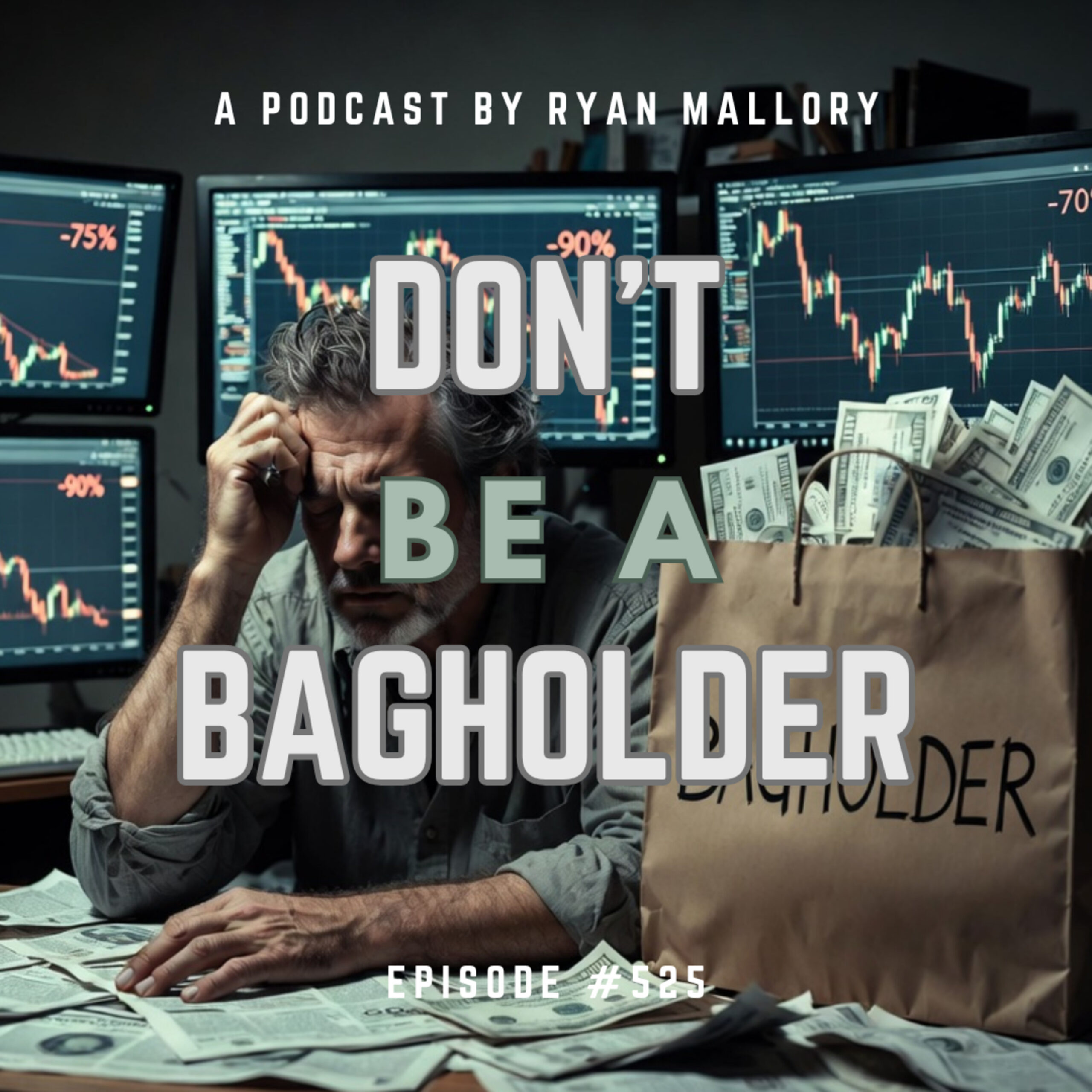
Refusing to take a loss when the trade has turned, and the reason for getting into the trade in the first place is no longer valid, is one of the biggest problems traders face. In this video, Ryan Mallory discusses the pitfalls that comes with refusing to take the loss and instead opting to become a bagholder on one’s trades.
Available on: Apple Podcasts | Spotify | Amazon | YouTube
Episode Highlights & Timestamps
- [0:02] Bag Holding Risk
Ryan explains how trading earnings can quickly lead to bag holding without proper risk management. - [1:37] Meemaw‘s Question
A newer trader asks how to handle earnings season and avoid emotional decisions driven by FOMO. - [3:42] Why Earnings Are Unpredictable
Even perfect information cannot guarantee direction as stocks often react opposite to expectations. - [7:24] Avoiding Post Earnings Trades
Ryan explains why he avoids trading immediately after earnings due to volatility and false moves. - [14:51] Stop Losses and R Multiples
A dive into why honoring stop losses prevents devastating drawdowns and protects long term performance.
Key Takeaways from This Episode:
- Avoid Earnings Risk: Holding through earnings or trading right after releases exposes you to unpredictable moves.
- Do Not Chase Big Gaps: Stocks that jump 15 to 20 percent often create poor risk reward setups.
- Honor Your Stop Loss: Failing to exit losing trades can quickly turn small losses into major setbacks.
- Protect Your R Multiple: Consistent risk management ensures one trade does not erase many winners.
- Control Emotions: FOMO and panic decisions are the biggest threats during volatile market periods.
Resources & Links Mentioned:
- Swing Trading the Stock Market – Daily market analysis, trade setups, and insights by Ryan Mallory.
- Join the SharePlanner Trading Block – Get real-time trade alerts and community support.

Take the Next Step:
✅ Stay Connected: Subscribe to Ryan’s newsletter to get free access to Ryan’s Swing Trading Resource Library, along with receiving actionable swing trading strategies and risk management tips delivered straight to your inbox.
? Level Up Your Trading: Ready for structured training? Enroll in Ryan’s Swing Trading Mastery Course, The Self-Made Trader, and get the complete trading course, from the foundational elements of trading to advanced setups and profitable strategies.
? Join the Trading Community: Sign up for SharePlanner’s Trading Block to become part of Ryan’s swing-trading community, which includes all of Ryan’s real-time swing trades and live market analysis.
Full Episode Transcript
Click here to read the full transcript
0:02
Hey, I’m Ryan Mallory and this is my Swing Trading the Stock Market podcast. I’m here to teach you how to trade in a complex, ever changing world of finance. Learn what it means to trade profitably and consistently, managing risk, avoiding the pitfalls of trading, and most importantly, letting those winners run wild.
0:19
You can succeed at the stock market and I’m ready to show you how. Hey everybody, this is Ryan Mallory with shareplanner.com Swing Trading the Stock Market. In today’s episode, we are going to be talking about bag holding and trading earnings. Now they, they sound like two different concepts, but trading earnings can easily turn you into a bag holder.
0:40
And if you don’t know what bag holding means, it’s a the commonly used term that a lot of traders use is essentially not using a stop loss, not getting out when the trade goes against you and simply holding the bag while everybody else gets out. And so they’re jumping ship and you’re willing to go down with it.
0:56
And that’s essentially what that term means. Now, as I do with every podcast episode, I give people a good Florida Reddick name. Why? Because I’m I’m a Floridian native, native born and pretty much a redneck too. I live out in the country, do redneck things.
1:11
And so I give everybody a red nickname so I don’t have to use their real identity because there’s a good chance people wouldn’t write the show if I did. So in this case, I’m going to call this lady Meemaw. Now, meanwhile’s a good Florida name. I think everybody needs a good Meemaw that we actually have a Meemaw’s BBQ which is a kind of a cool place locally and it’s good BBQ too.
1:37
But anyways, without getting too sidetracked, Meemaw writes. Hi, I’m Meemaw and fairly new to swing trading. I’ve technically been doing it for several years I guess you could say, but never had a true strategy and would make dumb moves and wind up bag holding forever until I took a loss or broke even.
1:53
Most of my winning trades were due to writing. My father in law’s coattails with trades that he has suggested. I’m a mother of three young children, ages 7, four and one, and work nights as an RNI. Guess that’s a registered nurse, right? Registered. Yeah, registered nurse part time.
2:09
So as you can imagine, I don’t have a ton of time to watch the market constantly, but I do enjoy swing trading. This year my goal was to Start learning more about trading successfully without riding my father in I have learned so much and this year I’m up about 20% this far.
2:28
Thus far I am very proud of myself for how I am doing, but I do realize I still have much more to learn. My question is about earning season and hopefully it’s not a dumb one. I’m having a heck of a time judging it. Obviously holding during earning season is a gamble.
2:46
I like your strategy on selling before earnings and have adopted that into my own strategy. However, after earnings I’m having a difficult time judging stock plays as it seems like a stock in either tank or skyrocket. If it tanks, you obviously want to see if it recovers rather than buy the dip blindly, right?
3:03
But if it skyrockets then you’re just chasing it at that point. Do most people sit in cash during earnings? And how soon after earnings are you willing to get into a stock, especially if it has jumped 15 to 20% off of earnings? Maybe you have already discussed this and I missed it where I simply haven’t listened to the podcast yet.
3:21
I feel like I have a bad case of FOMO around earnings time and need to check my emotions almost daily. Thank you for all your hard work Meemaw. So good questions for. Meanwhile, I think one of the things earnings is a huge trap for people and it doesn’t sound like she’s playing earnings directly from a swing trading standpoint.
3:42
But here’s the here’s the problem with earnings you can get. You can, you can know what the EPS is going to be, that’s earnings per share. You can know what the revenue is going to be and how that compares to the expectations. And you can even know what the future guidance is going to be versus expectations.
4:00
You can have all of that in hand and still be wrong about the direction that the stock takes. Now obviously if the stock beats the earnings and beats revenue and guides higher, you would think that the stock will go higher as well. But often times you’ll go with that assumption and then it actually sells off.
4:17
And that’s often times because the prices or the stock is priced for perfection that that the stock is already priced in that big move that they were already expecting it. And as a result, once once the move was announced, yeah, maybe it goes up a little bit more, but then people will start taking those profits.
4:33
And then that’s where you see that snowball effect where everybody’s like, why is it doing this? And that comes back to like the buy the rumor, the sell the news O de Dodge that that so many people has talked about in the past that you don’t really see it as much anymore. More people. It seems like now it is by the rumor, by the news and by the recycled rumor and keep and keep buying the recycled news as well.
4:56
Nonetheless, judging earnings, you really can’t do it. And like I said, if you had the information, you wouldn’t be able to always be able to rightfully predict. It would definitely help. But again, you’d still probably see some heavy surprises there. Now some of the questions that she has, she says that she sells before earnings and that she’s adapted that into her own strategy.
5:18
That’s a that’s a huge starting point there. But then she has a difficult time judging stock plays. That seems like a stock can either tank or skyrocket after reports. So one of the big things that you don’t want to do, at least in my viewpoint, I have no desire to buy a stock after it immediately reports earnings.
5:35
Because what you’ll often see, especially if you like look at a one minute or a 5 minute chart, is that it will shoot way up, shoot way back down, anything. OK, now it’s tanking. And then if you get short on it, then all of a sudden it just starts to squeeze higher and vice versa. So trying to judge those what’s up, it’s almost like a FOMC statement in some ways.
5:51
You get that initial move from the FOMC people, you know, start buying and then they pull the rug and all of a sudden it starts tanking. For the same reason I won’t try to play the initial move on a FOMC statement is the same reason why I won’t play the initial move on an earnings release is because just because it makes it a move a a strong move initially in One Direction doesn’t mean that’s going to be what plays on.
6:13
In fact, it usually makes multiple head fakes. It’ll it’ll pull the rug out from underneath you thinking that you caught the right direction, that you’re going to ride this wave of momentum and all of a sudden it just stops dead in its tracks. So you’re not going to see me trying to play that whatsoever.
6:30
And you’re right, it can skyrocket and that’s the reason why I stay out of it can skyrocket or it can tank the following day. What you’ll often see too is attempts to buy the dip. Like if you have a very popular stock like NVIDIA or something that sells off hard after hours, then when the market opens, you start to see this propensity to want to buy the dip on it.
6:49
Or it’s not just NVIDIA, It can be a lot of very popular stocks in general. But then there’s the ones like you take like a Oracle or, or, or some of these other ones that just get absolutely crushed at earnings are like meta. And instead of getting that bounce, maybe they try to do it initially and they suck in a lot of the buyers.
7:07
And then all of a sudden kind of like that initial earnings release, once the earnings regular trading hours comes across, they tank the market there. And so rarely, rarely, rarely, rarely do I ever buy a stock on the day that the earnings have been released. Meaning like if they released in the afternoon, I’m not buying the next day.
7:24
Very rarely do I ever do that. I could possibly see myself doing it from a long term standpoint if I’m going to start averaging in and I feel like that’s a good place to start averaging in. But from a swing trading standpoint, heck no. There’s just too much, too much risk in doing that. And then you’re all of a sudden having to make up for these losses that could have been easily avoided.
7:44
I always talk about avoiding unnecessarily unnecessary losses, right? And that’s, that’s one that can really hurt you in a big way. So the reversals are real after the market opens. It’s like honestly like playing roulette at the casino.
8:01
If you go there and you’re playing red, black or or green, if you’re, if you’re trying to play that and you’re trying to guess which one that it’s essentially what earnings is like trying to trying to play roulette. And it it’s not a, you may get it, get it right, but it’s going to be that time where you get it wrong and then you lose what you’ve earned on the previous times where you got it right.
8:24
But then you think that’s only a one off instance. And so what’s your natural, natural inclination to try to play it again? And then you get it wrong again. And then you’re saying, oh, crud, now I got to get a lot more money back to get just get back to break even. I can’t take that loss. So you keep playing. The only thing that you knew that one time gave you some profits and then all of a sudden you get that wrong.
8:43
And then you find yourself doubling down and tripling down and try and then you bury yourself in a hole. One of the things that that that my son’s done recently is he had 20 bucks in one of these sports betting companies and he played, he played the the odds on I think 3 of the soccer players getting two goals each.
9:09
And I think there was probably like a less of a 1% chance that each of those guys will get it. But he hit that parlay and you know, one of the things that I told him was is that that’s great that you made that money just like be great if somebody made the earnings call and you profited big time off of it.
9:24
But what you got to be careful of is that it doesn’t lead you right back to the Trump to be making these high risk gambles that ultimately the odds are going to catch up with you and you’re not going to be successful at it. And then you’re going to find yourself taking a big hit as a result. Now, somebody tells me that they, you know, bought Micron from just the other day and they’ve made 20% off of it.
9:45
I’m happy for them. I am, but I, I also fear more about what that behavior will lead to and that people are going to say, well, it worked for me last time. It’s natural human tendency to want to try to do that again. So there’s big potential for gains, but the risk is far too much and, and it, and it’s very easy to get stopped out if you try to play that same day earnings there when it, when it first comes out.
10:12
So the other thing is, is if it jumps 15 to 20% off of earnings, my question is, is like what, what are you chasing after 15 to 20%? Like let’s, let’s take Micron for instance, it wait, it opens up 15 to 20% higher after earnings.
10:31
There’s a lot of people buying. I mean, the call buying that day was huge after it already opened up 20% higher. People were buying calls on Micron. So clearly some heavy, heavy amounts of chasing going on. We’ve seen it of, of Laden SanDisk. SanDisk just goes up and down 15% for no logical reason almost every day.
10:50
Yet people are playing the calls on it. And so they’ll they’ll see it open up 15% higher. And like I need to buy calls on that didn’t need it yesterday when it sold off 15%, but today that now it’s up 15%. I probably need those calls and so they buy. But what are you chasing?
11:07
If you see that the stock is already up 15 or 20%, what are you chasing at that point? Are you chasing what it’s already done? That doesn’t make sense. Are you chasing it because you think that it’s going to go up another 15 to 20%? So now you’re thinking that, OK, there’s somewhere around 30 to 40% to be had on this stock, especially if you’re playing ODT ES, that would be crazy.
11:28
What? What are you, what are you expecting? Because when you try to play the risk on it, when you try to manage the stop loss, where you put in a stop loss that you’re not putting it on a daily candle because that would be 15 to 20% lower. Possibly it would be way down there. So what what is where’s the candle? Where’s the stop loss going?
11:44
If you just play below the day’s lows, there’s a very good chance to get that. They’re going to do essentially like, you know, sweep out all the stop orders there, take it out and then shoot it right back up. So putting it below the day’s lows doesn’t make a lot of sense either, especially with a stock that that’s volatile and that prone to see some profit taking and profit taking it did it ended up dropping 10%.
12:04
And so great example of how with what you saw Micron the day after earnings, what it did, it gaps up like 20% higher. Maybe it was like 18%, but let’s just round it up to 20%. Then it gives up half of those gains. So now it’s like that up only 10%.
12:20
So let’s say you got in right at the open, it’s like, OK, I’m going to run the sucker higher. I’m going to chase it. I got the FOMO and then it drops 10%. What are you thinking right there? It’s like, I got to get out. I was wrong and this thing’s going to collapse. What if it goes back to where? What if it goes red? Then I’m going to be down 20%. It’s like, I can’t take that. So you get out of it.
12:36
So you’re down 10%. You take the stop loss because these moves happen fast. And then later on there at the end of the day, it’s back up to 20%. Like I was right. Why should I just trust myself? You know what, I’m going to get back in it. So you get back in it and then you hold overnight and then you open up to it being down 6%.
12:56
Like, oh gosh, I, I, you know what, I just, I just got to take the L on this one. So you take the L and then it goes, you know, you start seeing that the the buyers buy it right off of the lows. So that that’s the kind of struggles that you’ll deal with when you’re playing a very highly emotional stock following earnings or just really, it can happen with any stock too.
13:18
If they report bad earnings, you’re going to see a lot of emotions flood into it because it’s going to be something that wasn’t expected. It’s going to be a a scenario that catches a lot of people off guards and they’re going to be making sudden and emotional decisions. But one thing that can help you with that, yes, I’m going to tell you about the self-made trader.
13:36
This is my training course that I put together took me about four years to do and it was a long process, but I, I essentially created a course all on my own, about 25 hours of instructional videos and you know, a lot, lot to read as well. But what you’re getting with this is I’m going to take you from the very beginning of my, my, my training.
13:57
So if you’re starting off a training, this is a great point to start off at and you’re going to get, you’re going to learn everything that I know First off. But I’m going to take you from the very beginning concepts teach you about, you know, about strategies, teach you about managing the risk. And also I’m going to start you through the process of learning how to scan for stocks and building a watch list.
14:18
And then from there, how to take those stocks that go from the watch list to actual trade setups and managing the risk and identifying the entry points on it, Plus how to close out the trades, how to take partial profits when when to get out of a trade, maybe even prematurely.
14:34
I cover all the stuff. And then we review trades and, and learn how to really just analyze what you’re doing as a trader in order to increase crease the odds that of, of, of becoming a better and, and more self-made trader. So check that out. Go to shareplanner.com.
14:51
Check out the tab where it says trading Academy. Click on it and you’ll see that course offering right there, self-made trader at shareplanner.com. Now let’s talk a little bit about bag holding because we focused a lot about earnings. Now the reason why bag holding is so bad and I, I know that I get a lot of people annoyed because I could be a very boring trader at times.
15:14
And one of the things that I do is I always take, take the stop. If my stop loss is it I’m out of the trade, I don’t care that I’m taking a loss, I’m getting out. And that’s because they are multiple. The are multiple mean something to me. And that’s essentially if you’re going into a trade with, you know, at $100 and you’re placing your stop loss at 95, that’s your are multiple.
15:35
And now the reward is how many multiples of that risk can you take? And so if I expected to go to you know, $115.00, that’s a three to 1 reward risk ratio or or multiple there. So three times the risk that you’re hoping to to profit from.
15:54
But let’s say that you get into a trade and your stop loss is at 2% and then your reward is at 6%. So you got a three to one right there, right. So if you’re going in at 100, your stop loss is at 98 and your profit is that or your, yeah, your profit would be at $106.00 a year target.
16:16
But instead of taking your stop loss at 98, I was like, you know what, 2% isn’t that bad. I can hold on a little bit longer and just see if it reverses course. Not good to do because once you plan your trade, you need to follow your, your, your trading plan. And then all of a sudden it gaps down.
16:32
Maybe you hold it through earnings and then all of a sudden it’s down to $75. Well, now you’re taking A25R multiple of what you risked. Do you know how many winning trades you got to get to be able to make up for that kind of multiple? It’s a lot so you want to avoid that kind of trading behaviors because it sets you back so far in your trading journey.
16:55
So that’s a huge thing that’s how you start to back one and then you get down to like where you’re taking a 25% loss on it. Something what, what is the natural human tendency to do is like, well, I’m down so much now I might as well see if it comes back up. I, I can’t take this loss, you know, and then he also, you’re down 50%.
17:11
So then, you know, actually I said 25% earlier, you’re down 50. Let’s say you’re down 50%. That’s a 20. That’s a 25 R multiple because you’re, you’re risking 2%. So I was a little bit wrong there. But let’s say from 50%, it goes down even further and it just creates bad decisions begets or as the Bible would say, begets bad decisions, right?
17:38
The more bad decisions that you have, the more likely you’re going to make even more bad decisions. I mean, you look at just human behavior in general. You know, you start going down 11 bad, bad path, you’re likely to continue on that path much, much further and make continuously more and more bad decisions before you can’t find your way back to where you came from.
18:02
And it’s the same thing with trading. You got to stay disciplined because you got to realize the human tendency is to make bad decisions when it comes to trading. So if you enjoyed this podcast episode, and I hope that you did, please make sure to leave me a five star review on whatever platform that you’re listening to me and make sure to send me your questions, ryan@shareplanner.com.
18:22
I do read them all. I do make podcasts of them all and check out the self made trader at shareplanner.com by clicking on Academy and it’ll give you all the information there. Greatly appreciate it. Remember what Jesus Christ says. I am the way, the truth and the life. Nobody comes to the Father except through this Christ.
18:40
Thank you, God bless. Thanks for listening to Swing Trading the Stock Market. If you’d like to trade alongside me each day, I invite you to join the SharePlanner trading block where I navigate the markets in real time with traders from around the world. Your membership includes A7 day trial and full access to my Discord trading room.
18:57
You can Sign up today by visiting shareplanner.com/trading Block. Be sure to follow SharePlanner on YouTube and X and across all major social platforms where I share unique market insights every day. And if you have any questions, feel free to reach out to me directly at ryan@sharepanner.com.
19:13
All the best and I look forward to trading with you soon.
Enjoy this episode? Please leave a 5-star review and share your feedback! It helps others find the podcast and enables Ryan to produce more content that benefits the trading community.
Have a question or story to share? Email Ryan and your experience could be featured in an upcoming episode!
Become part of the Trading Block and get my trades, and learn how I manage them for consistent profits. With your subscription you will get my real-time trade setups via Discord and email, as well as become part of an incredibly helpful and knowledgeable community of traders to grow and learn with. If you’re not sure it is for you, don’t worry, because you get a Free 7-Day Trial. So Sign Up Today!

Welcome to Swing Trading the Stock Market Podcast!
I want you to become a better trader, and you know what? You absolutely can!
Commit these three rules to memory and to your trading:
#1: Manage the RISK ALWAYS!
#2: Keep the Losses Small
#3: Do #1 & #2 and the profits will take care of themselves.
That’s right, successful swing-trading is about managing the risk, and with Swing Trading the Stock Market podcast, I encourage you to email me (ryan@shareplanner.com) your questions, and there’s a good chance I’ll make a future podcast out of your stock market related question.
In this podcast episode, Ryan discusses how really bad, losing trades in the stock market creates an impossible scenario for the trader in terms of what the right decision should be.
Be sure to check out my Swing-Trading offering through SharePlanner that goes hand-in-hand with my podcast, offering all of the research, charts and technical analysis on the stock market and individual stocks, not to mention my personal watch-lists, reviews and regular updates on the most popular stocks, including the all-important big tech stocks. Check it out now at: https://www.shareplanner.com/premium-plans
📈 START SWING-TRADING WITH ME! 📈
Click here to subscribe: https://shareplanner.com/tradingblock
— — — — — — — — —
💻 STOCK MARKET TRAINING COURSES 💻
Click here for all of my training courses: https://www.shareplanner.com/trading-academy
– The A-Z of the Self-Made Trader –https://www.shareplanner.com/the-a-z-of-the-self-made-trader
– The Winning Watch-List — https://www.shareplanner.com/winning-watchlist
– Patterns to Profits — https://www.shareplanner.com/patterns-to-profits
– Get 1-on-1 Coaching — https://www.shareplanner.com/coaching
— — — — — — — — —
❤️ SUBSCRIBE TO MY YOUTUBE CHANNEL 📺
Click here to subscribe: https://www.youtube.com/shareplanner?sub_confirmation=1
🎧 LISTEN TO MY PODCAST 🎵
Click here to listen to my podcast: https://open.spotify.com/show/5Nn7MhTB9HJSyQ0C6bMKXI
— — — — — — — — —
💰 FREE RESOURCES 💰
— — — — — — — — —
🛠 TOOLS OF THE TRADE 🛠
Software I use (TC2000): https://bit.ly/2HBdnBm
— — — — — — — — —
📱 FOLLOW SHAREPLANNER ON SOCIAL MEDIA 📱
FACEBOOK: https://facebook.com/shareplanner
*Disclaimer: Ryan Mallory is not a financial adviser and this podcast is for entertainment purposes only. Consult your financial adviser before making any decisions.
You Might Like

South Korea: The Hidden Driver of US Tech Volatility
Stop Trying to Hit Home Runs: Start Trading Within Your Means
How to Trade Breakouts Without Getting Trapped