
Episode Overview
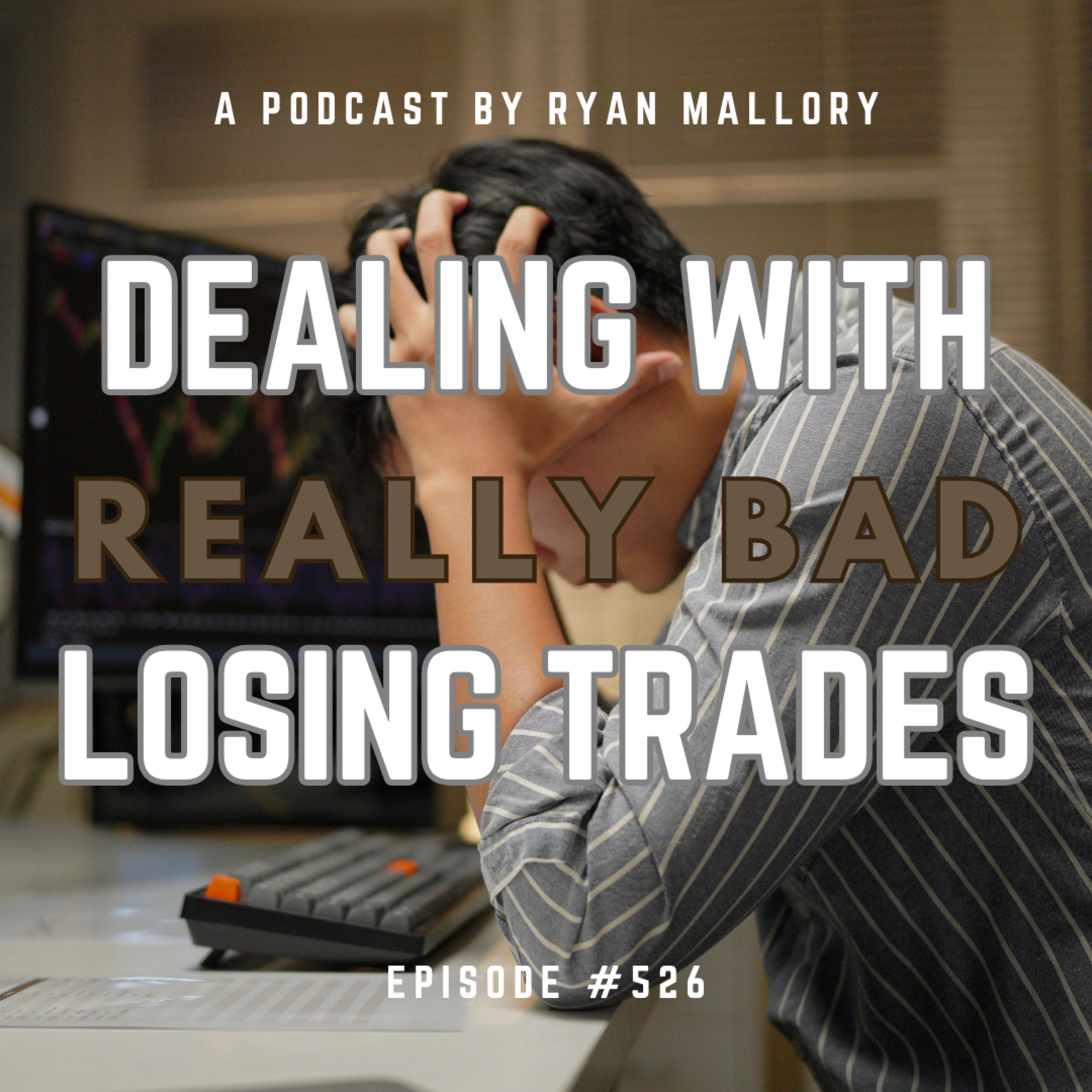
In this podcast episode, Ryan discusses how really bad, losing trades in the stock market creates an impossible scenario for the trader in terms of what the right decision should be.
Available on: Apple Podcasts | Spotify | Amazon | YouTube
Episode Highlights & Timestamps
- [0:19] What to Do With Really Bad Losing Trades
Ryan starts off addressing the problem of managing a position after the loss has become so large that every available choice feels wrong. - [1:37] MO Challenges Ryan’s Previous Guidance
A longtime listener questions whether Ryan’s advice in the Rusty Gravel episode conflicted with his rules against marrying trades and misallocating capital. - [3:20] Why Deep Losses Create a No-Win Situation
Ryan explains why advising someone after a stock has already collapsed can make the adviser look wrong whether the trader sells or stays in. - [9:00] Is This the Best Place for Your Capital?
Ryan discusses whether a deeply damaged stock is really the strongest option for rebuilding lost capital. - [16:10] Build a New Plan for an Old Loser
Ryan supports creating a fresh plan around support and risk when the original trading plan was ignored, while stressing that doing nothing is not a strategy.
Key Takeaways from This Episode:
- Do Not Marry a Losing Trade: A massive unrealized loss does not make the same stock the best vehicle for earning the money back.
- Compare Current Opportunities: Evaluate whether another stock, sector, asset, or use of cash offers a better risk and reward profile.
- Stop the No-Win Scenario Early: Follow position sizing and exit rules before a manageable loss becomes an 80% or 90% drawdown.
- Rotate Capital Proactively: The best place for capital can change even when a position is profitable or has not yet broken down.
- Make a New Plan When Necessary: If the original plan was ignored, define support, a stop, and a clear exit instead of continuing without rules.
Resources & Links Mentioned:
- Swing Trading the Stock Market – Daily market analysis, trade setups, and insights by Ryan Mallory.
- Join the SharePlanner Trading Block – Get real-time trade alerts and community support.

Take the Next Step:
✅ Stay Connected: Subscribe to Ryan’s newsletter to get free access to Ryan’s Swing Trading Resource Library, along with receiving actionable swing trading strategies and risk management tips delivered straight to your inbox.
? Level Up Your Trading: Ready for structured training? Enroll in Ryan’s Swing Trading Mastery Course, The Self-Made Trader, and get the complete trading course, from the foundational elements of trading to advanced setups and profitable strategies.
? Join the Trading Community: Sign up for SharePlanner’s Trading Block to become part of Ryan’s swing-trading community, which includes all of Ryan’s real-time swing trades and live market analysis.
Full Episode Transcript
Click here to read the full transcript
0:02
Hey, I’m Ryan Mallory and this is my Swing Trading the Stock Market podcast. I’m here to teach you how to trade in a complex, ever changing world of finance. Learn what it means to trade profitably and consistently, managing risk, avoiding the pitfalls of trading, and most importantly, letting those winners run wild.
0:19
You can succeed at the stock market and I’m ready to show you how. Hey everybody, this is Ryan Mallory with shareplanner.com. Swing Trading the Stock Market. In today’s episode, we are going to talk about what to do with really bad losing trades. Like really bad. This particular e-mail comes from a long time listener.
0:40
He’s gone back in time and listened to all the episodes and he’s also written the show before. And he wrote me another e-mail here just recently doing a little bit of a call out, explained to himself that he felt like I was contradicting one of the rules that I’ve been very strong about in the past in that when I did the, the episode with Rusty Gravel, where Rusty gravel, that’s the Florida red nickname I give him, obviously not the real person’s name.
1:05
But when the Rusty gravel episode, he had some really bad losses. And I, I told him, you know, not necessarily to like marry yourself to the position, but it made it sound like I was, I was telling people to marry yourself to a losing position.
1:21
So want to do a little bit of clarifying on that and also expand on the what I meant and how you can get yourself into such a bad trade where it can seem like there’s not a right answer at all. I like that you’re in like a no win situation essentially. And we’ll dig into that a little bit more here.
1:37
But first, that the person that that wrote the show here, we’re going to call him MO, that’s what we called him the last time that he wrote into the show. And MO writes Ryan, I just listened to the Rusty Gravel episode where a listener wrote and asking about whether to get out of a major loss or not.
1:55
Your feedback to him was not at all what I expected from listening to the podcast for several years now. In fact, it seems like you were going against two key elements that you preach on the show. First, it appears that you gave Rusty Gravel and other listeners the same situation, permission to get married to their big losers if they want to.
2:11
You said repeatedly, don’t get married to your trades. Yet your feedback to Rusty was. It’s hard to know whether or not to cut your losses or let them ride. The second element is or the second element was. Is this the best place for your capital right now?
2:27
You’ve always said that line several times through the course of the show, and it has stuck with me in a significant as a significant guiding principle. So of course it jumped out to me when you didn’t use this concept to help Rusty Gravel make his decision for both points. We don’t know what will happen to a stock tomorrow.
2:42
That is why we don’t get married to our trades and we put our capital in the best place it can to work for us. If the big loser is riding near a key support level with no resistance overhead, then maybe we set a stop loss but below support and ride it out. But if it’s just trading sideways or remains in our freefall, then obviously not the best place to be right now and it’s better to get out and realign your capital.
3:02
Or at least this would be my recommendation largely based on the things that you said on the show in the past. Thanks for the work you do. It’s helped me out countless others and countless others out there. Sincerely, MO. OK, so that’s a good question. I do think that I probably muddy the waters a little bit in that particular episode and that wasn’t my intentions at all.
3:20
But you know, for a moment of honesty there. Yeah, I I definitely think that I could probably said some of that better. But what I was essentially saying, because when I go to, you know, gatherings or if I have a Christmas party or even like church on Sundays, you know, people will come up to me.
3:38
And I’ve had a lot of people even write the show about this very, very topic. And they’ll say, hey, what do I do with this stock? Like I’m getting destroyed on it. Like, do I sell it? Do I stay in it? And I think it often times what they’re hoping that I come and tell them is like, no, don’t get out of it Now.
3:54
This is like the worst possible time to get out, stay in it and it’ll go back up. But that’s really not what, what I, what I seek to tell them. And I actually hate the, the question, especially like when it’s a friends that are asking me this because it puts me in a no win situation.
4:12
I had one friend that was in Garmin long term and it dropped like 90%. And I told him like, OK, you got to get out of this thing. And it’s like, no, it’s going to come back. No, it’s going back. And finally he did. And then it came back a little bit, but it was like years and years and years down the road.
4:29
But obviously he sees that, you know, 10 years down the road comes back. He’s like, oh, why’d you tell me to get out of that thing? You know, I knew that thing was a good trade. Well, not really. I mean, considering how much you were down on it, I don’t think it was a good trade. But it’s, it’s really a no win situation. So if somebody comes to me and say, hey, I bought Adobe at $700.00 a share, which slightly higher than the all time high.
4:50
I think the all time high was like 69950. But for the sake of this, let’s say he bought it at 700. He top ticked this sucker and now it’s trading in the two hundreds. And he said, what do I do with it? What do I do? I don’t know. So I, I could tell him ride it out at that point.
5:09
And if it goes further, it’s going to absolutely, you know, take whatever’s left of that position and hurt him even more. And he’s like, man, why’d you not tell me to get out? Why’d you tell me to stay in? Or if I tell him to get out? And I was like, hey, you got to move on from this trade. This thing’s killing you, you know, 700 to the two hundreds.
5:26
Can’t stay in this thing any longer. If I do that and let’s say it comes back immediately, say they come out with some AI news because that seems to be the thing that gets all the stocks running these days. Even got a shoe company running at one point. But if, if that is what were to happen on Adobe and then he and and no one’s able to predict that not at least you know the, the regular trader like you and I, they’re going to come back and be like, why did you tell me to sell it?
5:56
Did you see the news that came out? Well, how am I supposed to know what those that news was? I don’t know what that news is that nobody could have known that was coming out. So I’m like really the bad guy no matter what, if it, if it goes back up, you know, and I told him to get out. I was like, why’d you tell me to get out?
6:12
If I told him to get, if I tell him to stay in and it keeps going down. I was like, why’d you tell me to stay in? And, and a lot of times too, I, I get a lot of questions at cocktail parties that people will be like, Hey, what’s a good stock for me to invest in right now? I don’t know if I’d necessarily ever go to cocktail parties.
6:28
Honestly, I think like get togethers, OK, let’s say like I’m having a pizza night. I think cocktails is just a, a blanket, blanket name for them. But yeah, I don’t think I’ve ever been to a just a cocktail party. I think it’s like I make pizzas at the house.
6:45
I usually do the entertaining, but they come over and let’s say they ask about, you know, what should I do? I got like $20,000. I want to put it somewhere. So they’re asking you to pull out of a stock out of your hat and say, oh, you know what, Adobe or, or maybe SpaceX or something like, like they do want something really exciting and sexy.
7:11
And I guess SpaceX would be one that people like. Oh, yeah, oh, yeah. I could see that, even though that, you know, it hasn’t been doing that great since its IPO, after the first few days of its IPO. But the people, people ask you that, but they don’t. And they’ll go buy it, but then they don’t really manage the trade.
7:29
They’re not coming up with a trading plan. And so if it, if things get torn up, let’s say we had a recession in the market drops 2030% and SpaceX drops 50 or 60%. And they’re like, why did you give me that horrible stock pick? Well, for one, almost any stocking of recessions going to go down. And then two, you follow me into a trade, but you’re not willing to follow me out of a trade.
7:47
Let’s say I, I said gave them a legitimate 1 and I got into it and they got into it and I was like, OK, I’m getting out. Most of the time they’ll stay in, especially if it’s a loss. Like if I, I’m taking a small loss on the trade, they’ll hold on just to hope, hope that it comes back some so they don’t have to take any kind of a loss at all.
8:03
Not understanding that part of trading is taking losses like you’re going to take losses throughout, throughout the course of your trading. So I think no, with like what most pointing out here, have I changed my positions at all? No, I mean, there’s there’s some things if you listen to my very first episodes to to currently, you’ll see that there is definitely some changes in my approach to trading.
8:24
I think one of the biggest ones is the fact that I take partial profits now, whereas I didn’t really before it was always all in or all out. And a lot of a lot of that tend to be hinged on the fact that we were paying this outrageous commissions back in the day and now we don’t have to pay crazy commissions.
8:40
There was a point where I was paying $20 to get in and out of the trade. That’s pretty wild. That’s not like $20 in today’s value. That’s like $20 in like 2000 value. Big, big difference there. And that was even like electronic trading or Internet trading. I don’t know if it’s electronic.
9:00
So there there’s some things that I’ve changed on on in terms of being married to your position. The the second element of what MO talked about, is this the best place for your capital right now? That’s the question that we really should be asking ourselves. And, and that’s still my position.
9:16
So if you buy, you know, Adobe near $700.00 and it goes all the way down to like 222, most people won’t sell that, you know, they’re in a position. I was like, I’ve lost so much money, I’m not going to do it, But technically you can sell it. You can take the the right off from a tax standpoint and and then you can try to make that money back with something better.
9:40
I mean, is that, is that really the best way to make back that loss? I mean, we’re, we, we feel like we have to make it back in the stock that we lost it in it. It’s like, you know, you’re in like a bad relationship and you think the only way for you to being a good relationship is to stay in a bad relationship.
10:00
It doesn’t make sense. Like for me, you know, you know, the most happiness that I, that I found, you know, from a marriage standpoint was in my second marriage, not, not my first one. My first one was, it was a, was a pretty big disaster, but the first, second one has brought me true happiness.
10:18
Now I, I could never found that happiness in my first marriage, but I did did find in my second marriage. And that’s, I think that’s this almost like the same way with, with stocks in a sense that we’re trying to, trying to find those profits. We’re trying to get those profits back through the, the one that we’ve lost it all.
10:38
Then when there’s other good trades, there’s other good positions that can be had, you know, like for instance, what would you rather be in right now, Adobe or NVIDIA that he is definitely doing pretty well, I would say, or even Adobe versus Apple or Adobe versus.
10:55
I mean, I hate to say, but probably even Adobe versus SpaceX, you know, so, and I’m not just trying to pick on Adobe. What I’m just trying to say is, is that, you know, you’re sitting on massive losses. Why are you why are you trying to depend on the stock that gave you the biggest losses to be able to make you right again?
11:13
I feel like I’m going all over the place in this podcast, bringing in like, like marital life and everything else. That’s not what I was necessarily setting out to do on this, but it kind of made sense at the time. I won’t get any more into that. So the big thing that I’ve that I’ve noticed, you know, when it comes to what is the best situation for your, for your cash, it, it, it’s not always about losers either.
11:43
I, I think about just recently, I, I was in AI had some dividend stocks in My Portfolio and I didn’t sell them all, but I sold some of them. But there was some land that opened up behind my house that was for sale. And I’m like, OK, that would be nice to have that extra couple acres.
12:00
And it was at a price that I could afford. So I did it. And, you know, so it, it’s not always about, you know, going from a losing to a, a winning trade. Sometimes it can be that all right, you know, the the utility stock or the staple stock isn’t the best, best thing to be in right now.
12:15
So is it better to rotate your money into something that’s actually running? Maybe it’s tech that’s running or or industrials or discretionary, and it’s the staples that are selling off. Don’t don’t stay in a sector that’s rotating out when there’s a better place that your capital could be. So the the second element about what most talking about is this the best place for your capital right now?
12:35
Also, you know, means something when you are following your trading plane and when you are trading correctly and when you are managing risk that there may be sectors that are falling out of the market. And maybe your, your positions haven’t necessarily gone bad yet, but there’s there’s better opportunities that can be had elsewhere and not in the the places that you currently have your your positions in.
12:59
So really then you could say the best place for your capital it, it shouldn’t just be when you are down 90% or 50% or even 10%. It really should be, you know, maybe you’re up 5% or maybe you’re up 10%, but it’s not the best place for your capital right now.
13:16
And so we should always be asking ourselves that question and the the future questions that that we should be asking ourselves is that, well, in five to 10 years from now, will we be glad that we held on to Adobe when it was trained down to 200?
13:35
There’s a good chance that it’s still going to be struggling. And the fact that we could have rotated our money into something that would be maybe if it’s just even from an investment standpoint that it could perform better down the road, could have served a, a, a much better return for us as a trader or as a long term investor.
13:52
Now, usually I do a plug for the show with my training course and I’d still tell people to go out and, and, and check out the training course. But I also wanted to let you guys know that SharePlanner is going undergoing some major renovations. You won’t see it on the website right now, but just keep an eye out for it.
14:09
As we get closer to the end of month and early August that there’s going to be a new roll out of some incredible tools, incredible software, some huge enhancements to the trading block and that there will be a price increase, but not for existing members. And so I would encourage you to check that out. Check out the trading block at shareplanner.com.
14:26
This is my my big platform where I trade with with everybody from around the world each and every day. It’s a really awesome place. I put my trades out there. I put my ideas out there. Constance charts, constant good ideas coming from multiple members of the community each and every day.
14:44
So I would encourage you to check that out trading, but there’s going to be a huge enhancement here in the next month or so and it’s going to just knock your socks off it. I think it’s going to add more, more tools and, and utilization to, to make better trades and to become a better trader than what we’ve we’ve really ever had at our disposal.
15:01
So I’m really excited about that. So check that out. shareplanner.com trading block, you can just go right to the homepage and it’ll direct you from there. I think you click on the premium tab is what you do and then it’ll take you right there. All right, guys, so that pretty much wraps it up.
15:17
I, I, I hope that for, you know, Moe’s sake, I was able to reconcile a little bit of the, the discrepancy there between what I’ve said consistently throughout my podcast episodes and the position that I gave Rusty gravel in that one where, you know, I’ve the, in the, in the end, you don’t want to be married to your positions, but you can get yourself into a, into a circumstance where, let’s say when you are down 80 to 90%, it’s like, I don’t feel like I can make the right decision here.
15:45
You know, where, where it seems like it’s probably better said, you can’t make it doesn’t seem like you can make the right decision because if you get out and it ends up coming back, you’re going to hate yourself for it. And then if you stay in and it keeps going down, you’re going to be mad that you didn’t get out sooner. And and that’s the that’s the the issue that that a lot of traders get themselves into when they’re back holding and a lot of people back hold guys, they just cannot take the loss.
16:10
Now there was one other thing too, he says, and this is MO speaking. He says, if the big loser is right in your key support level with no resistance overhead, then maybe we set a stop loss below and let it write out. I’m actually fine with that. In fact, I could probably say that would be a good addendum to what I’ve said in the past about not marrying your losers, that if you if you do have some bad losers from your past and you don’t know what to do with it, maybe start a plan.
16:33
If you didn’t go into the trade with a plan or you ignored your plan, make a plan now and follow that plan. Maybe it is putting it below recent support levels and, and let’s see if it can’t, not if it can’t bounce. And maybe you can, you know, straight back some of those losses. But in the end, at least you’ll be having a plan that you’re following with this new loser.
16:53
But you’ve got to be willing to manage the risk at some point and whether it’s getting out of that trade completely, which is usually the best, best thing to go ahead and do because you’ve already blown through your trading plan or at least starting a new trading plan. That’s that’s better than doing nothing. So if you enjoyed this podcast episode, and I hope that you did, please make sure to leave a five star review on whatever platform you’re listening to me on.
17:14
If you’re listening to me on YouTube, make sure to like and subscribe and turn that notification bell on so that you can be updated anytime I do a new podcast episode or video. Also sendmeyourquestions.ryan@shareplanner.com and let me know in depth what is bothering you, what are you struggling with, what are your problems as a trader?
17:34
I want to hear about them. I want to write or do a podcast episode on them for you. I’ll keep you anonymous and remember Jesus Christ, He is the way, He’s the truth and the life. Nobody comes to the Father except through Him. Thank you, God bless. Thanks for listening to Swing Trading the Stock market.
17:50
If you’d like to trade alongside me each day, I invite you to join the SharePlanner trading block where I navigate the markets in real time with traders from around the world. Your membership includes A7 day trial and full access to my Discord trading room. You can Sign up today by visiting shareplanner.com/trading Block.
18:07
Be sure to follow SharePlanner on YouTube and X and across all major social platforms where I share unique market insights every day. And if you have any questions, feel free to reach out to me directly at ryan@shareplanner.com.
19:13
All the best and I look forward to trading with you soon.
Enjoy this episode? Please leave a 5-star review and share your feedback! It helps others find the podcast and enables Ryan to produce more content that benefits the trading community.
Have a question or story to share? Email Ryan and your experience could be featured in an upcoming episode!
Become part of the Trading Block and get my trades, and learn how I manage them for consistent profits. With your subscription you will get my real-time trade setups via Discord and email, as well as become part of an incredibly helpful and knowledgeable community of traders to grow and learn with. If you’re not sure it is for you, don’t worry, because you get a Free 7-Day Trial. So Sign Up Today!

Welcome to Swing Trading the Stock Market Podcast!
I want you to become a better trader, and you know what? You absolutely can!
Commit these three rules to memory and to your trading:
#1: Manage the RISK ALWAYS!
#2: Keep the Losses Small
#3: Do #1 & #2 and the profits will take care of themselves.
That’s right, successful swing-trading is about managing the risk, and with Swing Trading the Stock Market podcast, I encourage you to email me (ryan@shareplanner.com) your questions, and there’s a good chance I’ll make a future podcast out of your stock market related question.
In this podcast episode, Ryan discusses how really bad, losing trades in the stock market creates an impossible scenario for the trader in terms of what the right decision should be.
Be sure to check out my Swing-Trading offering through SharePlanner that goes hand-in-hand with my podcast, offering all of the research, charts and technical analysis on the stock market and individual stocks, not to mention my personal watch-lists, reviews and regular updates on the most popular stocks, including the all-important big tech stocks. Check it out now at: https://www.shareplanner.com/premium-plans
📈 START SWING-TRADING WITH ME! 📈
Click here to subscribe: https://shareplanner.com/tradingblock
— — — — — — — — —
💻 STOCK MARKET TRAINING COURSES 💻
Click here for all of my training courses: https://www.shareplanner.com/trading-academy
– The A-Z of the Self-Made Trader –https://www.shareplanner.com/the-a-z-of-the-self-made-trader
– The Winning Watch-List — https://www.shareplanner.com/winning-watchlist
– Patterns to Profits — https://www.shareplanner.com/patterns-to-profits
– Get 1-on-1 Coaching — https://www.shareplanner.com/coaching
— — — — — — — — —
❤️ SUBSCRIBE TO MY YOUTUBE CHANNEL 📺
Click here to subscribe: https://www.youtube.com/shareplanner?sub_confirmation=1
🎧 LISTEN TO MY PODCAST 🎵
Click here to listen to my podcast: https://open.spotify.com/show/5Nn7MhTB9HJSyQ0C6bMKXI
— — — — — — — — —
💰 FREE RESOURCES 💰
— — — — — — — — —
🛠 TOOLS OF THE TRADE 🛠
Software I use (TC2000): https://bit.ly/2HBdnBm
— — — — — — — — —
📱 FOLLOW SHAREPLANNER ON SOCIAL MEDIA 📱
FACEBOOK: https://facebook.com/shareplanner
*Disclaimer: Ryan Mallory is not a financial adviser and this podcast is for entertainment purposes only. Consult your financial adviser before making any decisions.
You Might Like

South Korea: The Hidden Driver of US Tech Volatility
Stop Trying to Hit Home Runs: Start Trading Within Your Means
How to Trade Breakouts Without Getting Trapped