
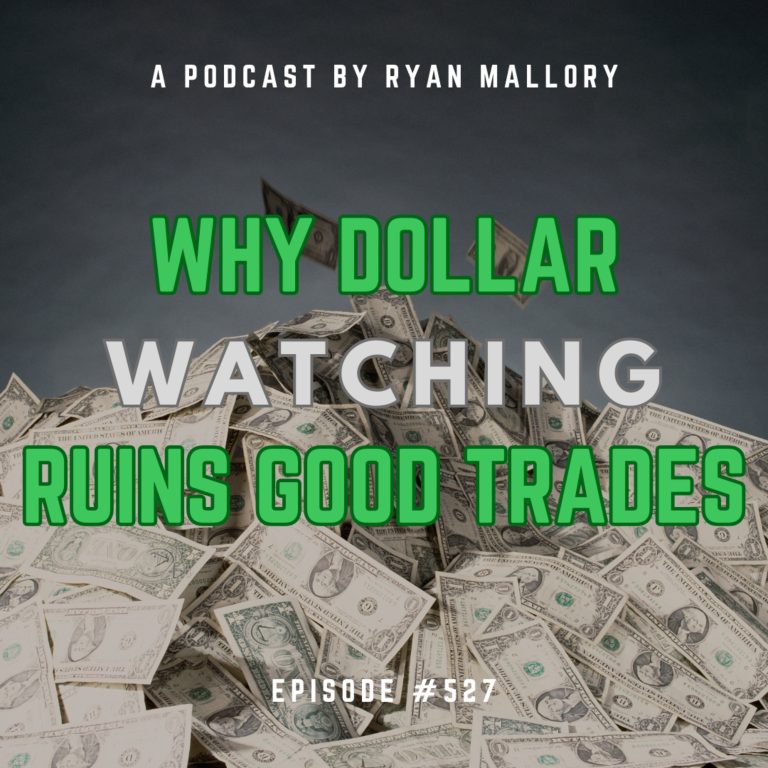
This is going to be a farily informal post, but one thing I’ve been thinking about, and one thing that I believe gets in the way of traders in general is watching the Benjamin’s in their account.
For me personally, I think watching how much an active position is up or down can really kill your ability to trade successfully.
I know that sounds like it flies in the face of risk management, and keeping losses small, but as I break it down for you it really doesn’t.
As humans, we all hate losing money. They say don’t be emotional about your trading, and while this is possible (the reason why paper-trading is typically so much easier), what is not possible is to be unemotional about your money.
If you think your the exception than take all the cash that and valuable assets that you have have and flush it down the toilet….
I’ll bet you’ll be emotional about it. Probably fly completely off the hook in the process.
So then, when it comes to your trading, yes you’ll always know based on the current price versus where you got in at, whether you are losing money, but here’s the thing:
Do everything you can not to look at the actually dollar profit or loss of any active position.
Why do I say that? Because when you are up a sizable bit let’s say 10%, but the stock clearly has more room to go, you may get out right then and there simply because you have $2,000, and yes that is a lot of money.
BUT THAT IS YOUR PROBLEM… IT IS A LOT OF MONEY. When I look at the dollars and cents – I’d sell it, because there’s a lot you can do with $2,000.
As a trader, don’t get caught up with the money made on the trade, that causes you to short cut stop-losses that shouldn’t be cut short, and ruin your chances at realizing the full potential of a big money gainer as well.
There’s an old song that you’ve probably heard of by Kenny Rogers entitled “The Gambler” (one of my favorites by the way) and there is a line in there about a guy giving poker advice to a youngin’ and he says “You never count your money, when you’re sitting at the table, there will be time enough to count them, when the dealing is done” (and be impressed because I know those lyrics by heart).
Honestly, you couldn’t have written these words better than what this guy did. They are spot on, and what you should take from this post is wait, at the very least, until your trade is done and over with, to count your gains (or losses) on a particular trade, and preferrably after the market closes as well (you can make irrational trades to try to get back to break even, or make careless trades after being up to much).
But do this, focus each trade on your basis for trading, your chart, your technical analysis, manage based on the chart you’re trading off of, and the risk parameters it dictates.
When the chart says move you’re stop up, you move it up, not because you’re afraid of losing a few bucks. When the stock says close out the trade, and you’re target has been reached… DO IT… but not because you’re comfortable with the money made.
And of course… here’s good ole’ Kenny and his epic hit: “The Gambler”


Welcome to Swing Trading the Stock Market Podcast!
I want you to become a better trader, and you know what? You absolutely can!
Commit these three rules to memory and to your trading:
#1: Manage the RISK ALWAYS!
#2: Keep the Losses Small
#3: Do #1 & #2 and the profits will take care of themselves.
That’s right, successful swing-trading is about managing the risk, and with Swing Trading the Stock Market podcast, I encourage you to email me (ryan@shareplanner.com) your questions, and there’s a good chance I’ll make a future podcast out of your stock market related question.
Watching the dollars rise and fall in your trading account can turn a well-planned swing trade into an emotional, deeply personal decision. In this episode, I explain why focusing on price action, percentage returns, and R-multiples can help you avoid cutting winners early, holding losers too long, and abandoning your trading plan.
Be sure to check out my Swing-Trading offering through SharePlanner that goes hand-in-hand with my podcast, offering all of the research, charts and technical analysis on the stock market and individual stocks, not to mention my personal watch-lists, reviews and regular updates on the most popular stocks, including the all-important big tech stocks. Check it out now at: https://www.shareplanner.com/premium-plans
📈 START SWING-TRADING WITH ME! 📈
Click here to subscribe: https://shareplanner.com/tradingblock
— — — — — — — — —
💻 STOCK MARKET TRAINING COURSES 💻
Click here for all of my training courses: https://www.shareplanner.com/trading-academy
– The A-Z of the Self-Made Trader –https://www.shareplanner.com/the-a-z-of-the-self-made-trader
– The Winning Watch-List — https://www.shareplanner.com/winning-watchlist
– Patterns to Profits — https://www.shareplanner.com/patterns-to-profits
– Get 1-on-1 Coaching — https://www.shareplanner.com/coaching
— — — — — — — — —
❤️ SUBSCRIBE TO MY YOUTUBE CHANNEL 📺
Click here to subscribe: https://www.youtube.com/shareplanner?sub_confirmation=1
🎧 LISTEN TO MY PODCAST 🎵
Click here to listen to my podcast: https://open.spotify.com/show/5Nn7MhTB9HJSyQ0C6bMKXI
— — — — — — — — —
💰 FREE RESOURCES 💰
— — — — — — — — —
🛠 TOOLS OF THE TRADE 🛠
Software I use (TC2000): https://bit.ly/2HBdnBm
— — — — — — — — —
📱 FOLLOW SHAREPLANNER ON SOCIAL MEDIA 📱
*Disclaimer: Ryan Mallory is not a financial adviser and this podcast is for entertainment purposes only. Consult your financial adviser before making any decisions.
You Might Like

South Korea: The Hidden Driver of US Tech Volatility
Stop Trying to Hit Home Runs: Start Trading Within Your Means
How to Trade Breakouts Without Getting Trapped