
Episode Overview
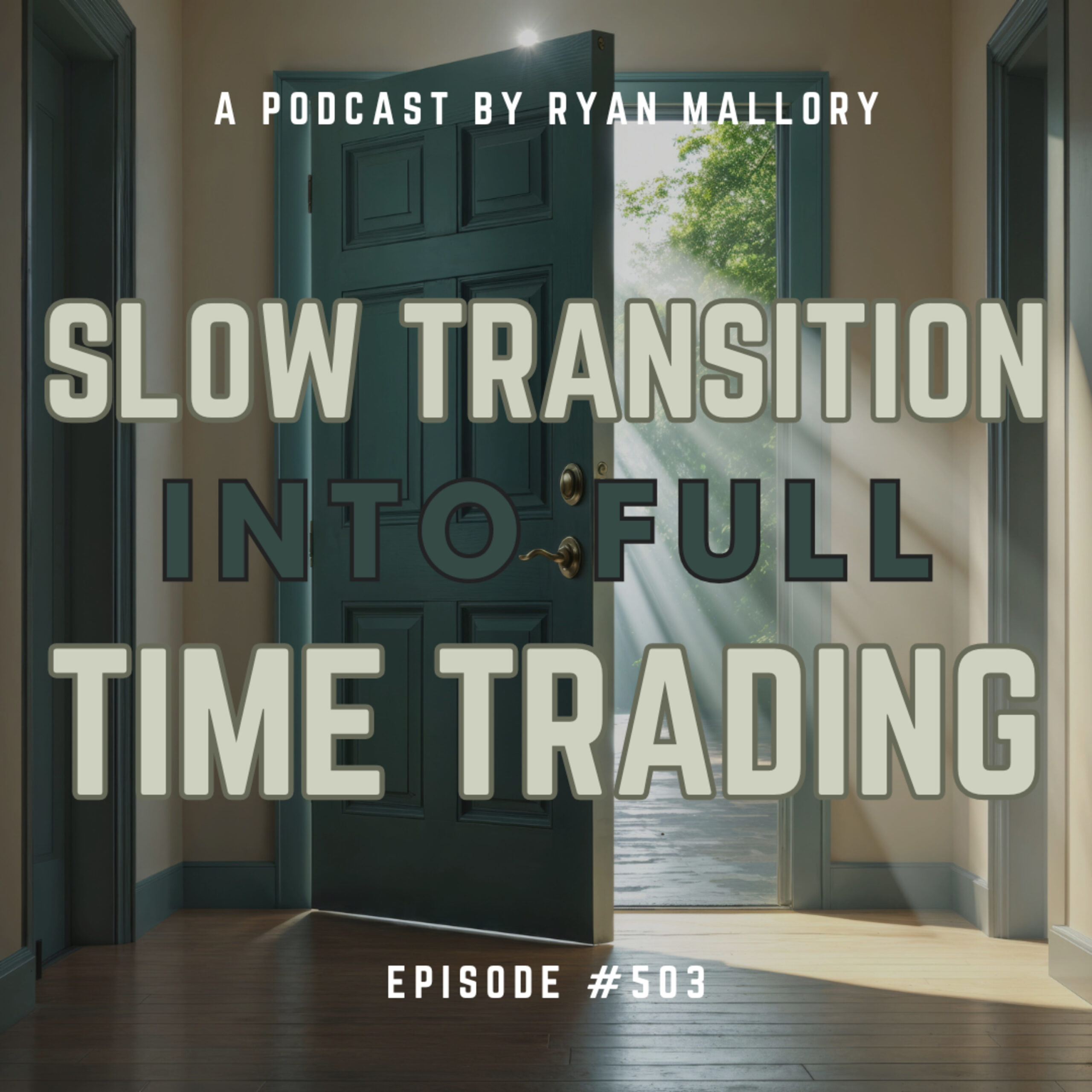
How should one go from their regular 9-5 job into full-time trading? As a swing trader, we don’t have to necessarily be full-time, and instead we can combine our trading into a lifestyle that allows us to maximize our time and earning ability.
Available on: Apple Podcasts | Spotify | Amazon | YouTube
Episode Highlights & Timestamps
- [0:00] What It Really Takes to Go Full Time as a Trader
Ryan breaks down the reality of transitioning from part time trading to a full time career, emphasizing why a measured, deliberate approach is essential for long term success. - [0:24] The Danger of Overconfidence in a Bubble Market
A reminder that bull markets often cause traders to overestimate their skill, leading many to quit their jobs prematurely without a proven system or track record. - [1:09] Uncle Jimmy’s 5 Year Plan
Ryan shares an email from a plumber-turned-trader who is taking a disciplined five year approach toward becoming a full time trader. - [2:58] Why Conviction Can Hurt Traders
Ryan explains why emotional conviction about market direction is dangerous and why the only conviction traders should embrace is proper risk management. - [10:43] Why Side Hustles Make Trading Easier
Ryan highlights how maintaining additional income streams removes emotional pressure from trading and leads to better decisions and less stress.
Key Takeaways from This Episode:
- A Slow Transition Works Best: Gradually moving into full time trading provides the experience needed to survive different market environments.
- Risk Management Is Your Only Conviction: Strong beliefs about market direction can destroy traders, while disciplined risk control keeps them alive.
- Multiple Income Streams Reduce Stress: Having another source of income prevents emotional decision making when trades move against you.
- Experience All Market Seasons: Before going full time, traders should endure bull, bear, and sideways markets to understand how each affects performance.
- Avoid Personal Pressures in Trading: Bills, family obligations, and financial stress cannot influence trade decisions, so structure your life to prevent that pressure.
Resources & Links Mentioned:
- Swing Trading the Stock Market – Daily market analysis, trade setups, and insights by Ryan Mallory.
- Join the SharePlanner Trading Block – Get real-time trade alerts and community support.

Take the Next Step:
✅ Stay Connected: Subscribe to Ryan’s newsletter to get free access to Ryan’s Swing Trading Resource Library, along with receiving actionable swing trading strategies and risk management tips delivered straight to your inbox.
📈 Level Up Your Trading: Ready for structured training? Enroll in Ryan’s Swing Trading Mastery Course, The Self-Made Trader, and get the complete trading course, from the foundational elements of trading to advanced setups and profitable strategies.
📲 Join the Trading Community: Sign up for SharePlanner’s Trading Block to become part of Ryan’s swing-trading community, which includes all of Ryan’s real-time swing trades and live market analysis.
Full Episode Transcript
Click here to read the full transcript
0:00
Hey everybody, this is Ryan Mallory with shareplanner.com. Swing Trading the Stock Market in today’s episode promises to be a good one. We are going to talk about making that transition into a more permanent reality when it comes to trading. That’s making it full time rather than just a part time endeavor and some of the tips and tricks that come along going into that slow transition into full time trading.
0:24
And I emphasize slow because one of the worst things that you can do and you’re going to start seeing a lot of that if it hasn’t already begun already where people are quitting their jobs now I’d become full time traders because in this bull market that we’re in where it seems like it has this relentless bid, people have overestimated their value or their skill set when it comes to trading and there’s going to be a harsh reality for them ahead.
0:46
So instead, I want to focus more on the slow transition into full time trading. And this e-mail today I got from a guy, we’re going to call him Uncle Jimmy because it’s, it’s really after this guy. He, he’s the guy who sprays the bugs around our house because in Florida you got to have somebody constantly spraying bugs or they’ll get into your house.
1:09
And his name is Jimmy. He’s actually a futures trader and he always comes by and wants to talk shop with me, which is cool. But any case, this is in honor of Jimmy. I would call him Uncle Jimmy just because I honestly don’t know why I call him Uncle Jimmy.
1:24
But he’s very country. I think maybe Bayou, not so much Florida country, but definitely country nonetheless. In any case, Jimmy writes. Hi Ryan, my name is Jimmy and I wanted to quickly introduce myself as I get ready to start your A-Z at the self-made Trader course.
1:47
I’ve worked in the plumbing and HVAC industry for 30 years and I’ve owned my own business for the past eighteen of those years. I’m 49 years old and while trading has been good to me, the physical demands has definitely caught up to me over time and because of that I’ve been building a structured 5 year plan to transition and to becoming a full time trader.
2:07
Trading has become something I’m genuinely passionate about and I’m excited to begin your course as the foundation of this next chapter. I plan to gradually phase out of my plumbing business while still using it part time during the transition so I can move into trading responsibly and sustainably.
2:23
I like that. I’m really looking forward to learning from your experience and applying the material the right way from the start. Just wanted to reach out beforehand and say hello and let you know how much I’m looking forward to getting started. Thank you, Jimmy, Well thought out.
2:42
I’m glad that he’s looking at it from a slow transitional frame of mind and that’s what we’re going to tackle here today. We’re in a stock market bubble now. You can like that, you can hate that. For me, I don’t care.
2:58
I don’t care that we’re in a stock market bubble. For me, it’s really just about reacting to what the market does. If you go back to like I think it was November 21st, we haven’t had a huge sell off in the market. I was short at that point. Now I’m long before I would got short, I was long and before I got long, I was short.
3:16
And that’s not because I had AI. Don’t know. If you look at politics, for instance, and I’m not trying to get into the world of politics, but you always hear the term flip flopper and it’s used with a negative connotation. You know, it’s like, oh, he’s flip-flopped on this position all the time.
3:32
Well, and trading, I’m a flip flopper and I don’t flip flop just because I mean, when the market conditions change, I’m going to flip flop. I can be bearish one day and be bullish the next day. I don’t have conviction. I think actually convictions bad, unlike life where when you have morals, you want to have a conviction behind those morals.
3:53
When it comes to trading, I don’t have conviction. What I have conviction about is risk management. But in terms of market direction, I mean, goodness, if you go back to the sell off that we had in late November when NVIDIA reported earnings, NVIDIA was opening higher and it started pulling back and the whole market came down with it.
4:10
I think it was actually November 19th when they reported. So like November 20th probably is when it was. But in any case, huge sell off and it took the whole market down. I mean the candle was massive and you had every reason to be bearish at that point.
4:25
I got short. A lot of people I’m sure got short that day. I mean, it looked like the market was on the verge of falling apart. And really ever since then, the market has been trading higher. It’s only had a couple days where it’s actually traded lower and the days that it sold off hasn’t been by much.
4:43
So the conviction is important. You don’t want to have strong convictions when it comes to the stock market as to market direction or having to stay into a stock ’cause you just have this conviction about this. I mean, you hear about conviction trades or conviction picks. I think you hear about those things on CNBC.
5:00
Those are awful because if the trade isn’t going to work, there’s no point in having a conviction about it, because you can have all the conviction, you can have all the belief in a stock, but the market doesn’t care what your beliefs are. That’s why it’s not good to insert variables like conviction into your trading, because when you do, you’re putting something into the market that the market has no need for, no basis to acknowledge or to care about.
5:26
So any case, we’re in a bubble fueled market right now. Don’t care, but what concerns me about these bubble field markets is that a lot of people have a gross overestimation about how good they are at trading.
5:46
And so this happened duringthe.com bubble. This is probably the most other time in stock market history where it’s very notorious where people are quitting good well paying jobs to become stock traders. And then all of a sudden the market busted and they lost everything.
6:04
They didn’t. They might have had conviction in their picks, but they did not have conviction when it came to risk management. And as a result, they pretty much lost everything and had to go find a job, probably taking a lesser of a job than what they could have had if they had just stayed with their careers that they had before.
6:21
They be thought day trading was right for them. So a lot of people were quitting their jobs to trade and they’re not basing it off of realistic success. They’re trying, they’re not trying to learn the right way. One of the things that I like what Jimmy’s doing here is, is yes, he’s, he’s bought my training course.
6:41
And for those who don’t know, my training course, it’s about 25 hours of video instruction and a lot of of topics going from the very basics of trading to the my more advanced strategies where you learn everything that I know about trading.
6:56
It’s a really, really good course, highly recommended. A lot of people have already bought the course and I’ve gotten really nothing but good feedback on it took me about four years to put together. I, I put, put all the videos together, I edited them. I’ve done it all. So Jimmy’s going through this and I like to, to I, I, I think about when I was graduating from high school and my dad, my mom and my dad, they gave me this card And in the car, I’ll never forget it because it had such a wonderful example of what parenting is about.
7:34
And it showed this guy, he was pulling back the arrow and he was aiming at this bullseye. And he lets go of the arrow and the arrow is going through the air. And in that card, it said, we’ve directed you to the bullseye. Now it’s your job to hit the target.
7:52
And so unlike other people who will say, you know, they’re training courses, you know, ensures success or whatever, that’s not what I’m trying to claim here. And that’s not what Jimmy’s expecting it to do, What I’m trying to do with my courses, I’m trying to aim it, aim you at the bullseye for you to hit it, doing everything I can to set you up for that success.
8:14
And then it’s your job to hit the target. So he’s taking the course, but he’s not just quitting his job because he’s taking the course, nor should he. Because getting to the point to where you can quit your job and become a full time trader, you need to have a track record of 1.
8:33
Being consistent in your decisions. That means over many years you have a track record that shows that you’re not doing things that will blow up your account, that you’re not getting frustrated, revenge trading or doubling down, ignoring stop losses. If you’re doing those things, you’re not ready for trading.
8:50
And what a lot of people will do right now is they will have made, you know, trades and Sofi and hood. They will have bought Palantir and and NVIDIA and Micron and Broadcom and loaded up on just a crazy amount of tech stocks and they’ve done well for themselves.
9:10
But they’re they’re looking at what probably like 6 or 7 trades that they felt for a while. It made good money off of it, didn’t use any kind of risk management, just blessed because of the because of the market and the circumstance of the market, not penalizing them for their lack of risk management.
9:27
And as a result, they don’t count their their, their blessings that that they’re still in the game. Instead, they look at it and say, Hey, I’m ready to trade full time now. And so they quit. And then you get like a.com bubble like burst, which hasn’t happened yet, but pretty sure it’s going to happen at some point.
9:47
I don’t know when, nor does anybody know if they’re telling you that they know they’re lying to you, But when it does happen, they’re not going to be ready for it. For me, I’m not really worried about the bubble busting because I manage my my risk in such a way to where I’m I’m always ready for the worst possible scenario to happen.
10:09
And if that happens, I’ll either be short or I’ll be going into cash. so like the .com bubble. People leaving, leaving pensions, leaving well paying jobs become traders. They think that man, if I could just do this full time, I can make so much more money.
10:25
My job gets really into the way, but I don’t think that you should necessarily leave your job just because you want to be able to trade full time instead. I think especially with the Internet, especially with all the stuff that’s going on with AI, we don’t need to do that stuff.
10:43
And I know it’s kind of like a badge of honor to say I’m a full time trader and I don’t need the income from anything else. But especially when it comes to swing trading, there’s a lot of downtime. You need something to keep yourself busy. Whether it’s I, I, I tell people if I wasn’t doing SharePlanner, which I’m sure you guys probably listening to this know about SharePlanner.
11:06
That’s my website, shareplanner.com. But if I didn’t have that, I’d probably be spending a lot of my day not only doing trading and going through charts and everything. And that does take time, but I’d probably be doing something like woodworking or carpentry or, or something that that I would be able to enjoy and maybe do a little side hustle off of.
11:29
And I think there’s so many ways now with the Internet to be able to do side hustles. And let’s be honest, having a side hustle does make trading a little bit easier if you’re single or if you’re the the sole income winner and your family and let’s say your wife’s at home with the four kids.
11:47
You got car insurance, you got mortgage bills, you’ve got health insurance, you have grocery bills, which we know that’s not going down. I mean, a ton of responsibilities and when you, when it comes to full time trading, all those responsibilities are going to fall on your trades and on your decisions.
12:07
And so when they start going wrong, you’re not going to say to yourself, this trade’s moving against me. I’m going to, you know, do AB and C. No, you’re going to say, this trade’s moving against me. I got to, you know, put food in in little Johnny’s mouth.
12:24
I’ve got to pay my bills. I got to pay the mortgage. I got to pay for college student loans. I’ve got all these other expenses. I can’t afford for this trade not to work out. So then you get out of the trade when you shouldn’t have gone out of the trade, and you watch it go right back up.
12:40
Or you get even more irrational. You start doubling down, saying I can’t afford to lose it. I’m going to lower my cost basis by doubling down. And you lose far more, twice as much, three times as much because you start Norton stop losses when you start doubling down as well because you can’t take that big of a loss.
12:58
And so the pressure of trading off will fall on your shoulders with all of your personal responsibilities. And it goes back to what I said in the beginning of this episode is that you can’t put your own personal issues, inject variables into the market that doesn’t belong because it has nothing to do with stock trading.
13:22
And that’s why I say things like position sizing is so important is because when, if you’re trading with too big of of dollar amounts, you will start injecting variables that shouldn’t be injected into the market in your trading and thinking as it pertains to risk management and taking partial profits, raising stop losses, when to get in, when to get out, whether you should be getting in, whether you should be getting out.
13:48
And you don’t want that to be the case. So having a side hustle, having something to work with is actually good. So with Jimmy here, he has a plumbing business. And so he’s looking at getting out of the plumbing business over the next five years, hopefully in the next 5 years. 1, he sees a bubble burst.
14:09
He sees a strong sideways market. He sees a bear market that can be sustained for a little while, not just like the four or five weeks that we saw during March and April of this year, but one that might be more like 2022. And so you look at the last five years, what have we seen?
14:28
You know, going back to 2020, we saw the whole COVID craziness. We saw the bull run that came out of that. We then we saw the prolonged sell off that lasted about a year, 10 months or so back in 2022. We’ve seen quantitative easing, we’ve seen quantitative tapering.
14:46
We’ve seen a lot of that stuff that’s taken hold on traders. And then of course we’ve had the bull, the market run that’s you know gone from 23 to 24 into 25. And then of course you had that, that Liberation Day tariff sell off in 20 early 2025 that have impacted a lot of things.
15:06
So you’ve seen a lot over the last five years. One thing you really haven’t seen as much sideways, sideways trading. I would probably say 2015 was really one of the last times we saw a very strong sideways market.
15:33
And those are important because the sideways markets, if you’re practicing and managing risk regularly, the sideways markets are the most threatening because they are the ones that give you the most opportunity to get turned out of your positions the most. And so you really want to be able to go through a sideways market that can really test your patience. And when you’re in a sideways market, the the the opportunities are not going to be that great. You take what we’ve seen since about the Wednesday before Thanksgiving and you know the the five or six days that’s followed, it’s been a very sideways market. So you’ve had been really choosy with what you’re getting into because you’re not getting a lot of help out at the market. And so you’re looking for opportunities that are ready to bounce off a key support levels and and stocks that will be able to run without necessarily the help of the overall market.
16:12
So in sideways markets can be very difficult. I think sideways markets are much more difficult than a bear market or a bull market. I, if it’s me, I usually consider the bear markets probably the easiest just because volatility is working so well in your favor when you’re short and you can do far more with far fewer positions. It’s, it’s actually incredible most of the time, but the sideways markets is really what gets you in trouble. So there there’s seasons and trading, you know, like what I was just talking about with the bullish markets, bearish markets, sideways markets and the market doesn’t necessarily repeat itself, but kind of like history.
16:50
It rhymes. So kind of with right now with the AI movement rhymes a lot with the.com. Is it just like it? No, I the AI bubble is like 17 times bigger than the NASDAQ bubble. It’s it’s quite scary. But this five year plan that Jimmy’s talking about here, if I’m him, I don’t necessarily try to get rid of the business.
17:14
OK, I get that. I’m 45. I’m feeling soreness a lot more these days. I, I changed this kitchen sink out or not the sink, but the faucet. My wife wanted the silver. She didn’t like the silver faucet anymore, wanted the black 1. So I swapped that out and had to get in like contort my body and all sorts of different ways to be able to get that, that thing unscrewed and out of there and, and install the black faucet. I wake up this morning, I can’t even hardly move my neck. It’s hurting so bad.
17:47
So I get with Jimmy being a plumber, not necessarily wanting to continue down that path for many more years. I, it’s, it’s rough on the body now. What I would start trying to think about is how can I hand over the physical labor? Maybe it’s to a kid, you know, in the family, or maybe it’s to a close friend.
18:05
And some way that you can still be over it being able to trade. Maybe you’re doing more of the office and administrative work while other people are out in the fields. You’re still able to make a little bit of income from the business. And the other thing too is over the next five years, as you’re looking to do less and less physical or manual labor, look at what comes about with in the AI space.
18:28
There’s, there’s going to be a lot of changes in there, some good, some bad, but there may be stuff that helps you run your business and be able to do both the plumbing and do the part time trading or full time trading more at, at the same time.
18:44
And, and I actually think that’s really good at a lot of people, like I said earlier, they think it’s a badge of honor that they could say that they’re a full time trader. I have SharePlanner. I make money off of SharePlanner. Obviously, like with the training courses or with the trading block, I make money off of that. But could I do a full time trading?
19:02
Absolutely. And do nothing else? Sure. Would it be more stressful? Absolutely. But I don’t need to. And, and as a swing trader, there’s a lot of dull moments. I would need something else to do with my time because it would get kind of boring. That’s why I love the trading block because I get to trade with the people every single day from around the world.
19:18
It’s awesome. The the other thing though, is not having to have that pressure. You know, for me as well, my wife works, you know, and so I don’t need to necessarily tell her. He’s like, you know, look, I got to be a full time trader. So you can’t work, you know, no, I like my wife working.
19:35
You know, it’s, it’s different streams of income. Your wife works, I work, I trade, it’s great. So the the more streams of income that you can have with your trading, the less pressure it’s going to put on you, especially if you’re giving yourself five years after that five years is up, you’re going to have been used to making a regular income from your plumbing and then all of a sudden that’s going to be gone.
19:58
It’s going to feel a whole lot different. And so be careful. I think you’re doing everything right. I think that you’re in in the right place, taking the training course, the self-made trader, but. Let yourself see the seasons of trading to be able to experience the sideways markets, the bull markets, the bear markets.
20:19
And and obviously you’re you’re experiencing the bull market right now, but it’s good to see what it’s like when you get a heavy bear market as well. If you enjoyed this podcast episode, and I hope that you did, make sure to leave me a five star review on whatever podcast platform that you’re listening to me on.
20:34
Plus, make sure to like and subscribe to my YouTube channel. Yes, you could watch the videos of my podcasts on YouTube if you’re not watching it right now, and make sure to check out the self-made Trader at shareplanner.com. You can go there by clicking on Trading Academy and you’ll see it there for purchase.
20:53
Also, send me your questions, your concerns, the things that trouble you. I want to hear about them ryan@shareplanner.com and I’ll make a podcast episode out of them. Remember Jesus Christ, He’s the way, the truth and the life. Nobody comes to the Father except through him.
21:10
Thank you and God bless. Thanks for listening to my podcast, Swing Trading the Stock Market. I’d like to encourage you to join me in the SharePlanner Trading Block where I navigate the stock market each day with traders from around the world. With your membership, you will get a seven day trial and access to my trading room including alerts via text, e-mail and WhatsApp.
21:30
So go ahead, sign up by going to shareplanner.com/trading Block. That’s www.shareplanner.com/trading-block and follow me on SharePlanners Twitter, Instagram and Facebook where I provide unique market and trading information every day. If you have any questions, please feel free to e-mail me at ryan@shareplanner.com.
21:50
All the best to you and I look forward to trading with you soon.
Enjoy this episode? Please leave a 5-star review and share your feedback! It helps others find the podcast and enables Ryan to produce more content that benefits the trading community.
Have a question or story to share? Email Ryan and your experience could be featured in an upcoming episode!
Become part of the Trading Block and get my trades, and learn how I manage them for consistent profits. With your subscription you will get my real-time trade setups via Discord and email, as well as become part of an incredibly helpful and knowledgeable community of traders to grow and learn with. If you’re not sure it is for you, don’t worry, because you get a Free 7-Day Trial. So Sign Up Today!

Welcome to Swing Trading the Stock Market Podcast!
I want you to become a better trader, and you know what? You absolutely can!
Commit these three rules to memory and to your trading:
#1: Manage the RISK ALWAYS!
#2: Keep the Losses Small
#3: Do #1 & #2 and the profits will take care of themselves.
That’s right, successful swing-trading is about managing the risk, and with Swing Trading the Stock Market podcast, I encourage you to email me (ryan@shareplanner.com) your questions, and there’s a good chance I’ll make a future podcast out of your stock market related question.
Passive investing can be a great source of funds for retirement and for building a nest egg. In this podcast episode, a husband and wife asks Ryan's thoughts on building a SPY position on just $2/day. While consistent building a nest egg, is great, the timing and strategy in doing so is just as important.
Be sure to check out my Swing-Trading offering through SharePlanner that goes hand-in-hand with my podcast, offering all of the research, charts and technical analysis on the stock market and individual stocks, not to mention my personal watch-lists, reviews and regular updates on the most popular stocks, including the all-important big tech stocks. Check it out now at: https://www.shareplanner.com/premium-plans
📈 START SWING-TRADING WITH ME! 📈
Click here to subscribe: https://shareplanner.com/tradingblock
— — — — — — — — —
💻 STOCK MARKET TRAINING COURSES 💻
Click here for all of my training courses: https://www.shareplanner.com/trading-academy
– The A-Z of the Self-Made Trader –https://www.shareplanner.com/the-a-z-of-the-self-made-trader
– The Winning Watch-List — https://www.shareplanner.com/winning-watchlist
– Patterns to Profits — https://www.shareplanner.com/patterns-to-profits
– Get 1-on-1 Coaching — https://www.shareplanner.com/coaching
— — — — — — — — —
❤️ SUBSCRIBE TO MY YOUTUBE CHANNEL 📺
Click here to subscribe: https://www.youtube.com/shareplanner?sub_confirmation=1
🎧 LISTEN TO MY PODCAST 🎵
Click here to listen to my podcast: https://open.spotify.com/show/5Nn7MhTB9HJSyQ0C6bMKXI
— — — — — — — — —
💰 FREE RESOURCES 💰
— — — — — — — — —
🛠 TOOLS OF THE TRADE 🛠
Software I use (TC2000): https://bit.ly/2HBdnBm
— — — — — — — — —
📱 FOLLOW SHAREPLANNER ON SOCIAL MEDIA 📱
*Disclaimer: Ryan Mallory is not a financial adviser and this podcast is for entertainment purposes only. Consult your financial adviser before making any decisions.
You Might Like
How to Trade Breakouts Without Getting Trapped

Managing Headline Risk: How to Survive the News Cycle Without Losing Your Mind

What to Do After a Winning Trade