
Episode Overview
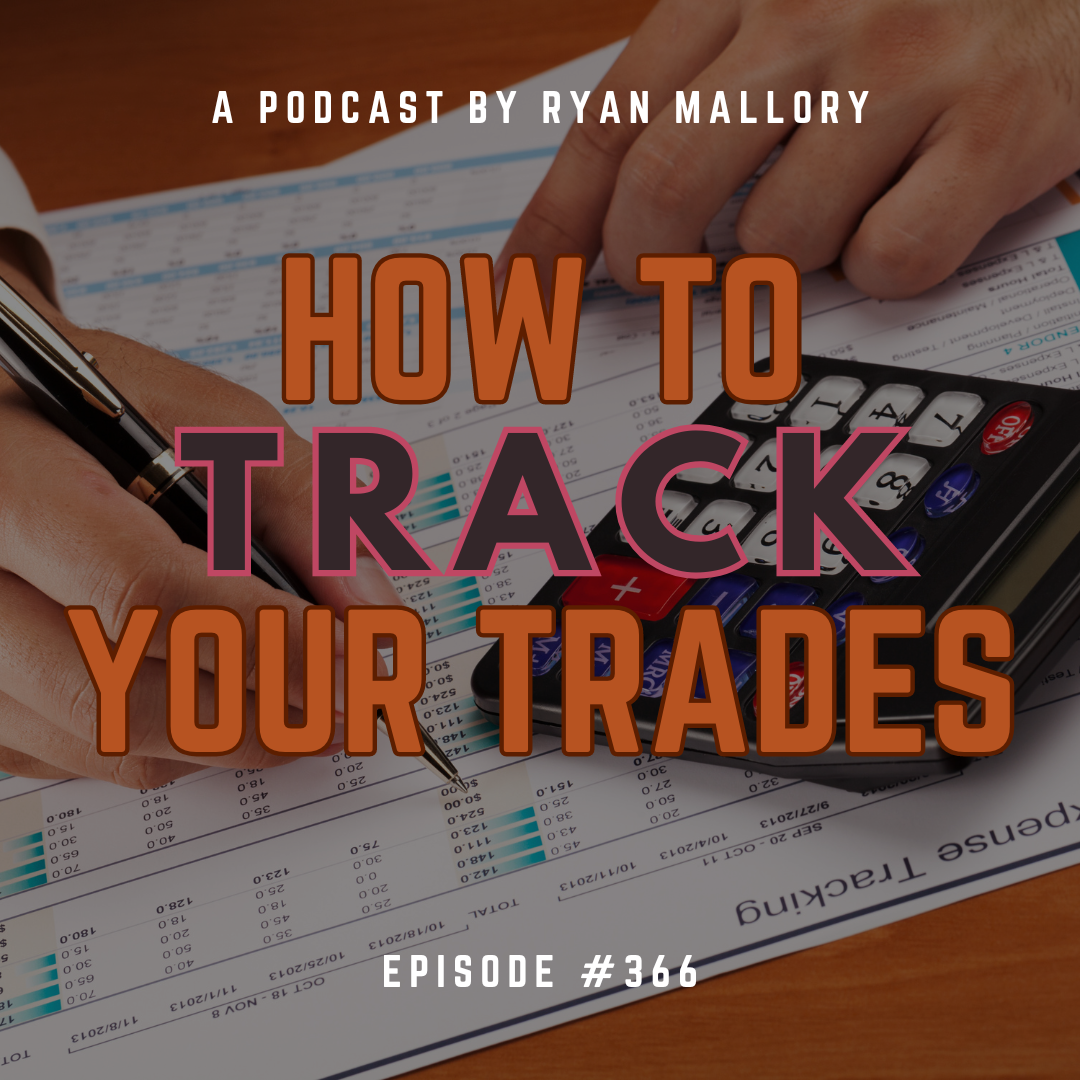
What are the key elements of journaling your trades and keeping track of them? In this podcast episode, Ryan discusses the particulars for journaling and some of the unique aspects of his methods that will help you better understand your short-comings as a trader.
Available on: Apple Podcasts | Spotify | Amazon | YouTube
Episode Highlights & Timestamps
- [0:07] Why Trade Journaling Matters
Ryan opens the episode by answering a listener’s question about what to include in a trading journal and why it’s so important. - [1:37] Must-Have Trade Data
Key details to track include entry/exit dates, position size, direction, stop-loss, and target levels for evaluating performance. - [5:23] The Importance of Context
Tracking life events and emotional states during trading helps explain performance patterns and improve future decisions. - [6:55] Spotting Winning and Losing Streaks
Ryan discusses how journaling reveals patterns like post-winning streak overconfidence or desperation trades after losses. - [10:06] Beyond the Numbers
Ryan explains the importance of saving annotated charts, logging trade rationale, and regularly reviewing your journal.
Key Takeaways from This Episode:
- Capture Key Trade Metrics: Track basics like entry and exit, size, direction, stop-loss, and profit targets to understand trade outcomes.
- Log the “Why”: Document your rationale for entering and exiting trades, as well as the strategy or setup you used.
- Track Emotional States: Your mood, stress level, or personal challenges at the time can impact your trading decisions and should be noted.
- Review Regularly: Analyze your journal at least quarterly to identify behavioral trends and adjust your strategy accordingly.
- Use Tools That Work for You: Whether it’s Excel, physical notebooks, or GoodNotes, use whatever tool keeps you consistent and organized.
Resources & Links Mentioned:
- Swing Trading the Stock Market – Daily market analysis, trade setups, and insights by Ryan Mallory.
- Join the SharePlanner Trading Block – Get real-time trade alerts and community support.

Take the Next Step:
✅ Stay Connected: Subscribe to Ryan’s newsletter to get free access to Ryan’s Swing Trading Resource Library, along with receiving actionable swing trading strategies and risk management tips delivered straight to your inbox.
📈 Level Up Your Trading: Ready for structured training? Enroll in Ryan’s Swing Trading Mastery Course, The Self-Made Trader, and get the complete trading course, from the foundational elements of trading to advanced setups and profitable strategies.
📲 Join the Trading Community: Sign up for SharePlanner’s Trading Block to become part of Ryan’s swing-trading community, which includes all of Ryan’s real-time swing trades and live market analysis.
Full Episode Transcript
Click here to read the full transcript
0:07
Hey, I’m Ryan Mallory and this is my Swing Trading the Stock Market podcast. I’m here to teach you how to trade in a complex, everchanging world of finance. Learn what it means to trade profitably and consistently managing risk, avoiding the pitfalls of trading, and most importantly, to let those winners run wild.
0:25
You can succeed at the stock market, and I’m ready to show you how. Hey everybody, this is Ryan Mallory with Swing Trading the Stock Market. And today’s episode we’re going to talk about tracking your trades, journaling your trades, trying to figure out the best way to record what’s going on with your trading.
0:43
So that when you go back in time and you want to look at what what happened, you’re able to do so and do it in the most succinct and beneficial of ways. So that’s what we’re going to talk about. I got a e-mail from somebody the other day who subscribes to swingtradingthestockmarket.com and he said Ryan, what are the essentials of tracking your trades and journaling your trades?
1:05
Sincerely, Buford. Now his name wasn’t actually Buford. I give people a Florida redneck name just to conceal their identity so that if you feel the need to write the show, you don’t have to worry about me divulging your personal information. But good to the point e-mail from Buford.
1:21
I do like though when you guys tell me your life stories and explain things to me and and tell me what you’re going through as a trader, the frustration. So don’t shy away from writing me some longer emails telling me those things you can do. So by writing the show at ryan@shareplanner.com.
1:37
Now there’s some definite key elements to your trading journal that you should have and there and some of it’s obvious, like the date of the trade, right? Entry where you got in at the day that it was closed on. That would be your exit day. What did you trade? Was it stocks?
1:52
Was it forex? Was it commodities? A lot of times, you know, you’re either all forex or all stocks or all options or all futures. So you don’t necessarily have to say you know, have a column that says stocks or options. But if you’re trading a whole bunch of different ones, let’s say in a given day you might trade fuse options and you know equities, you might want to differentiate between the two.
2:13
And sometimes it the symbol itself will differentiate it. Like if you’re trading the S&P 500 contracts, you know that would be a yes. Or if it’s the NASDAQ contracts in Q versus if you’re trading the S&P 500 ETF that would be SPY or the NASDAQ one that would be QQQ.
2:30
And of course the position size, we talk a lot about position sizes. So you can do it one a couple ways. You can do the number of shares or you can do the amount of cash that you put down on the trade and honestly you can do either both or not even included it at all. If it’s like a standard you’re putting $5000 on every trade, then you know you don’t have really any reason to assume otherwise unless you change it.
2:50
And of course you want to make sure that you’re saying whether or not you’re long or short on the trade. That’s also important and so the dates for when you get in, when you get out, the type of trades, position, size, if you know it varies from trade to trade, and of course direction. The next thing I would say is your stop loss and and your target price.
3:09
And the reason for that is it helps you to see what the reward risk ratio is. And it doesn’t even hurt either if you have a column that can automatically calculate the reward risk ratio in doing that. Because here’s the thing, when you go through some tough markets, go through a tough year of mark trading or or something else, something that makes you have to go back and look at your trading journal and see, Okay, where did I go wrong?
3:30
What’s messing up here? It helps to be able to see what was the stop loss. Maybe all of your losses are coming from having too tight a stop, losses that if you would have had a little bit larger or a little bit wider of a stop loss, you would have taken on so many losing trades. That’s a helpful take.
3:46
Also knowing where you’re target price was originally at and then where you took profits at along the way. Did the stock ultimately go up to that target price, but you were just not willing to trust the trade enough to be able to let it play out? That’s an important part too. And some people would say, oh, commissions and stuff like that.
4:02
I don’t know if that’s all that necessary for me. I’m trading journals. It doesn’t have to add up exactly to the penny like a lot of people want to make sure that they’re including all those, like SEC fees and all that stuff. I don’t think you have to include all that stuff. I think that’s just a little bit tasking. What you’re really wanting to see is the history of traits.
4:19
How did things turn out? It’s not like a back in the old days, right? I remember growing up, every month I would be watching TV, I’d be sitting, not every month I’d be watching TV. But you know, once a month when I was watching, TVI would be always laying on the floor watching TV. Because as kid you got to be as close as possible to the screen, right?
4:36
And I would. I look behind me and there was always my mom sitting there on the couch next to a lamp and she was trying to balance the checkbook and just absolutely drove herself nuts because at times she couldn’t figure out what was missing from the checkbook. Why was the account statements not matching up with what she had in her checkbook?
4:52
And remember, most people paid with checks back in those days and just we’re talking like 80s here, right? And so it frustrated her a lot and she would have to go back and figure out why is there a shortfall? And sometimes it came down to somebody not cashing the check, right, that they ever in a check out to maybe the grocery store hadn’t cashed their checks yet.
5:08
And so but likewise, you don’t want to be going through that same kind of frustration trying to get your trading account to bounce perfectly in your trading journal. It’s just there’s always going to be something weird. Maybe it’s a dividend that hasn’t been posted to your account yet or something else that that’s really not what a trading journal is about.
5:23
A trading journal is really a log of your trades and where you did things right, where you did things wrong, where you can discover trends about yourself and things that you might have done for better or for worse. Sometimes too, if you’re going through times, it may not hurt to put like some brackets around trades and just be able to notate on there that, hey, I was going through a very difficult time here.
5:43
Maybe it was I was getting cancer treatments or I was going through the a divorce or death of a parent or maybe I was working a lot of overtime and I wasn’t able to spend as much time focused on the screen, the trading screen. And the reason why that’s important is because in doing that, it gives you a little bit more of a context of what those trades were placed in.
6:03
I remember heard me talk about this in other episodes, but I remember when I was going through a divorce, I was actually trading stocks in the courtroom. And those weren’t probably my best trades. And it’s good to know, you know, when I look back at my trades, I was like okay, you know, that was going through a divorce at that time. That’s kind of helpful to know okay.
6:20
That’s why I had, you know, so many bad trades during that period was because I was going through divorce. And so it helps to have that context. And sometimes you can even peel another layer back and look more at like, what was the mood. You know, you find yourself placing a lot of trades when you’re feeling anxious or when you’re feeling desperate or when you’re just feeling frustrated with the overmarket.
6:38
Maybe your longterm trades are doing bad. And so you’re trying to trade scalp day trade, swing trade or whatever to try and make up for those losses that you’re taking in your longterm account. And so sometimes that mood, that desperation needs to be highlighted. And one of the things, too, that I like to look back on on my trading journal is the streaks.
6:55
Sometimes you might find that you get like 10 winning trades in a row and then you have a like 10 losing trades. Why is that? What’s happening? Perhaps after like 10 winning trades, you’re starting to notice that you’re getting a little cocky. You’re thinking that I’m really good at this, I’m invincible. And as a result, you start taking on bigger position sizes or you start taking on trades you wouldn’t normally take on because you just think every one of them’s going to be right.
7:11
And then all of a sudden you find yourself on A10 trade losing streaks. We want to be aware of those streaks that we see popping up. You know, it’s like we’re constantly seeing 10 trades right and 10 trades wrong, 10 trades right, 10 trades wrong. Try to figure out what’s going on with those 10 trades that were right versus the 10 trades were wrong. What was the differences between those?
7:30
It could be just that you were in a choppy market to where when the market was popping in that choppiness, everything was going right. But then you kept trying to trade the same way when the market was pulling back. And those are things that you want to be able to recognize as well because it can help you mitigate some of those losses in the future.
7:50
And one thing that will really help is signing up for swingtradingthestockmarket.com. Yes. Did you think you were going to get out of this podcast episode without me talking about it? swingtradingthestockmarket.com. It’s the patron website that goes alongside of this podcast and it’s really good. It’s going to give you all my stock market research each and every day with it.
8:08
You’re going to be getting my bullish and bearish watch list each week. You’re also going to be getting my daily list of setups that I’m following. Plus, you’re going to be getting different trading videos, updates on all the big tech stocks, updates on the S&P 500, the NASDAQ, the Russell 2000, a really, really cool feature that goes with this podcast.
8:28
You enjoy the podcast. I’m pretty sure you’ll like that as well. Now, what are some of the other things that we could look at here? Obviously, we want to know what the gross profit loss was on the trade. We obviously want to see what the percentage profit or loss was. We want to be able to see where you were taking profits at. Maybe you were taking it in thirds.
8:44
So you want to be able to outline all those and then you also want to see what the actual dollar amounts were of those trades. Some people like to talk about the ROI for equities, it’s it’s really the capital that you put down on the trade for things like options and futures that could be a lot more different. So if you’re doing options and futures, yeah, it doesn’t hurt to see what the return on investment was, the ROI, Equities, I mean pretty much whatever your net net game was from a percentage standpoint is your ROI.
9:09
And I find it that it’s really good to also track the overall risk reward that you are getting for all of your trades combined. But also important, and maybe just as important, is what’s the maximum drawdown that you’re experiencing? Are you going down 20% and going up 30% or going down 20% and only going up 20%?
9:27
You’re only going up by as much as the previous drawdown. You’re actually losing money. For instance, if you fall 50% in your portfolio from $100 in your account down to $50.00 in your account. Yes, I’m trying to keep it simple here. And then you rally 50% on your next trade, but you’re only at $25.00, so you’re not doing that good.
9:46
Take it even more extreme, if you lose 90%, you go from 100 down to $10.00, but then you rally the portfolio 90%, you’re only you’re still down 81%. So you want to make sure that you understand the drawdowns and what kind of rally that takes place before your next drawdown. And if you’re only hitting lower highs on the peaks on your next rally, that’s not a good sign.
10:06
And too, I would say that if there’s like some lines or some space for you to to talk about the trade a little bit, talking about like the rationale behind why you believe that this was a good trade in the 1st place, explaining that trade, maybe even keeping a log of the charts, you know, having the charts saved on the computer that you can reference, you know, in your book.
10:24
Or maybe it’s on an Excel and you can hyperlink to somewhere on your hard drive. I don’t. I’ve never tried doing that before. I would assume you can’t do that though. Somehow the strategy used for that trade. Like what? What were you doing? Were you trying to play bounce plays? Were you trying to play breakouts? Were you trying to play bounces off of extreme oversold conditions in the general market?
10:43
Were you using a top down trading approach? Like I said, the psychological factors, I think those are also very important and should be included. And then at the end we discussed why you got into the trade, but also why did you get out of the trade? What went wrong on the trade? Why did you get out and was it for the right reasons and what areas could you approve it?
11:02
Now a lot of people will try to make adjustments to their trading style from trade to trade to trade. I don’t think that’s necessarily the best thing in the world. I think what you want to do is be able to see trends and your trading behavior and make adjustments off of those bad trends that you’re spotting. And again, one of the biggest things that I’m a fan of is using charts.
11:21
Charts is the absolute way that I mark up my trades. I can go back and look at all my trades through charts and see where did I want to put the stop loss at? Why did I put it there? What was the logic behind my trade? How often should you go through your trades? I would say at least once a year.
11:38
I think it’s better if you go like once a month or once a quarter, but nothing else. At least look through it once a year, and sometimes you can make a lot of bad trades within a year’s period and before it’s too late. You might want to consider looking at it from a quarterly or a monthly standpoint.
11:54
And there’s there’s software out there, there’s stuff that you can use. Personally, for me, I just save a lot of my stuff on my computer using Excel spreadsheets, keeping the charts and folders. Maybe that’s just maybe an old school. I also like to write a lot in books. There’s also another really cool thing that you can download that’s really great if you just don’t want tons and tons of books.
12:13
I used to have hard copy books all the time, but then I switched over to Good Notes. Good Notes is pretty good. You can create your own formats. You can create your own templates. Really awesome software. I think it’s like 7 bucks in the Apple store. You really can’t beat it.
12:29
Amazing stuff. I use it every day. You cannot be good notes. So no, no, that’s not a paid plug or anything like that. I’m just telling you I like good notes a lot. So what I would want to tell you here in conclusion is that it’s important to implement a way to track your trades, to track why you got into the trade, how you got into the trade, and how did the trade turn out for you and what you would do differently.
12:52
The psychological factors behind those trades, the streaks, the moods, the life experiences that you might be going through at that time. And the more detailed you are, the better that journal’s going to be. And you also have to be consistent about it every day. You should be updating those journals, so get to it.
13:10
And if you enjoyed this podcast episode, make sure to leave a 5 star review wherever you listen to this podcast at, whether it’s Apple or Amazon or Google or iHeartRadio. Somebody got on to me the other day. Gotta talk about iHeartRadio. It’s available there and it’s true. It is there. I always forget about iHeartRadio, but you can listen to it pretty much anywhere that podcasts are available.
13:29
I think it’s all of the platform and make sure to keep writing me ryan@shareplanner.com and check out swingtradingthestockmarket.com. Thank you and God bless.
13:50
Thanks for listening to my podcast Swing Trading the Stock Market. I’d like to encourage you to join me in the SharePlanner trading block where I navigate the stock market each day with traders from around the world. With your membership you will get a seven day trial and access to my trading room including alerts via text, e-mail and WhatsApp. So go ahead, sign up by going to shareplanner.com/trading Block, that’s www.shareplanner.com/trading-block and follow me on SharePlanners, Twitter, Instagram and Facebook where I provide unique market and trading information every day.
14:11
If you have any questions, please feel free to e-mail me at ryan@shareplanner.com. All the best to you and I look forward to trading with you soon.
Enjoy this episode? Please leave a 5-star review and share your feedback! It helps others find the podcast and enables Ryan to produce more content that benefits the trading community.
Have a question or story to share? Email Ryan and your experience could be featured in an upcoming episode!
Become part of the Trading Block and get my trades, and learn how I manage them for consistent profits. With your subscription you will get my real-time trade setups via Discord and email, as well as become part of an incredibly helpful and knowledgeable community of traders to grow and learn with. If you’re not sure it is for you, don’t worry, because you get a Free 7-Day Trial. So Sign Up Today!

Welcome to Swing Trading the Stock Market Podcast!
I want you to become a better trader, and you know what? You absolutely can!
Commit these three rules to memory and to your trading:
#1: Manage the RISK ALWAYS!
#2: Keep the Losses Small
#3: Do #1 & #2 and the profits will take care of themselves.
That’s right, successful swing-trading is about managing the risk, and with Swing Trading the Stock Market podcast, I encourage you to email me (ryan@shareplanner.com) your questions, and there’s a good chance I’ll make a future podcast out of your stock market related question.
Passive investing can be a great source of funds for retirement and for building a nest egg. In this podcast episode, a husband and wife asks Ryan's thoughts on building a SPY position on just $2/day. While consistent building a nest egg, is great, the timing and strategy in doing so is just as important.
Be sure to check out my Swing-Trading offering through SharePlanner that goes hand-in-hand with my podcast, offering all of the research, charts and technical analysis on the stock market and individual stocks, not to mention my personal watch-lists, reviews and regular updates on the most popular stocks, including the all-important big tech stocks. Check it out now at: https://www.shareplanner.com/premium-plans
📈 START SWING-TRADING WITH ME! 📈
Click here to subscribe: https://shareplanner.com/tradingblock
— — — — — — — — —
💻 STOCK MARKET TRAINING COURSES 💻
Click here for all of my training courses: https://www.shareplanner.com/trading-academy
– The A-Z of the Self-Made Trader –https://www.shareplanner.com/the-a-z-of-the-self-made-trader
– The Winning Watch-List — https://www.shareplanner.com/winning-watchlist
– Patterns to Profits — https://www.shareplanner.com/patterns-to-profits
– Get 1-on-1 Coaching — https://www.shareplanner.com/coaching
— — — — — — — — —
❤️ SUBSCRIBE TO MY YOUTUBE CHANNEL 📺
Click here to subscribe: https://www.youtube.com/shareplanner?sub_confirmation=1
🎧 LISTEN TO MY PODCAST 🎵
Click here to listen to my podcast: https://open.spotify.com/show/5Nn7MhTB9HJSyQ0C6bMKXI
— — — — — — — — —
💰 FREE RESOURCES 💰
— — — — — — — — —
🛠 TOOLS OF THE TRADE 🛠
Software I use (TC2000): https://bit.ly/2HBdnBm
— — — — — — — — —
📱 FOLLOW SHAREPLANNER ON SOCIAL MEDIA 📱
*Disclaimer: Ryan Mallory is not a financial adviser and this podcast is for entertainment purposes only. Consult your financial adviser before making any decisions.
You Might Like
How to Trade Breakouts Without Getting Trapped

Managing Headline Risk: How to Survive the News Cycle Without Losing Your Mind

What to Do After a Winning Trade