
Episode Overview
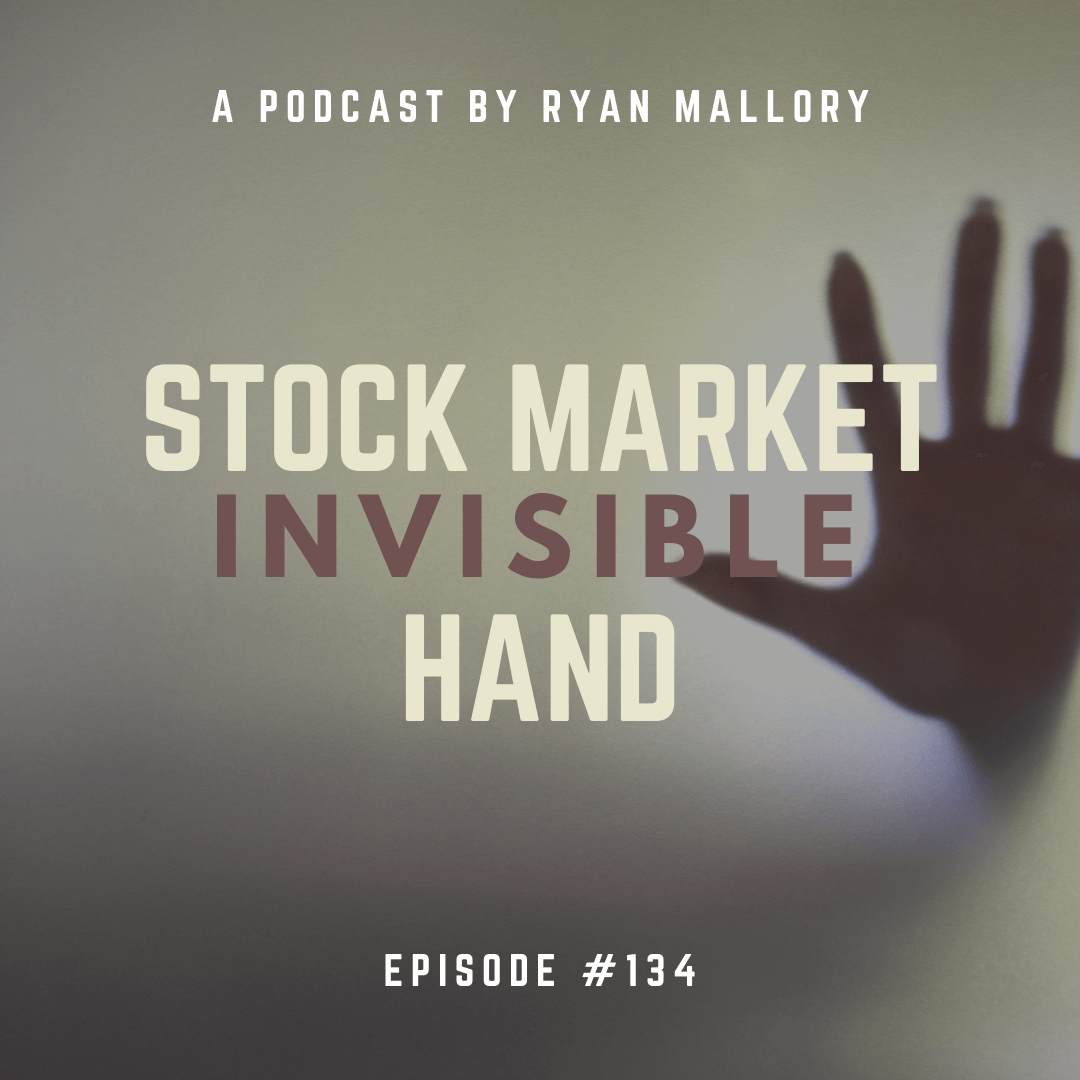
What is the stock market’s invisible hand you ask? It is a lot like Adam Smith’s invisible hand in that it is an unforeseen force that moves the stock market. In this episode, Ryan Mallory details how to follow the clues the stock market is giving you when it comes to amount of long and short exposure as well as which sectors and industries you should be trading.
Available on: Apple Podcasts | Spotify | Amazon | YouTube
Episode Highlights & Timestamps
- [0:07] The Stock Market’s Invisible Hand
Ryan Frames the episode around letting the market guide your decisions rather than forcing outcomes, using Adam Smith’s “invisible hand” as a lens. - [1:12] Don’t Force Your Will On The Market
How projecting fixed profit goals or rigid expectations leads to bad decisions, and why flexibility keeps you out of trouble. - [6:02] Position Sizing Through A Rally
Why traders often get too long at the worst time, and how exposure should generally decrease toward the late stages of a rally. - [8:59] Trade What The Market Gives You
Let sector rotation lead your watchlist. Even if you prefer tech, trade energy if that’s where valid setups keep appearing. - [10:25] Plan The Night Before, Honor Your Triggers
Pre-plan entries, stops, and targets. If a setup doesn’t trigger, don’t force it just because the market is moving.
Key Takeaways from This Episode:
- Follow Market Flow: Let the market’s “invisible hand” guide your exposure, sectors, and entries instead of imposing your plans on it.
- Size With Conviction: Match position size and overall exposure to how confident you are in current market conditions.
- Respect Rotation: Build watchlists from objective chart setups. If energy stocks set up and tech doesn’t, trade energy.
- Pre-Plan & Execute: Define entries, stops, and targets in advance. Only act when price confirms your trigger.
- Cash Is Power: It’s fine to sit out when conditions aren’t right; raise stops into strength and avoid chasing.
Resources & Links Mentioned:
- Swing Trading the Stock Market – Daily market analysis, trade setups, and insights by Ryan Mallory.
- Join the SharePlanner Trading Block – Get real-time trade alerts and community support.

Take the Next Step:
✅ Stay Connected: Subscribe to Ryan’s newsletter to get free access to Ryan’s Swing Trading Resource Library, along with receiving actionable swing trading strategies and risk management tips delivered straight to your inbox.
? Level Up Your Trading: Ready for structured training? Enroll in Ryan’s Swing Trading Mastery Course, The Self-Made Trader, and get the complete trading course, from the foundational elements of trading to advanced setups and profitable strategies.
? Join the Trading Community: Sign up for SharePlanner’s Trading Block to become part of Ryan’s swing-trading community, which includes all of Ryan’s real-time swing trades and live market analysis.
Full Episode Transcript
Click here to read the full transcript
0:07
Hey, I’m Ryan Mallory, and this is my Swing Trading the Stock Market podcast. I’m here to teach you how to trade in a complex, ever changing world of finance. Learn what it means to trade profitably and consistently, managing risk, avoiding the pitfalls of trading, and most importantly to let those winners run wild.
0:25
You can succeed at the stock market, and I’m ready to show you how. Hey everybody, this is Ryan Mallory with Swing Trading the Stock Market, and I got a good episode for you guys today. We’re not doing an email on this particular episode as you’re so used to me usually doing because every once in a while, I’ll have an idea that pops up in my head that says, you know what, this would be a good topic to talk about.
0:47
And it’s not necessarily something that I’m getting an email on. So what do I have to do? I kind of skirt away from the emails for a little bit and just get to me talking about a particular subject that I think is important. This one’s kind of a unique one because this one is one that I think a lot of you guys listening are probably going to find that you struggle with, and you don’t even probably realize it yet, but I do think that it’s something as well that will help you.
1:12
Mitigate and avoid some unnecessary losses in the future. And so the title of this particular podcast is called The Stock Market’s Invisible Hand and basically it’s letting the stock market guide you. Now you’ve probably heard of Adam Smith or if you’ve read anything about Adam Smith, you’ve heard about the invisible hand that guides the economy and this is kind of like the same thing, but it’s going to relate to you on a personal level.
1:35
And as it pertains to the stock market, because here’s the thing, so often we try to force our will on the stock market. I remember when I first started, uh, taking the swing trading more seriously than I ever had before. I was still working in corporate America and everything, but I kind of got a good taste for some really good profits in the stock market and I started telling myself, and this is probably, probably about 20 years ago at this point.
1:58
I said to myself, man, and I even created a spreadsheet for this. And when you start creating spreadsheets, trying to project out into the future when it comes to stock market profits, you’re going down a bad, bad path, but I remember I started saying, well, if I make 5% on every trade that I make going forward, man, after 500 trades over the next few years, I’ll be a millionaire.
2:21
And, and then you start adding 5% on every one of those trades and you really think you’re gonna be a gazillionaire or something or a billionaire. I mean, it just kind of gets out of hand, right? And so, I’m creating this spreadsheet projecting all this money that I want to make in the stock market.
2:37
And I’m essentially, I’m essentially projecting my will on the stock market. I’m telling it what it has to provide me with. And that’s one of the biggest mistakes that you can make going into trading, and I get these emails a lot. I get them a ton and it scares me because they’re taking their circumstances in life saying, OK, these are my circumstances, these are my needs, these are my wants.
2:59
And so the stock market needs to do A, B and C in order to get to there. That’s really not the way that it works. Because the stock market is evolving almost every day. I mean, you just take like what we have seen over the last couple of years and how much things have changed with the Robin Hood bros flooding into the market because we have free commission trading.
3:17
So now you’re starting to see a lot more exaggerated moves in stocks like Neo and stocks like Penn, and we’re in the midst of a pandemic, right? We have New York pretty much on shutdown, yet these stocks are all flourishing. I still to this day don’t know why they’re flourishing because you think that you would need disposable income to do some of these gambling sites, right?
3:35
Or if you’re doing drafting, but that is something the market’s totally choosing to ignore because so many people are still buying these. And so when we try to take our circumstances and mold it to what we want the market to provide us with, we have to be careful about that. Instead, what we should be doing is letting the market’s invisible hand because why do I call it invisible hand?
3:54
because it’s kind of like the. Economic theory that I just mentioned by Adam Smith, this hand that you can’t see, but it seems to have its way in the economy and I’m kind of dumbing it down quite a bit here, but it, it basically creates an order for things. And in the same sense, if we’re more open to the there being a stock market invisible hand, I’m not trying to get all voodoo here, OK?
4:14
But just, just hear me out. I think that we can make better trading decisions going forward and I’m gonna talk about that. But first, what am I drinking? You probably think I’m drinking a whole lot right now, right? I am drinking Colonel Lee. Never even heard of this whiskey before.
4:31
But you got Colonel Lee, it’s from Kentucky, it’s straight. I say Kentucky, it’s Kentucky. Kentucky straight bourbon whiskey. 40% alcohol makes it about 80 proof. When I drank it, it’s just got like this weird, weird flavor. It’s not something that I go out and buy again.
4:48
I think this little sampler that I got might be the, the one and only one that I ever use on it. It’s just really not that good. On a scale of 1 to 10, I’d, I’d say it’s like a 33. I just don’t see it being any better than that. It, it’s kind of like when you uh have a Pepsi that stays out overnight, not in the fridge, but overnight, like on the counter.
5:07
And you wake up the next day and you take a sip of it and it’s flat, or maybe it’s been sitting out there on the counter for like a couple of days. Very, very flat. That’s kind of like what it tastes like. It’s just really not that good. So, 3.34. Colonel Lee, it’s very flat.
5:23
It’s, it’s just, there’s a little bit of a harshness, but it just, it almost like flavor just sinks below that harshness and it, you just don’t know if drinking some kind of like crude flavored mouthwash. I’m a trooper though, I’ll finish it off. I’m not gonna throw it away. Screwball peanut butter whiskey I would though, I’d dump that right down the drains.
5:39
Anyways, let’s get back to what we’re talking about. I don’t want to get too derailed here. So we’re, we’re talking about the stock market’s invisible hand and where I think that and I’m gonna talk about it in two different ways in the future podcast I may revisit it in different aspects of our trading lives that it can apply to but for tonight I want to talk about it in terms of position size and also about what we’re actually trading.
6:02
So oftentimes we want to be a certain amount long in the stock market. We were like, man. I feel like I’m missing out on this incredible run. It’s all-time highs. I’m gonna go into my margin. I’m gonna go 150% of my portfolio to the long side and maybe during the run up you were only like 50 or 60% long, and then all of a sudden you get to the top and you feel like, OK, I haven’t been long enough.
6:23
I’m going to get even more long at those all-time highs, and you’re not being pressed to get long. It’s just psychologically you think that you should be more long because you feel like you’re missing out. And what that does is that creates in a scenario where you might be getting far too long at the top of the market and your capital’s being exposed to major losses unnecessarily when the market starts pulling back.
6:44
Have you ever had that where it seems like you have like 345 or 6 months of really good solid profits and then all of a sudden you lose it all within a matter of a few weeks and the market didn’t even sell off as much as it rallied during the 4 or 5 months prior and maybe it only pulled back like 10% of that amount.
7:02
But it just seems like your losses are ridiculous man, why did I do that? A lot of times that has to do with your position sizing. You’re getting too long at the wrong time typically in every market rally is different, but if you’re just looking at it in theory, you should probably be more along in the beginning than you are towards the end because in the beginning you’re at the beginning of a rally, right?
7:20
And towards the end you’re at the end of a rally so it only makes sense that you have more exposure to the long side in the beginning of the rally or in the middle of a rally. Versus in the end you should see yourself starting to take profits along the way when the market’s starting to get to that point where it’s really struggling to find additional gains you should be raising your stock losses and at times they’re probably getting stopped out and so your exposure to the market is getting less and less.
7:46
The other aspect is in the sectors that we trade, right? For me personally, I really like trading tech stocks a lot. I always like having a couple of good tech stocks in my portfolio. Now, what do I tend to steer away from? Energy, real estate. I don’t really like to trade and dabble in those names.
8:03
Now, what have I found myself trading over the last couple of weeks and I don’t even enjoy it that much because it just. Tends to put a little bit more of an edge on my trading that I don’t really want to be there in terms of like edginess, discomfort, whatever. But when it comes to a sector that I really don’t like trading in, it’s energy.
8:22
I don’t enjoy energy. I don’t enjoy real estate. Sometimes I’ll dabble in utilities, but those three particular sectors, not a huge fan of trading in them. Utilities are usually kind of on the boring side of things. Energy is a little bit on the too unpredictable side of things. And over the last, you know, 34 years, energy is perpetually been selling off.
8:42
So I don’t really want to get long on that. Well, what do I find myself trading the most of and getting the most gains out of, of late? It’s been energy. It’s been Hallibur. It’s been Hess. But why am I getting into it not because I want to get into it. It’s because the market’s invisible hand is dictating that I get into it.
8:59
And so how did I know that the market’s invisible hand? Is telling me, hey, you need to get into this. It’s because when I’m looking at my watch list and I’m judging stocks based off of what the charts tell me and I’m deciding based off of what the charts tell me whether it belongs to my bullish watch list and my bears watch list or neither of them.
9:18
I can tell you after I go through 4 or 500 stocks, I just keep having all these oil stocks setting up to the long side. So what do I do? Well, first of all, I acknowledge it. I recognize, hey, I got a lot of oil stocks starting to pile up. What do I not have a lot of on my watch list right now?
9:34
Tech stocks. Why is that? Because tech stocks aren’t rallying. At the time of this particular episode, OK? And so if you’re listening to this 10 years after I released this episode, don’t worry, this is all still very relevant because I’m trying to explain to you as a moment in time how this applies to just trading in general.
9:52
All right guys stick with me here OK? because I’m gonna bring it all together here towards the end, but what I’m trying to get at here is whether it comes down to position sizing or whether it comes down to the sectors and industries that we’re trading and we have to let the market flow dictate what we trade in.
10:09
I don’t like trading in energy. I like trading in tech, but right now the market’s not giving me tech and it’s giving me energy, so I have to trade the energy. And one of the best ways to do that is, is for me at night at least. I know everybody’s different, so I’ll tell you what it works for me the best.
10:25
That comes by planning my day ahead the night before. If I do it the morning of, I’m usually feeling a little bit more on the rush side, so I always do it the night before. I’m planning it out. I’m planning out the trade set ups that I think might work. What is my entry price going to be? What is my stop loss gonna be?
10:41
What do I think the target is? What do I think the risk reward on the trade trade is? Is it worth some is it something worth trading? So if I say, OK, stock XYZ is trading at $100 a share, it goes up to $10,250 I’m gonna get long on it. But then it opens up and it drops down to $98.
10:57
I’m like, well, you know, hey. It’s 2% less than where I closed the day yesterday at, and I can get in at over 4% lower than where I had originally planned to. But then I’m trying to force my will on the market of what I really want to do here when the market’s clearly saying, hey, stock XYZ isn’t gonna trigger today.
11:13
But then I’m seeing the market rally and I’m like, oh man, I should be in this. But no, no, you shouldn’t because you planned out your day, you planned out your trades, and the market wasn’t reciprocating it for you. So sometimes you gotta follow that, that market flow, the market’s invisible hand. And let it dictate for you what you’re going to be doing.
11:30
One of the best ways to find out what’s in my watchlist is by going to my Patreon account. I mean, one of the best ways to know what is popping up on my watchlist and what’s popping up as my setups is to follow my Patron account. You can go to swingtradingthestockmarket.com. You can get all my market research that’s gonna include analysis on the S&P 500, the Nasdaq, the Russell multiple times each week.
11:52
I’m also gonna give weekly updates on all the FA stocks that also includes Microsoft, it includes Tesla. And on top of that, I’m gonna provide you with my watch list each week and then daily setups on top of that. So then you’re gonna be able to start seeing, OK, Ryan’s starting to watch these oil stocks. He’s paying less attention to these tech stocks.
12:10
And that’s how it all incorporates into following the invisible hand of the stock market. When the stock market keeps going higher and higher and higher, I’m usually raising up my stock losses along with it, so I might be pulling out 1520, 25% gains on my trades. I’m taking some profits along the way, but at some point the stock is gonna pull back and it’s gonna knock me out of those trades.
12:31
So then when you have the combination of you’re getting knocked out of some of these profitable trades that you have been holding on to for a while. Coupled with the fact that you’re not able to get into some of these trades that you had planned out for yourself, that’s, that’s the invisible hand of the market working good things in your portfolio.
12:50
It’s telling you, hey, it’s time to start taking profits in these we’re, I’m pulling it back some here. It’s also the market telling you, hey, you don’t need to be adding more long exposure at this, OK, or just slow down. So for me, like right now, I wouldn’t mind having more long positions in my portfolio, but I don’t.
13:06
Why is because I got stopped out of micron technology in the past week. That was for like a 38% gain. I got taken out of my last third of a position in Hess for an 8% gain. I got stopped out of Garman for, you know, slightly profitable trade.
13:22
Now, it doesn’t mean that I won’t add any new long quisitions because I did. I added one today. But that was because the market allowed for it. My plans came together, but the worst thing we can do is when we’re wanting to add more positions to our portfolio, the market’s not really giving us those opportunities. It may also come in the fact that there’s no good trade setups out there right now.
13:40
I’m struggling to find a lot of good quality trade setups. It doesn’t mean I stopped looking. It doesn’t mean that there isn’t any out there. I, I do find them, but there’s some times when there’s just a plethora of good trade setups out there and there’s other times where it’s like famine, it’s like a feast or famine kind of a thing. That’s also the market trying to dictates like, hey, don’t force your will on a stock that doesn’t have a trade set up there.
14:01
Don’t force your will on the market. Don’t try to increase your long exposure if there’s no real credible opportunities to take advantage of. Moving up your stock losses is a natural progression and a market rally as the stock continues to rally and as the market continues to rally, you wanna keep moving up those stock losses because loss.
14:17
You want to do is just backhole all the way back down. At some point, the rally in the EV stocks, all these different stocks that have been spending months and months and months and even in some cases years rallying will come to an end. And there’s gonna be a lot of people out there that that just lose it all. They won’t come away with profits, even though they should have, and even though they have substantial profits, the market can take it away a lot faster than what it gives you.
14:39
And there’s also the mentality where we ignore the direction of the market and what the market’s telling us whether or not it’s bullish, whether it’s parish, whether or not it wants us to add more long exposure, whether or not it’s naturally stopping us out of some of our more recent profitable positions and when you start getting married to those profitable positions, you start ignoring stop losses and then you lose even more profit.
14:58
Because we just don’t want to be stopped out of it. It was a good run. We just can’t see ourselves departing from that stock, but you got to at time. But on top of that, we also start chasing stocks because that is what everyone else is in. We wanna be in NIO. We wanna be in Tesla because everybody else is in it and we feel like we’re missing out.
15:13
That’s that FOMO, that’s that fear of missing out, right? And that’s another way where we try to force our will on the market. It’s like, no, I’m getting into the stock. I’m getting into Kodak. I’m getting into Hertz because that’s what everybody else is doing. These people are making 100% off of the stock that’s going bankrupt. I gotta get into it. And then as soon as you get into it, you get your head handed to you on a silver platter.
15:31
So when you’re like looking at your watch list and you should always have watch, you’re looking at your watch list, what sectors are you seeing popping up? That’s the market trying to tell you, hey, this is where the money is rotating into. When you start seeing the oil stocks popping up on your watch list with good setups, when you start seeing.
15:48
Stocks not popping up on your watch list that are in the tech sector that’s telling you that the tech sector is really not that much in play right now. You gotta follow the lead that the market’s giving you. For instance, I saw a good set up in Adobe, couldn’t get into it. I, I for the last two days I thought I would get into it.
16:05
Haven’t been able to get into it. Does that mean I’m gonna force my hand or my will on the market? No, no, I may never get into it. And that’s fine. The market’s not gonna give it to me. I’m not gonna force my will on it. That’s the whole point of this podcast, making sure. That you’re following the lead in the direction of the stock market.
16:23
That’s gonna do it. That’s a wrap. If you guys enjoyed this podcast, I encourage you to go to your favorite platform. Most of you guys listen to me on Apple iTunes, so if you can go there and leave a positive review, I would greatly appreciate it. Some people are just downright mean and cruel, but I have faith in you guys that you listened this far.
16:45
Maybe I’ve got a special place in your heart that will say, hey, I’m gonna leave this guy a 5 star review and if you do, I would greatly appreciate that, guys. You’re the best. Make sure you send me your questions at ryan@shareplanner.com. I do read all your emails and I will, if it’s a good question, I will put it on the air.
17:03
Thanks for listening to my podcast Swing Trading the stock market. I’d like to encourage you to join me in the share planner trading block where I navigate the stock market each day with traders from around the world. With your membership, you will get a 7 day trial and access to my trading room, including alerts via text, email.
17:19
And WhatsApp. So go ahead, sign up by going to shareplanner.com/tradingblock. That’s www.shareplanner.com/trading-block. And follow me on SharePlanner’s Twitter, Instagram, and Facebook where I provide unique market and trading information every day.
17:36
If you have any questions, please feel free to email me at ryan@shareplanner.com. All the best to you and I look forward to trading with you soon.
Enjoy this episode? Please leave a 5-star review and share your feedback! It helps others find the podcast and enables Ryan to produce more content that benefits the trading community.
Have a question or story to share? Email Ryan and your experience could be featured in an upcoming episode!
Become part of the Trading Block and get my trades, and learn how I manage them for consistent profits. With your subscription you will get my real-time trade setups via Discord and email, as well as become part of an incredibly helpful and knowledgeable community of traders to grow and learn with. If you’re not sure it is for you, don’t worry, because you get a Free 7-Day Trial. So Sign Up Today!

Welcome to Swing Trading the Stock Market Podcast!
I want you to become a better trader, and you know what? You absolutely can!
Commit these three rules to memory and to your trading:
#1: Manage the RISK ALWAYS!
#2: Keep the Losses Small
#3: Do #1 & #2 and the profits will take care of themselves.
That’s right, successful swing-trading is about managing the risk, and with Swing Trading the Stock Market podcast, I encourage you to email me (ryan@shareplanner.com) your questions, and there’s a good chance I’ll make a future podcast out of your stock market related question.
Watching the dollars rise and fall in your trading account can turn a well-planned swing trade into an emotional, deeply personal decision. In this episode, I explain why focusing on price action, percentage returns, and R-multiples can help you avoid cutting winners early, holding losers too long, and abandoning your trading plan.
Be sure to check out my Swing-Trading offering through SharePlanner that goes hand-in-hand with my podcast, offering all of the research, charts and technical analysis on the stock market and individual stocks, not to mention my personal watch-lists, reviews and regular updates on the most popular stocks, including the all-important big tech stocks. Check it out now at: https://www.shareplanner.com/premium-plans
📈 START SWING-TRADING WITH ME! 📈
Click here to subscribe: https://shareplanner.com/tradingblock
— — — — — — — — —
💻 STOCK MARKET TRAINING COURSES 💻
Click here for all of my training courses: https://www.shareplanner.com/trading-academy
– The A-Z of the Self-Made Trader –https://www.shareplanner.com/the-a-z-of-the-self-made-trader
– The Winning Watch-List — https://www.shareplanner.com/winning-watchlist
– Patterns to Profits — https://www.shareplanner.com/patterns-to-profits
– Get 1-on-1 Coaching — https://www.shareplanner.com/coaching
— — — — — — — — —
❤️ SUBSCRIBE TO MY YOUTUBE CHANNEL 📺
Click here to subscribe: https://www.youtube.com/shareplanner?sub_confirmation=1
🎧 LISTEN TO MY PODCAST 🎵
Click here to listen to my podcast: https://open.spotify.com/show/5Nn7MhTB9HJSyQ0C6bMKXI
— — — — — — — — —
💰 FREE RESOURCES 💰
— — — — — — — — —
🛠 TOOLS OF THE TRADE 🛠
Software I use (TC2000): https://bit.ly/2HBdnBm
— — — — — — — — —
📱 FOLLOW SHAREPLANNER ON SOCIAL MEDIA 📱
*Disclaimer: Ryan Mallory is not a financial adviser and this podcast is for entertainment purposes only. Consult your financial adviser before making any decisions.
You Might Like

South Korea: The Hidden Driver of US Tech Volatility
Stop Trying to Hit Home Runs: Start Trading Within Your Means
How to Trade Breakouts Without Getting Trapped