
Episode Overview
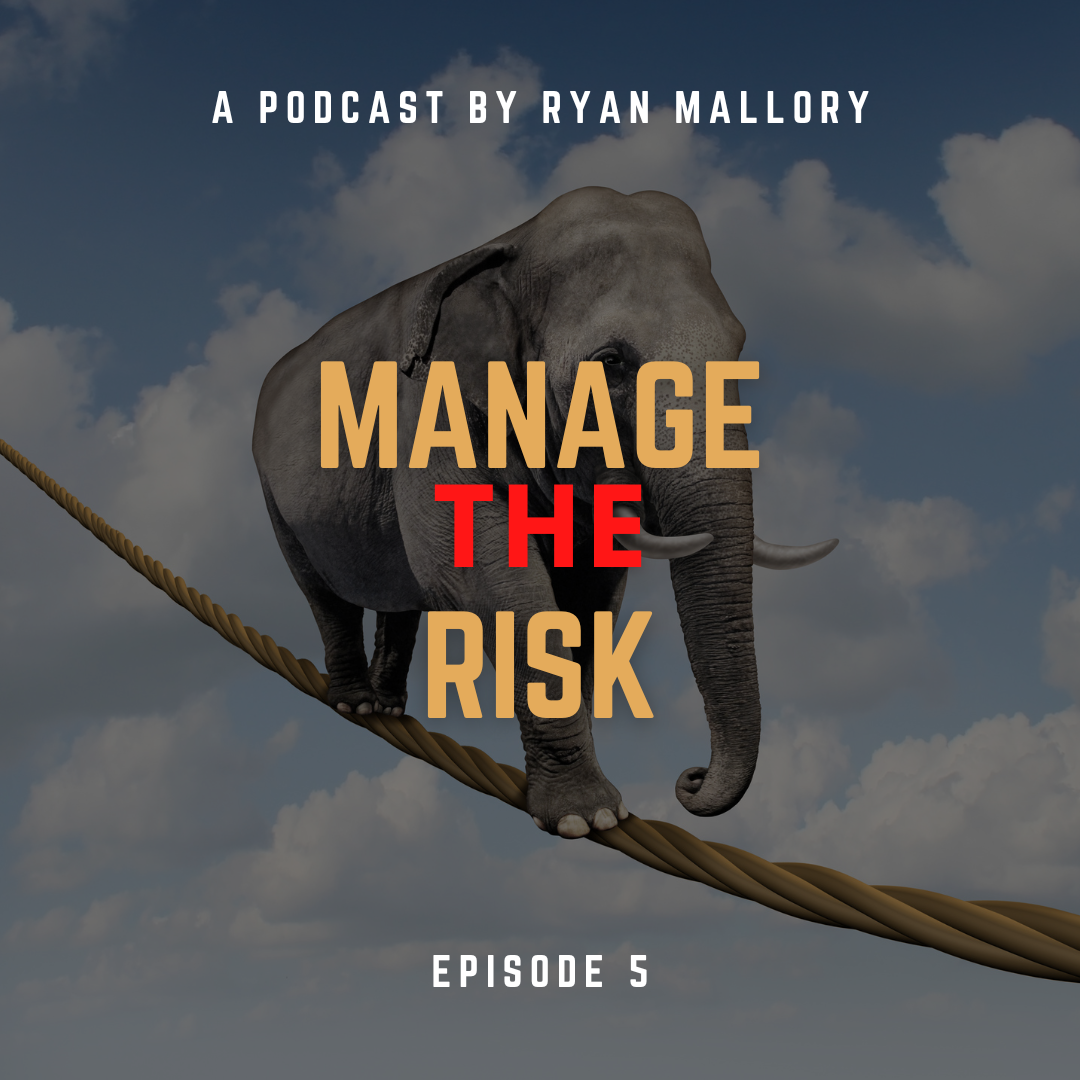
Part 2, in my three part of series of what it takes to be a profitable trader. In this episode of Swing Trading, I focus on managing the risk on each and every trade you make.
Available on: Apple Podcasts | Spotify | Amazon | YouTube
Episode Highlights & Timestamps
- [0:01] Managing Risk as the Foundation of Trading
Ryan explains why managing risk is more important than trying to predict what the market should do. - [2:05] Why Trading What You Think Leads to Ruin
Using a short selling example, Ryan shows how stubborn beliefs can destroy an account even when a trader believes they are right. - [6:23] The Dangerous Mindset Behind Most Trading Failures
- Ryan discusses how getting into the market for quick wealth often results in excessive risk and long term failure.
- [9:25] Why Risk Control Matters More Than Win Rate
Ryan breaks down how even a 50 percent win rate fails if losses are larger than gains and why risk reward ratios define success. - [14:01] How Proper Stop Placement Creates Long Term Profitability
Ryan explains how identifying key support levels allows traders to keep losses small while letting winners grow.
Key Takeaways from This Episode:
- Risk Management Comes Before Profits: Profits only matter if losses are controlled, and without proper risk management even strong strategies will fail.
- Win Rate Means Nothing Without Loss Control: Being right half the time is useless if losing trades are larger than winning trades.
- Stops Must Be Placed With Purpose: Stop losses should be placed where the trade thesis is invalidated, not at arbitrary percentages.
- Tight Risk Creates Compounding Gains: Small, controlled losses allow traders to compound gains over time when winners outweigh losers.
- Capital Preservation Is the Trader’s Edge: Protecting capital allows traders to stay in the game long enough for probabilities to work in their favor.
Resources & Links Mentioned:
- Swing Trading the Stock Market – Daily market analysis, trade setups, and insights by Ryan Mallory.
- Join the SharePlanner Trading Block – Get real-time trade alerts and community support.

Take the Next Step:
✅ Stay Connected: Subscribe to Ryan’s newsletter to get free access to Ryan’s Swing Trading Resource Library, along with receiving actionable swing trading strategies and risk management tips delivered straight to your inbox.
📈 Level Up Your Trading: Ready for structured training? Enroll in Ryan’s Swing Trading Mastery Course, The Self-Made Trader, and get the complete trading course, from the foundational elements of trading to advanced setups and profitable strategies.
📲 Join the Trading Community: Sign up for SharePlanner’s Trading Block to become part of Ryan’s swing-trading community, which includes all of Ryan’s real-time swing trades and live market analysis.
Full Episode Transcript
Click here to read the full transcript
0:01
Hey, everyone, this is Ryan Mallory bringing you another episode of SharePlanner’s Swing Trading the Stock Market podcast. Now, if you go back to the last episode that I did, It was about It was a 3-part series.
0:17
The first one was trading what you see. Number 2 is going to be managing the risk, and the 3rd is letting the profits take care of themselves, so. We’ve got the first episode out of the way, that is trading what you see.
0:35
Today, I’m going to talk to you about. Managing the risk. And this is also a very difficult topic, but just to give you a bit of a refresher of what we talked about on the trading what you see. A lot of times as traders, we tend to overthink things, that’s why a lot of times your doctors and your lawyers and your.
0:58
Nuclear scientists or your astrophysicists, physicists, I can’t even say the word, but um. Those are the people that usually struggle quite a bit and unexpectedly struggle quite a bit with the stock market because they’re so used to being able to think through all the problems and be able to use their smarts to to get them to where they’ve basically gotten themselves at in life.
1:23
So with the stock market, you can. Think things through, but that’s not necessarily what the stock market’s going to do. So that’s why it’s so important to trade what you see, not necessarily what you think should be the case or what you think should happen because. Where that gets you in trouble is, is, is when you have a stock market that is defying the odds and you’re saying to yourself, there’s no way it can continue to go up.
1:47
The economics aren’t there. The, the reports that we’re seeing on a weekly basis doesn’t support it. Earnings aren’t that good, so there’s no way that the market could keep going up. So you start to short the market thinking, yeah, I’m gonna, I’m gonna prove to everybody just how smart I am and I’m going to short this market.
2:05
And, and I’m going to make a killing in the process. Well, a day, a week, a month goes by, and the market’s still going up and up and up. But you know that you’re right because you’re a pretty smart guy, and you think that there is no doubt in your mind that, that this is going to pay off.
2:23
Well, another month, another 2 months go by, and the market’s still going up and up and up. And all of a sudden you’re getting calls from your broker, broker saying, hey, you need to cover, cover your shorts. You got a margin call. And. All of a sudden you realize whether I would think I’m gonna be right or not, I don’t have a choice in the matter.
2:42
I have to get out of the position or you just basically lose everything, um. Either way, Trading what you think should be the case or what you think the market should do. Is Usually a a fool’s path to profits, I mean, it just it doesn’t exist, so.
3:03
What, what I encourage people to do is to look at the charts to, to, to, to see what the market’s doing, where is it trending, and then to follow those trends because when you start thinking that you know something that the market doesn’t know, that’s where you’re going to get yourself into trouble.
3:19
And It The old saying that the market can stay irrational a lot longer than you can stay solvent is extremely true, extraordinarily true, and just because you think that something should happen doesn’t necessarily mean it’s going to happen.
3:35
In fact, the market can keep, keep up with its irrational behavior for far longer than anyone would ever imagine. And if you look at the stock market right now, we’re kind of in that phase. We’re in a phase right now where. Why is the market still making new all-time highs?
3:50
How does it keep going up? Everybody talking talked about how if Trump were to get elected and Hillary was to lose the election. That the market would crash, that overseas markets would fall to pieces. Well, that was true for maybe about a couple of hours, and then before the market opened, it was, it was heading right back towards break even, and the markets rallied off of the Trump r.
4:15
And in fact, it’s been one of the greatest rallies of all time. I mean, just up, up, up, and. In the meantime, everybody was forecasting that if Trump lost, or Trump won, that the entire world economy was going to go down the, the toilet. So.
4:31
You have to be willing to put aside your opinions, put aside your thoughts, what your beliefs are about the stock market and trade what you see. What is the market doing? So, right now, a lot of people are worried that this is a, um, fake rally or, or a rally that can’t.
4:49
Sustain itself well that may be true too, but it’s not showing that right now, so you still have to trade to the long side because that’s what the market’s willing to do at this point in time.
5:13
So trade long when the market’s willing to go along and then when the market does start to sell off and it, you start seeing behavior that’s not conducive to a. To what would be typical in a trending market that goes higher, then that’s when you start putting on the shorts, and that’s when you start, you know, adding, adding new short exposure, but you have to be active and you have to be willing to, uh, follow the market each day.
5:29
So that, so that you can be ready for when that time comes, but. You have to let the market dictate to you the circumstances for why you trade and what you trade, and you can’t. You can’t let the um. Desire for what you think the market should do or what you think it ought to be doing.
5:49
Dictate for that for you because usually you’re going to be wrong on that, so. All right, so that’s basically in a nutshell, what we talked about. In the last, um, podcast episode, I highly recommend that you go back and listen to it because that’s just sort of like surface level stuff that I just gave you.
6:07
I go into much bigger, much more detail than that, um, with that particular podcast. So today, it’s. Now that we’ve got trading what you see out of the way, now we’re going to talk about managing the risk and.
6:23
When you think about it. Why do, why do, why do we get into the stock market? Why do people? Get lured in.
6:42
Is it because they have a fascination with managing risk, or is it because that they wanna make money? Now, I will go out on a limb.
6:58
And say that people get into the stock market because they wanna bank some coin, OK?
7:16
They wanna get into the stock market because they don’t like their jobs and they want to make more money. They wanna drive nicer cars, live in bigger houses.
7:32
They wanna get rich, and that, that’s actually a really bad reason to get into the stock market as your primary focus.
7:53
But. If you, but for those who get into the stock market because they wanna add some additional supplemental income, or they just wanna be a trader for themselves and they want to learn how to do it. All those, all those reasons are good reasons for getting in, but they’re not good enough reasons for sustaining you in the stock market.
8:12
So if you get into the stock market and your sole focus is, how much money can I make on this stock? Where is the target price at? Where do you think the stock price is going? I need a hot stock. I need a stock that’s going to go through the roof. I want a stock that I can back up the truck and get in on the pullback and ride it to new all-time highs.
8:30
OK. Those, those are things that are going to hurt you in the stock market. Instead, OK? Instead, You have to look at trading as a function of risk management.
8:47
You look at big corporations, they have entire departments dedicated to risk management for their products, for their company operations, etc. You look at trading, you’re the only person that’s trading, so you have to be that function.
9:25
You have to look at trading as a function of risk management. If you don’t, All the profits in the world will not. Overcome the losses that you will also take along the way and so.
9:43
You know, if essentially what you want is you want to minimize your risk so much that it, it, it basically allows you to take home as much of the profits as possible because If you’re right, 50% of the time and being right in the stock market 50% of the time is a pretty, pretty phenomenal achievement.
9:59
OK? Not many people can do that. I’m typically right about 55 to 57% of the time or so, but for most people, that’s unattainable. They just can’t get to that 50% level. But let’s just say that you do, OK? And for every.
10:17
Every dollar that you make in the stock market. On your winning trades, your losing trades are losing $2. What does that mean? That means you’re losing. It doesn’t matter how often you’re right, it’s how you are right.
10:37
It’s how you are wrong and. And The how much money you make per trade means nothing if you can’t keep the losses under control, so.
10:55
You know, a person that can average 50% on every trade. It is only good if he could keep those losses around 25% on his losing trades, or if a person who can average 10% on his winning trades needs to figure out how to keep his losses to less than 5%.
11:12
So, if you don’t do that, You’re setting yourself up. You’re basically setting yourself up for failure there because, because if somebody, somebody who’s making 10% on his winning trades and losing 12% on his, on his losing trades, doesn’t have a winning trading strategy.
11:31
Actually, I would back that statement that I just made up a little bit and say he does have a winning strategy. He just hasn’t figured out how to manage the losers yet, OK?
11:50
So, the winning, the, the, the strategy or the success to trading isn’t so much in how much money you can make to the winning site, it’s how much you can keep the losses down on the losing side.
12:10
Because if you don’t keep those losses down, All the profits in the world. Will not, will not matter. You’re going to lose, so nobody likes to talk about the risk for me.
12:29
I like to get into stocks that aren’t not, that are not just like running through the roof, OK?
12:47
Because why is that? Because if I can get into a stock that’s just starting to come out of consolidation, that is just starting to, uh, push higher, that’s just starting to become a game changer of some kind.
13:06
Or, or on the, on the other side, a stock that’s just starting to bounce off of a key support level.
13:22
Well, I know that I can keep, uh, my, my stop loss just below that key support level and maybe have like a 1 or 2% stop loss.
13:39
And then if I’m right on the trade, that stock’s probably going to ride up 4 to 5%.
14:01
So if I have a 1% stop loss and I make 4%, I just made 4 to 1% on that.
14:17
Ah, trade, you know, versus what I risked and so.
14:35
If my losing, or if my, if I make 3% and my average loser is, is 1.5%, then I’m making 2 to 1 on my, my trades.
14:50
And, and since I trade over 50% on my success rate, that’s actually pretty darn good.
15:09
Um, That’s that that’s extraordinary, quite honestly so.
15:29
So you have to keep, you have to keep the risk under control, and when you don’t.
15:49
The profits are meaningless. They just, they get, they get overshadowed by the losses, and you don’t want that.
16:12
You want the profits to mean something, and the only way you can get the profits to mean something in trading is by keeping the losses minimized.
16:37
So.
16:56
So I like, yeah, I like to put my stops in areas where.
17:19
If, if that stop, stop loss is triggered.
17:42
There’s something fundamentally wrong with the trade, not fundamentally in the traditional sense like PE ratio or anything like that, but fundamentally wrong.
18:02
Like there is something absolutely wrong with the trade, and, uh, there’s no disputing that.
18:19
I don’t need to be in it any longer and I need to move on.
18:36
Now, that doesn’t mean the stock’s gonna just like crash to nothing, but it violates the thesis.
18:55
So that means don’t go into a trade where.
19:17
You know, you’re getting at $100 and you just arbitrarily say, uh, I’m just gonna just set it at 98%, $98 my stop loss because I don’t want to lose anything there.
19:35
Well, that $98 may be in the middle of like a, Of a gap fill or something like that, or just in the middle of nowhere, that it’s very easy for the trade just in its normal ups and downs, accidentally gets it triggered.
19:51
What you want to do is you want to find, let’s say, at $97 that there is a very key support level there that you’d know if it’s broken.
20:07
Something is wrong with that stock.
20:24
That thing’s heading lower, probably.
20:45
So you want to put your stop loss a few ticks below that price point, so that you know that if that price level is triggered, that you want to be out of that stock.
20:45
That’s gonna be it for this episode. Um, if you guys have any questions, feel free to email me, ryan@shareplanner.com, and I’d be happy to hear from you and answer any questions that you might have. In the meantime, have a great day of trading and God bless.
Enjoy this episode? Please leave a 5-star review and share your feedback! It helps others find the podcast and enables Ryan to produce more content that benefits the trading community.
Have a question or story to share? Email Ryan and your experience could be featured in an upcoming episode!
Become part of the Trading Block and get my trades, and learn how I manage them for consistent profits. With your subscription you will get my real-time trade setups via Discord and email, as well as become part of an incredibly helpful and knowledgeable community of traders to grow and learn with. If you’re not sure it is for you, don’t worry, because you get a Free 7-Day Trial. So Sign Up Today!

Welcome to Swing Trading the Stock Market Podcast!
I want you to become a better trader, and you know what? You absolutely can!
Commit these three rules to memory and to your trading:
#1: Manage the RISK ALWAYS!
#2: Keep the Losses Small
#3: Do #1 & #2 and the profits will take care of themselves.
That’s right, successful swing-trading is about managing the risk, and with Swing Trading the Stock Market podcast, I encourage you to email me (ryan@shareplanner.com) your questions, and there’s a good chance I’ll make a future podcast out of your stock market related question.
How does war impact the stock market and what are the potential risks and hazards that impact traders attempting to remain profitable in their swing trading? In this podcast episode, Ryan Mallory covers everything managing the volatility that comes with the headline risk, dealing with heightened levels of emotions, securing open profits, and market exposure to uncertainty in the stock market.
Be sure to check out my Swing-Trading offering through SharePlanner that goes hand-in-hand with my podcast, offering all of the research, charts and technical analysis on the stock market and individual stocks, not to mention my personal watch-lists, reviews and regular updates on the most popular stocks, including the all-important big tech stocks. Check it out now at: https://www.shareplanner.com/premium-plans
📈 START SWING-TRADING WITH ME! 📈
Click here to subscribe: https://shareplanner.com/tradingblock
— — — — — — — — —
💻 STOCK MARKET TRAINING COURSES 💻
Click here for all of my training courses: https://www.shareplanner.com/trading-academy
– The A-Z of the Self-Made Trader –https://www.shareplanner.com/the-a-z-of-the-self-made-trader
– The Winning Watch-List — https://www.shareplanner.com/winning-watchlist
– Patterns to Profits — https://www.shareplanner.com/patterns-to-profits
– Get 1-on-1 Coaching — https://www.shareplanner.com/coaching
— — — — — — — — —
❤️ SUBSCRIBE TO MY YOUTUBE CHANNEL 📺
Click here to subscribe: https://www.youtube.com/shareplanner?sub_confirmation=1
🎧 LISTEN TO MY PODCAST 🎵
Click here to listen to my podcast: https://open.spotify.com/show/5Nn7MhTB9HJSyQ0C6bMKXI
— — — — — — — — —
💰 FREE RESOURCES 💰
— — — — — — — — —
🛠 TOOLS OF THE TRADE 🛠
Software I use (TC2000): https://bit.ly/2HBdnBm
— — — — — — — — —
📱 FOLLOW SHAREPLANNER ON SOCIAL MEDIA 📱
*Disclaimer: Ryan Mallory is not a financial adviser and this podcast is for entertainment purposes only. Consult your financial adviser before making any decisions.
You Might Like
Stop Trying to Hit Home Runs: Start Trading Within Your Means
How to Trade Breakouts Without Getting Trapped

Managing Headline Risk: How to Survive the News Cycle Without Losing Your Mind