
Episode Overview
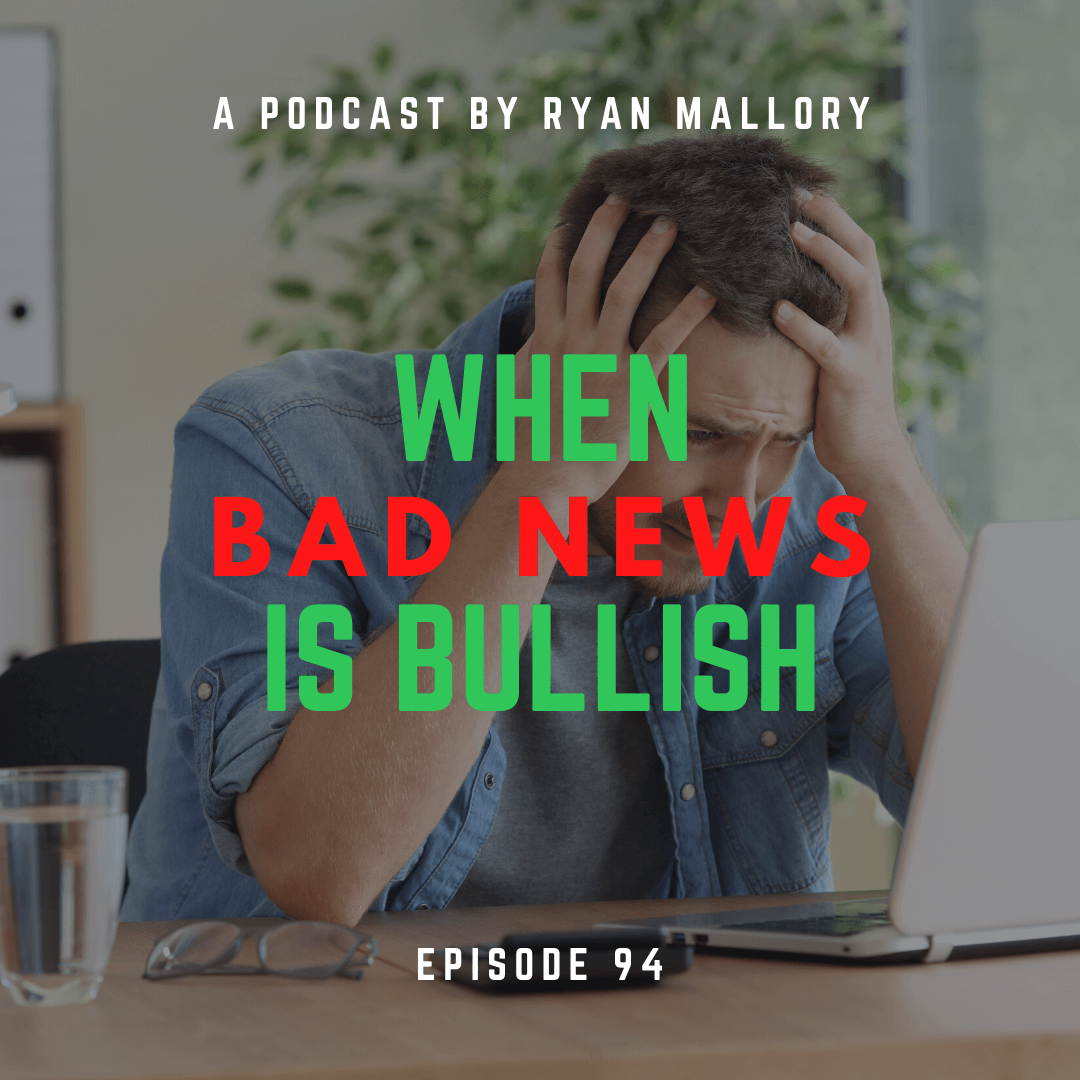
Are you finding yourself scratching your head how the stock market keep rallying on the worst possible kind of news? Record unemployment: Bullish. Jobless claims: Bullish. Covid19 deaths: Bullish. Bad Earnings: Bullish. Why is that? Why does the stock market rally when the news is the worst?!
Available on: Apple Podcasts | Spotify | Amazon | YouTube
Episode Highlights & Timestamps
- [0:06] Why Traders Ignore the Headlines
Ryan explores why traders often look past the flood of negative headlines and focus instead on market behavior, setting up the discussion on how bad news can sometimes fuel bullish rallies. - [1:02] Market Strength in the Face of Negativity
Ryan breaks down why the stock market continues to climb even as economic reports worsen, showing how investor psychology and positioning can drive unexpected rallies. - [2:33] The Rubber Band Effect
Ryan describes how markets often bounce sharply after extreme declines, comparing the behavior to stretching and releasing a rubber band. - [5:28] Cautious Optimism and Market Reality
He notes that many seasoned investors, including Warren Buffett, are holding cash and waiting for better risk conditions before jumping into the rally. - [9:42] Reopening, Consumption, and the Fed
Ryan discusses how Wall Street’s focus on reopening and vaccine optimism ignores the lasting economic challenges and how Federal Reserve intervention supports markets artificially.
Key Takeaways from This Episode:
- Markets Can Rally on Bad News: Often, severe sell-offs already price in the worst, leading to countertrend rallies even when data remains negative.
- Extreme Sell-Offs Lead to Strong Bounces: Like a stretched rubber band, the harder markets fall, the sharper they often rebound.
- Caution Over Complacency: Big investors holding cash signal that confidence in the rally may be premature.
- Economic Recovery Takes Time: High unemployment and reduced consumption will weigh on future earnings and growth.
- The Fed’s Influence Is Powerful but Limited: Central bank intervention can sustain markets temporarily, but fundamentals eventually matter.
Resources & Links Mentioned:
- Swing Trading the Stock Market – Daily market analysis, trade setups, and insights by Ryan Mallory.
- Join the SharePlanner Trading Block – Get real-time trade alerts and community support.

Take the Next Step:
✅ Stay Connected: Subscribe to Ryan’s newsletter to get free access to Ryan’s Swing Trading Resource Library, along with receiving actionable swing trading strategies and risk management tips delivered straight to your inbox.
? Level Up Your Trading: Ready for structured training? Enroll in Ryan’s Swing Trading Mastery Course, The Self-Made Trader, and get the complete trading course, from the foundational elements of trading to advanced setups and profitable strategies.
? Join the Trading Community: Sign up for SharePlanner’s Trading Block to become part of Ryan’s swing-trading community, which includes all of Ryan’s real-time swing trades and live market analysis.
Full Episode Transcript
Click here to read the full transcript
0:06
Hey, everybody. This is Ryan Mallory with Swing Training the stock market. And good news. I’m putting the podcast out there to, to more and more networks. I think I just saw this past week where it’s on Spotify. I’m trying to get it on Pandora and iHeartRadio.
1:02
That’s on top of the fact that you can also get it in the Android and Apple. Podcast apps, so that’s good too. Um, but any case though, we’re gonna talk about when bad news is bullish, and we’ve seen a lot of that lately. Of course. Ah, we’ve talked a lot in recent weeks and in recent episodes about the.
1:23
Massive sell-off that we’ve seen in the stock market going back to the late February time period where the S&P 500 goes from like 3400 almost, I think it was like 3397 where it ultimately peaked out at to like 2191 lows. Huge move, right?
1:40
But since then, we’re, we’re seeing the NASDAQ almost at all-time highs, the Nasdaq 100, that is. And we’re seeing the S&P 500 about, you know, 35, 36% off the lows. And the bad news is still out there. There’s still a lot of bad news, but guess what?
1:57
We’re not selling off. No, we actually keep rallying in the face of bad news. So that’s what this whole podcast is gonna be about today when bad news is bullish. And if you follow me on Twitter at all, my handle is uh SharePlanner. I make a lot of jokes about it.
2:13
You know, the, the bad news comes out and I’m always retweeting them and saying, oh, this has got to be bullish. And it seems kind of funny when I, when I do it at the time it’s like, oh my gosh, how could that possibly be bullish? And then you see the market react bullishly to it. The best example of it is in recent weeks with.
2:33
The unemployment numbers, the unemployment numbers are atrocious. The jobless claim. And you’ve seen it most recently with the jobless claims numbers. They’ve been atrocious. They’ve been absolutely awful, yet the market keeps rallying off of them.
2:50
I think we’re talking like 8 out of the last 9 it’s rallied. As I’m doing this podcast here, it’s kind of uncertain whether the whether the market will rally off today’s cause it’s a Thursday and I’m doing it, which is a couple of days late for my podcast. But nonetheless, it’s rallying today. But nonetheless, it has sold off initially and now it’s trying to claw its way back up.
3:12
We’ll have to see how it closes. But it’s not so much that the market is rallying off of bad news, it’s more about the fact that when you have major sell-offs, there’s always a bounce back.
3:31
There’s always a dead cat bounce. There’s always a counter trend rally. And so the, the sell-off that we had back in February and March, it was one of the, the biggest sell-offs of all time, and for that short of a period.
3:48
And yet, what did the market do? It came right back up. So I like to equate it to a rubber band. If you pull on a rubber band a little bit and let go, it’s not gonna go that far. But if you pull back on it a whole lot and stretch it to its max and let go, that thing’s gonna fly.
4:04
It’ll probably, if you hit somebody with it, it might knock their eye out. And might poke their eye out. But any case, That’s what you’re having But that’s what you’re having here with the S&P 500.
4:19
Very quick all-time high to recession, faster move than any that’s ever been seen in history.
4:35
So what should we expect in return? Well, we, we should expect a massive counter trend rally. Did I necessarily expect it at the Beginning? No, I didn’t. I, I still kind of remained bullish for a little bit. I, I did play the bounce here and there and stuff like that, but I haven’t been all about this market rally and a lot of people weren’t.
4:54
Take a look at Warren Buffett, OK? Everybody likes to praise him for being a shrewd investor. Guy hasn’t touched anything. In fact, he’s done more selling than anything. He’s sitting on a ton of cash. So there’s a lot of people sitting on cash and just not getting behind this rally, and that’s OK. You gotta wait until the risk environment is suitable for your trading.
5:13
And that may be the case with Warren Buffett that. And that may be the case with Warren Buffett that. The environment’s not suitable for his risk profile at this given moment. He, he got rid of some of his airline stocks. Actually, he got rid of all of them.
5:28
He shed some of his Bank stocks But looking back on the market action and when I talked about the rubber band, it’s, it’s, you can clearly see it in this behavior, we had an extreme sell-off followed by an extreme counter trend rally.
5:54
Now, do I think this rally is just going to hold up forever? No, I think we’re going to go back and we’re gonna possibly test those lows, maybe even break through them and go even lower. I think there’s a very good chance of that. Here’s the reason why too is because. The the street right now is focused on reopening.
6:10
They’re focused on the vaccine. You throw a vaccine story out of it out there. You throw a vaccine story out there, the S&P 500 is going to find a way to rally 100 points off of it. state starts talking about reopening. Oh, we gotta get bullish on that, but they’re not really, the street’s not really looking at.
6:29
The nitty gritty of what’s really going on here. You’ve got 39 million people without jobs right now. 39 million people have lost jobs due to the coronavirus. Due to the government shutdown. Do we really think that the employers are just going to rehire everybody back?
6:48
No. In fact, 50% of small businesses do not expect to hire back their people. If you have 20 million people that do not get rehired out of this. We’re at 39 million unemployed right now.
7:04
If 20 million of them do not get rehired, you’re looking at about 11, 12% unemployment going forward. And when it comes to large businesses, let me tell you, they’re going to use this as a reason to.
7:21
Make more people To make less people do more work. It’s happened in every recession we’ve ever been in. More responsibility to the people who got their jobs, they will do it because they don’t want to lose their jobs because a good job and a recession is hard to come by.
7:39
So guess what? They’re gonna step up, they’ll work the long hours, they’ll get stressed out. Corporations will not rehire people that they fired by and large. Because why? They’re going to tighten their purse strings too. So you have all this unemployment number, it becomes a self-fulfilling prophecy, consumption’s gonna go down because less people’s working, people who do work, they’re probably going to be a little bit nervous about going on these real fancy and extravagant vacations.
8:06
Guess what? Consumption’s gonna be pulled back there too. Everybody’s gonna pull back. I have a, a car lease right now, and I think it’s due in about 3 or 4 months. I got to turn it in and get a new car and they’re already hitting me up right now too. Get a new car, swap it out for for something new, but guess what?
8:28
Not gonna do it. Well, was that a George Bush expression there, the not gonna? I think it was. That was like the Dana Garvey, remember that from Saturday Night Live? But anyways. They’re still coming in really high.
8:44
I mean, they’re they’re they’re wanting to up my my price per month for my car by about 50, 60% than what I’m paying right now. So no, I’m not gonna do it. I feel like as a buyer in this economy, one, I want to make sure that I’m making prudent decisions, too.
9:01
They also they also. The other thing The other thing is is that I want to uh make sure that I am able to take advantage of any deals that come down the my way here in the, in the coming months. When these car companies start getting desperate.
9:20
When these dealerships start getting desperate to start moving some of their product off the lot. So going back to the main topic here. The Wall Street’s not really looking at the long-term effects of this coronavirus.
9:42
They’re looking at vaccines and reopenings. That’s all it’s caring about. It doesn’t even care if people get sick and die from this right now, because there’s still plenty of people getting sick and still plenty of people dying from the virus. It just wants to know, are we reopening? And is there a vaccine?
9:58
Two things that it cares about. That’s why when you see the jobless claims come out, doesn’t really care. As long as it thinks that it’s reopening, everything’s gonna go back to normal. What’s gonna have to happen is for the market to realize, OK, we’re reopening, but we’re not consuming.
10:16
We’re reopening, but people were not getting hired back up again. 2/3 of the economy is small business, guess what? Wall Street doesn’t see that. And yes, small business, small businesses are not publicly traded by and large, but you know what?
10:42
They have an impact on the large businesses. They have an impact on the publicly traded companies because of these small businesses do not rehire or these small businesses do not reopen, and there’s about 11% of them in a, in a Facebook survey that says, hey, if things don’t get better really soon, we’re not reopening ever.
11:01
Those people consume, those people buy those products, so. Why do I care so much about consumption because earnings will go down. Earning earnings forecasts will be revised.
11:37
So unemployment sky-high GDP is contracting. We’re talking about as much as 30% to 40% contraction in GDP for quarter two. There’s a huge role that the Fed is playing. The market cares about that quite a bit too. And they’re basically buying every kind of financial asset there is and sharing every kind of loan that there is, except for the idea of buying stocks, and they haven’t ruled that out.
12:00
They, they actually would like to buy stocks too, I’m sure. Is that good for the economy? Is that good for the world? No, it’s not. It’s, it’s socializing the market. It’s welfare, corporate welfare. All you’re doing is just enriching the corporate executives, giving them more money because their stock options are gonna become more and more valuable.
12:18
While the taxpayers foot the bill. And we always hear about, oh, the, the rich get richer and the poor get poorer. Capitalism has run amok.
12:35
I don’t think capitalism is run amok, but I think government. messes up capitalism, quite honestly, when it starts to intervene, it messes everything up. And that’s what’s happening right here. They’re allowing for the rich to get richer and to, at the expense of the poor and at the expense of the middle class because they are basically, because they are bailing them out.
12:57
When was the last time you ever heard of a billionaire going out of business? Yes, they’re probably shrewd businessmen and everything like that. However, they never have to dip into their own pockets to fix their mess. A small business, if they start going out of business or the, the threat of them going out of business looms at large. They’re going to fight to keep that business open.
13:15
They’re gonna dip into their own pockets to keep that business afloat. You wanna know who doesn’t do that? CEOs And owners of large businesses, they don’t do that. Very rarely do you see that happen. So the markets are going up.
13:40
Because their focus is on reopening. And vaccines, and it’s being given a floor of support underneath by the role that the Fed is playing.
14:00
People were buying the hope You’ve got the Robin Hood bros that are coming in strong on the market. They’ve never been in the stock market before. They’re coming in strong. They’re buying up everything. That’s why we’re going up so much on light light volume, because there’s not a lot of people selling at this moment.
14:19
So it doesn’t take much to keep it going up. Because if you, the, the slightest bit of buying power will propel the market 100 points to the upside. My other favorite expression is don’t fight the Fed.
14:35
Man, you know how overused that expression is? I do a YouTube video. I bet you every YouTube video that I have, somebody says, don’t fight the Fed, like they’re coming up with this novel idea of don’t fight the Fed. Man, we’ve been saying that for like 1520 years, guys. There’s nothing new about it, but it has its limits too.
14:51
People talk about, OK, don’t, don’t fight the Fed when uh they’re, they’re tightening the Don’t fight the Fed when they’re cutting interest rates. Guys, did you see what happened in the beginning of the sell-off? They were doing emergency rate cuts of gargantuan proportions, taking it all the way down to 0.
15:09
Each time they did it, and it was two separate times, the market sold off. The reason why is because there just wasn’t any ammunition left in those kinds of moves. Now, what the Fed’s doing right now, there is some ammunition in it. It’s causing the markets to go back up.
15:25
However, even that will will lose its firepower at some point. So if you blindly follow the Fed and just say, don’t fight the Fed and make that your mantra for trading it’s like buy the dip, don’t fight the Fed.
15:44
OK, cool. Guess what? That eventually leads to disappointment, just like the people who early on in the market sell-off that thought that the Fed cutting interest rates down to zero was going to help matters, it didn’t. It just kept on tanking. It did not care. So don’t be surprised in the world of trading when bad news is good for the stock market.
16:10
Because much of the bounce that’s happening is because the sell-off already factored in the bad news. And so it’s rising again. What will cause the market to go back down is when there’s a fresh batch of bad news of new. Data, which I think will probably come from the consumption side of things when it comes from people who are not going back to work, people are not buying, people are not renting an Airbnb or people are not going.
16:38
And buying new cars or buying new houses, that’s when you’re gonna start seeing another wave of selling in the stock market. But until then, yeah, bad news is gonna be bullish until you see otherwise. That’s gonna do it for this episode.
16:55
If you guys have any questions, feel free to email me, ryan@shareplanner.com. Thank you and God bless.
Enjoy this episode? Please leave a 5-star review and share your feedback! It helps others find the podcast and enables Ryan to produce more content that benefits the trading community.
Have a question or story to share? Email Ryan and your experience could be featured in an upcoming episode!
Become part of the Trading Block and get my trades, and learn how I manage them for consistent profits. With your subscription you will get my real-time trade setups via Discord and email, as well as become part of an incredibly helpful and knowledgeable community of traders to grow and learn with. If you’re not sure it is for you, don’t worry, because you get a Free 7-Day Trial. So Sign Up Today!


Welcome to Swing Trading the Stock Market Podcast!
I want you to become a better trader, and you know what? You absolutely can!
Commit these three rules to memory and to your trading:
#1: Manage the RISK ALWAYS!
#2: Keep the Losses Small
#3: Do #1 & #2 and the profits will take care of themselves.
That’s right, successful swing-trading is about managing the risk, and with Swing Trading the Stock Market podcast, I encourage you to email me (ryan@shareplanner.com) your questions, and there’s a good chance I’ll make a future podcast out of your stock market related question.
Watching the dollars rise and fall in your trading account can turn a well-planned swing trade into an emotional, deeply personal decision. In this episode, I explain why focusing on price action, percentage returns, and R-multiples can help you avoid cutting winners early, holding losers too long, and abandoning your trading plan.
Be sure to check out my Swing-Trading offering through SharePlanner that goes hand-in-hand with my podcast, offering all of the research, charts and technical analysis on the stock market and individual stocks, not to mention my personal watch-lists, reviews and regular updates on the most popular stocks, including the all-important big tech stocks. Check it out now at: https://www.shareplanner.com/premium-plans
📈 START SWING-TRADING WITH ME! 📈
Click here to subscribe: https://shareplanner.com/tradingblock
— — — — — — — — —
💻 STOCK MARKET TRAINING COURSES 💻
Click here for all of my training courses: https://www.shareplanner.com/trading-academy
– The A-Z of the Self-Made Trader –https://www.shareplanner.com/the-a-z-of-the-self-made-trader
– The Winning Watch-List — https://www.shareplanner.com/winning-watchlist
– Patterns to Profits — https://www.shareplanner.com/patterns-to-profits
– Get 1-on-1 Coaching — https://www.shareplanner.com/coaching
— — — — — — — — —
❤️ SUBSCRIBE TO MY YOUTUBE CHANNEL 📺
Click here to subscribe: https://www.youtube.com/shareplanner?sub_confirmation=1
🎧 LISTEN TO MY PODCAST 🎵
Click here to listen to my podcast: https://open.spotify.com/show/5Nn7MhTB9HJSyQ0C6bMKXI
— — — — — — — — —
💰 FREE RESOURCES 💰
— — — — — — — — —
🛠 TOOLS OF THE TRADE 🛠
Software I use (TC2000): https://bit.ly/2HBdnBm
— — — — — — — — —
📱 FOLLOW SHAREPLANNER ON SOCIAL MEDIA 📱
*Disclaimer: Ryan Mallory is not a financial adviser and this podcast is for entertainment purposes only. Consult your financial adviser before making any decisions.
You Might Like

South Korea: The Hidden Driver of US Tech Volatility
Stop Trying to Hit Home Runs: Start Trading Within Your Means
How to Trade Breakouts Without Getting Trapped