
Every swing trader knows the feeling. It is right before the opening bell, coffee in hand, when you check your portfolio and see one of your positions has gapped up. It is an adrenaline rush. But there is also the flip side, that sinking feeling when a stock gaps down against you, wiping out weeks of progress in a single pre-market session.
For years, I treated gaps as random acts of market violence, like weather. Something that happened to me. Something I could not control. But over time, I realized gaps are not random noise. They are some of the most powerful signals on a chart. A gap represents an imbalance between supply and demand, a sudden shift in sentiment that occurs while the market is closed.
If you are staring at a gap and wondering whether to chase it or sell it, you are missing the bigger picture. To master swing trading, you have to understand the psychology behind gaps. Learning to decode them helps remove emotion and keep you focused on the price action in front of you.
The Psychology of the Gap
A gap is a transfer of emotion. If a stock closes at $50 and opens the next day at $55, it means overnight sentiment shifted so aggressively that sellers were unwilling to sell at $50.01, $51, or even $54. Buyers overwhelmed sellers.
Here is the key. Not all gaps are created equal. Some are traps that lure in late buyers. Others are the starting gun for a major trend.
In my trading, I focus on three types of gaps: Breakaway, Runaway, and Exhaustion. Knowing the difference can protect your account.

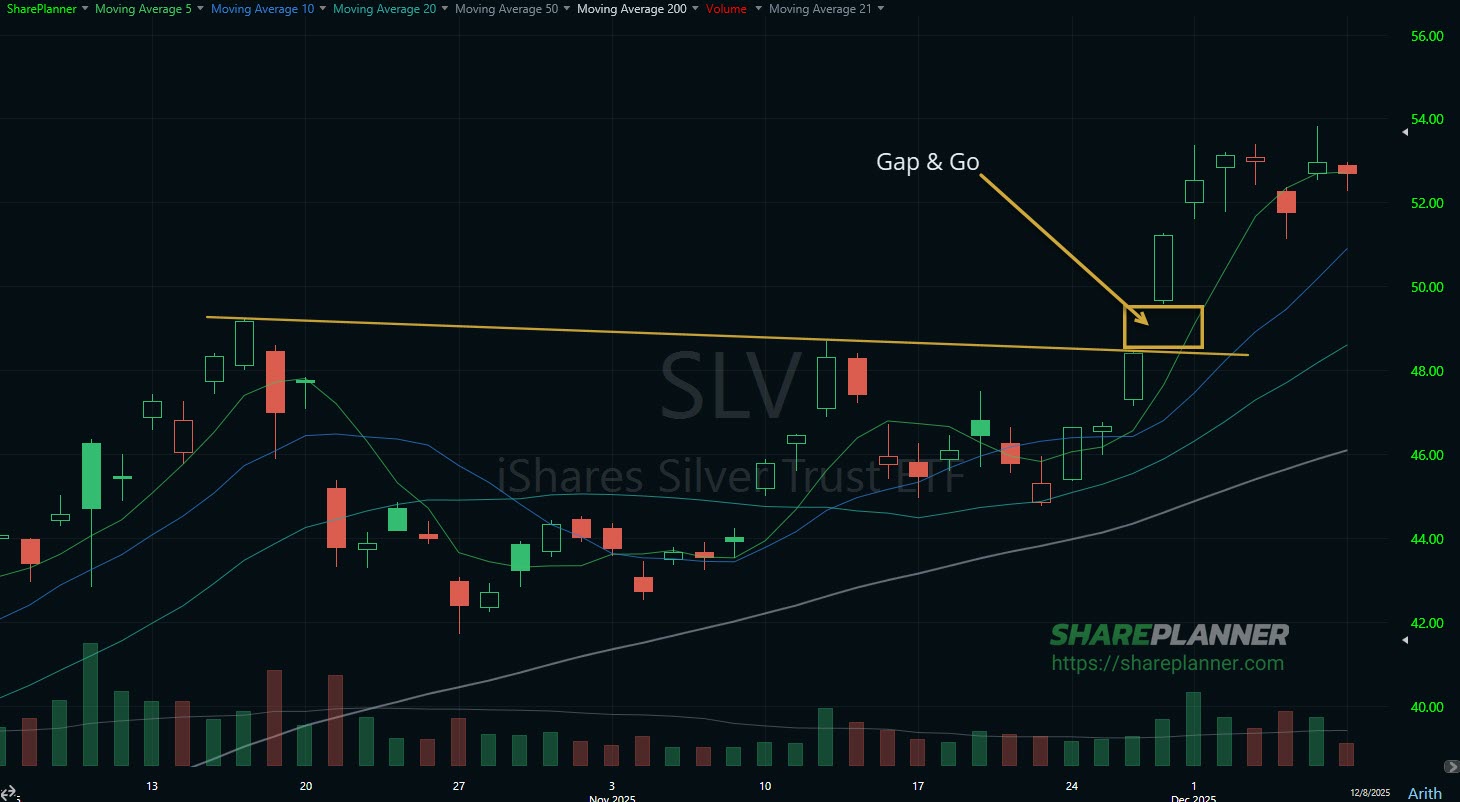
1. The Breakaway Gap: The Money Maker
A breakaway gap happens at the start of a new move, often after the stock has been trapped in a range for days or weeks.
Imagine a stock bouncing between $40 and $45 for three weeks. Volume dries up. Then it gaps to $46 on heavy volume. That is not random. That is a breakout. The stock absorbed supply at resistance and finally broke free.
The gap often becomes new support. Traders who missed the breakout wait for pullbacks. Shorts are trapped and forced to cover. That creates a floor under price.
My Rule: If a breakaway gap clears major resistance on strong volume, I will consider entering as long as the gap does not distort my reward-to-risk profile.
2. The Runaway Gap: The Trend Confirmer
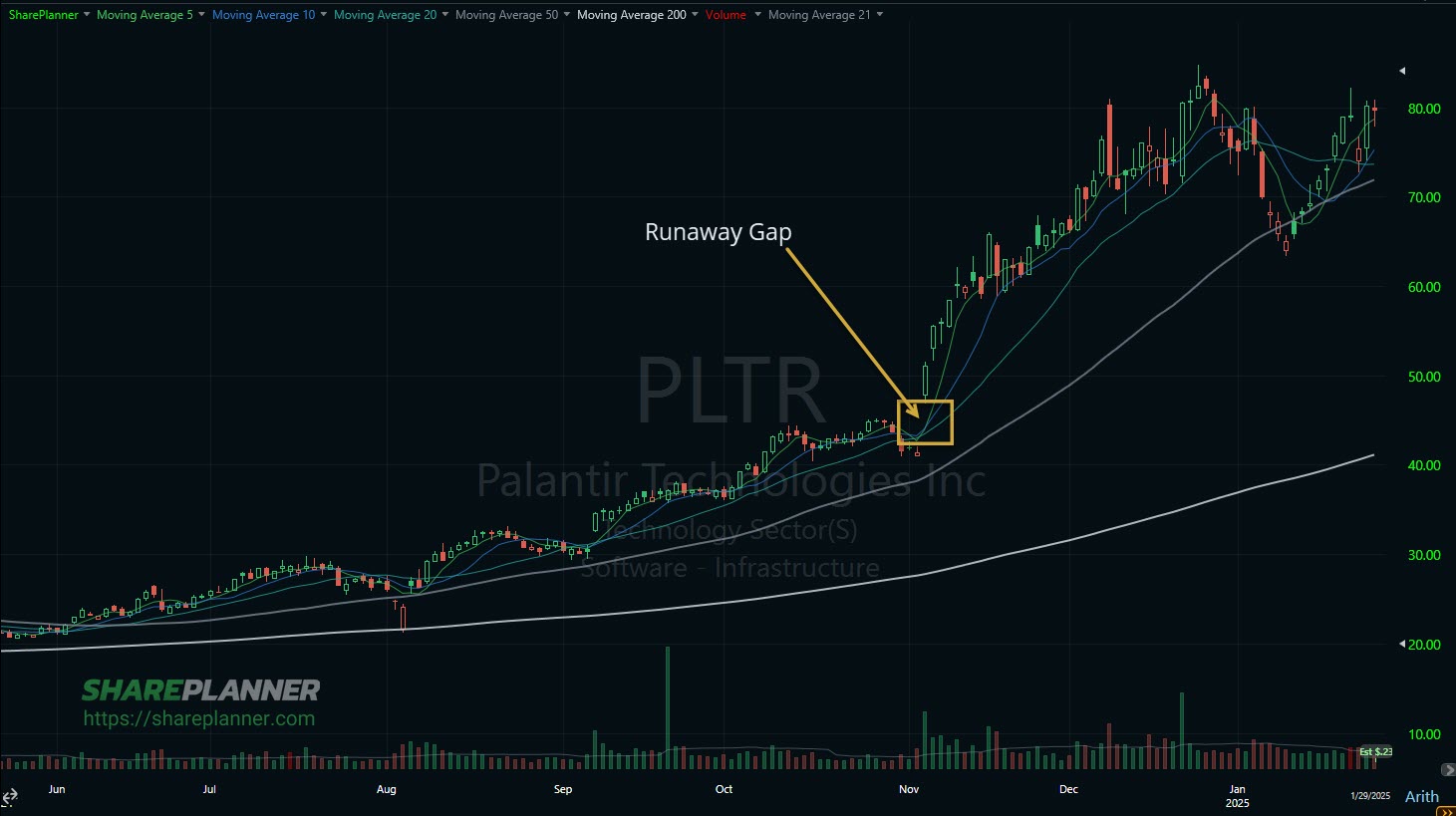
A runaway gap occurs in the middle of an established trend. The stock is already working, then it gaps again.
This signals strengthening demand and confirms the trend is healthy. The downside is that risk is often harder to define because stops get wider and reward-to-risk deteriorates.
My Rule: If I am already in the trade, a runaway gap is usually a reason to hold and tighten my trailing stop. If I am not in the trade, I am cautious about chasing. I would rather miss the move than buy extended.
3. The Exhaustion Gap: The FOMO Trap
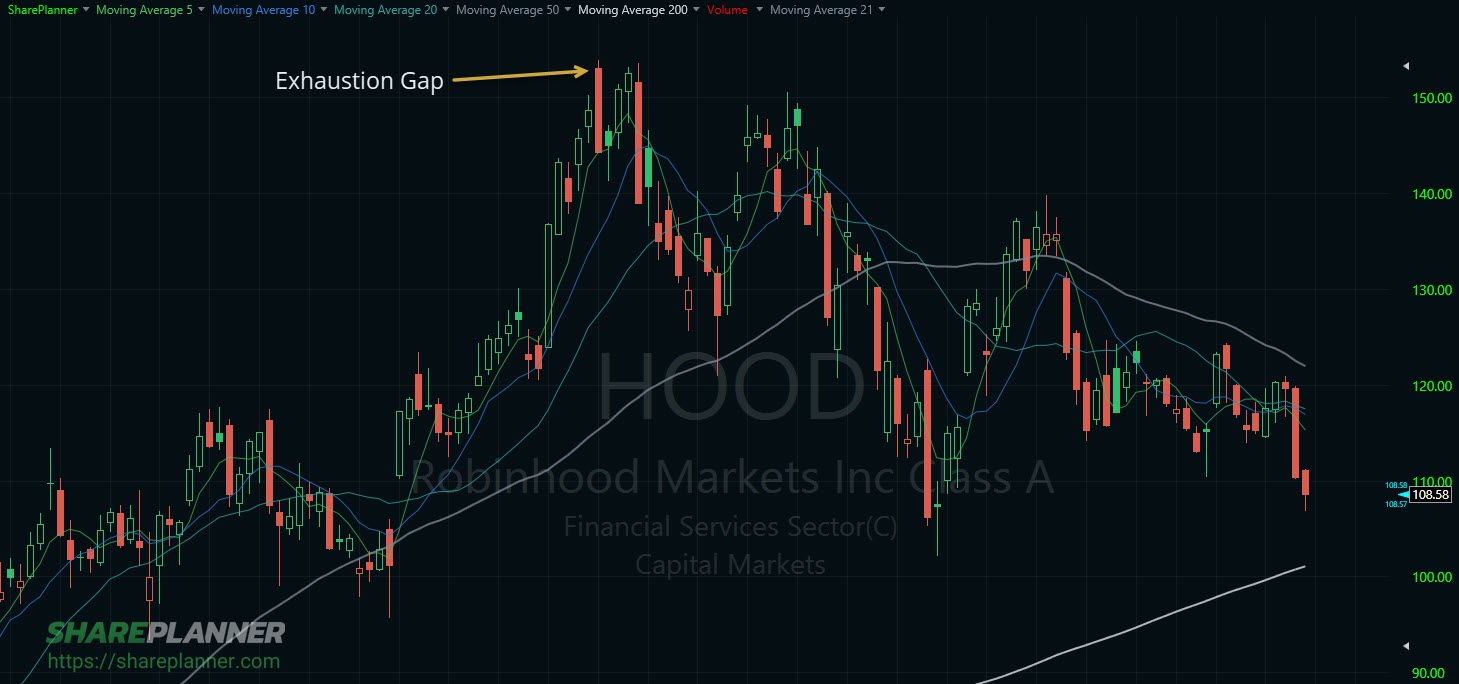
This is the most dangerous gap. Exhaustion gaps tend to appear late in a trend after weeks of price expansion. The stock is everywhere, hype is extreme, and it gaps again on massive volume.
This is often not smart money buying. It is retail panic-buying driven by FOMO. Once those buyers are in, demand dries up and price reverses.
My Rule: If a stock has run hard and gaps up on extreme volume without consolidation, I sell into the strength. I am not here to be a hero. I am here to pay the bills.
The Strategy: To Fade or To Follow?
The most common question is simple. Do I buy the gap or do I short it? The answer depends on volume and context.
The Gap and Go
If you want to follow a gap up, you need confirmation and conviction. I look for:
- High relative volume: Is volume in the first 30 minutes significantly higher than normal?
- A clean breakout: Did price clear major resistance or reclaim a key moving average like the 50-day or 200-day after prior rejection?
- The first-hour high: A common trigger is waiting for price to break above the first-hour high, confirming buyers stayed in control after early profit-taking.
The Gap Fill (The Fade)
If you are fading a gap up, you are betting the move was an overreaction. I look for:
- Resistance overhead: Did the stock gap into major resistance or a declining moving average where it previously struggled?
- Low volume: If the stock gaps up but volume is light, institutions may not be participating. Retail-driven gaps often fail.
- Extended price: If the stock is already up big in a short window, a gap up can be exhaustion. Just remember that exhaustion gaps can still squeeze higher before they fail.
Managing Overnight Risk
Holding positions overnight is required for swing trading, but it exposes you to gap risk. Stop-losses do not protect you when the market is closed.
Here is how I manage overnight risk:
- Position sizing: I never size a trade so large that a 10 percent gap down ruins my month. If a gap down makes you physically ill, your position size is too big.
- Avoid earnings roulette: I do not hold swing positions through earnings. Earnings reactions are unpredictable. I would rather trade the reaction afterward.
- Avoid headline-risk stocks: If a stock has a history of rug pulls, secondary offerings, surprise warnings, or repeated negative headlines, I stay away.
Finding Your Edge in the Gaps
Mastering gaps takes time. You have to stop looking at price in isolation and start reading the story. Is this a breakout from consolidation, or the final gasp of a tired trend?
Track the gaps on your watchlist. Do not rush to trade them. Observe which gaps fill and which ones run. Pay attention to volume. Over time, you will develop a feel for which gaps are gifts and which ones are grenades.
Gaps trigger fear and greed, and the market is designed to exploit both. But if you stay calm, identify the type of gap, and enforce strict risk management, you can turn one of the market’s scariest features into a real edge.
Frequently Asked Questions About Price Gaps
What is a price gap in trading?
A price gap occurs when a stock opens significantly higher or lower than the prior day’s close, usually due to overnight news or a major shift in supply and demand.
Are gaps bullish or bearish?
Gaps can be either. The meaning depends on context and volume. Breakaway and runaway gaps often support trends, while exhaustion gaps frequently appear near tops or bottoms.
What is a breakaway gap?
A breakaway gap happens when price gaps out of a consolidation range or through major resistance on strong volume, often starting a new trend.
What is a runaway gap?
A runaway gap occurs mid-trend and signals accelerating momentum. It often confirms strength but can create difficult risk management for new entries.
What is an exhaustion gap?
An exhaustion gap appears late in a trend, usually on extreme volume. It often signals FOMO-driven buying or panic selling and can precede reversals.
Should traders chase a gap up?
Chasing depends on the gap type. Gap-and-go setups require strong relative volume, a clean breakout, and confirmation after the open, such as reclaiming the first-hour high.
How do swing traders manage overnight gap risk?
The best defenses are position sizing, avoiding holding through earnings, and avoiding stocks with a long history of headline-driven rug pulls.


Welcome to Swing Trading the Stock Market Podcast!
I want you to become a better trader, and you know what? You absolutely can!
Commit these three rules to memory and to your trading:
#1: Manage the RISK ALWAYS!
#2: Keep the Losses Small
#3: Do #1 & #2 and the profits will take care of themselves.
That’s right, successful swing-trading is about managing the risk, and with Swing Trading the Stock Market podcast, I encourage you to email me (ryan@shareplanner.com) your questions, and there’s a good chance I’ll make a future podcast out of your stock market related question.
Watching the dollars rise and fall in your trading account can turn a well-planned swing trade into an emotional, deeply personal decision. In this episode, I explain why focusing on price action, percentage returns, and R-multiples can help you avoid cutting winners early, holding losers too long, and abandoning your trading plan.
Be sure to check out my Swing-Trading offering through SharePlanner that goes hand-in-hand with my podcast, offering all of the research, charts and technical analysis on the stock market and individual stocks, not to mention my personal watch-lists, reviews and regular updates on the most popular stocks, including the all-important big tech stocks. Check it out now at: https://www.shareplanner.com/premium-plans
📈 START SWING-TRADING WITH ME! 📈
Click here to subscribe: https://shareplanner.com/tradingblock
— — — — — — — — —
💻 STOCK MARKET TRAINING COURSES 💻
Click here for all of my training courses: https://www.shareplanner.com/trading-academy
– The A-Z of the Self-Made Trader –https://www.shareplanner.com/the-a-z-of-the-self-made-trader
– The Winning Watch-List — https://www.shareplanner.com/winning-watchlist
– Patterns to Profits — https://www.shareplanner.com/patterns-to-profits
– Get 1-on-1 Coaching — https://www.shareplanner.com/coaching
— — — — — — — — —
❤️ SUBSCRIBE TO MY YOUTUBE CHANNEL 📺
Click here to subscribe: https://www.youtube.com/shareplanner?sub_confirmation=1
🎧 LISTEN TO MY PODCAST 🎵
Click here to listen to my podcast: https://open.spotify.com/show/5Nn7MhTB9HJSyQ0C6bMKXI
— — — — — — — — —
💰 FREE RESOURCES 💰
— — — — — — — — —
🛠 TOOLS OF THE TRADE 🛠
Software I use (TC2000): https://bit.ly/2HBdnBm
— — — — — — — — —
📱 FOLLOW SHAREPLANNER ON SOCIAL MEDIA 📱
*Disclaimer: Ryan Mallory is not a financial adviser and this podcast is for entertainment purposes only. Consult your financial adviser before making any decisions.
You Might Like

South Korea: The Hidden Driver of US Tech Volatility

Stop Trying to Hit Home Runs: Start Trading Within Your Means
How to Trade Breakouts Without Getting Trapped